
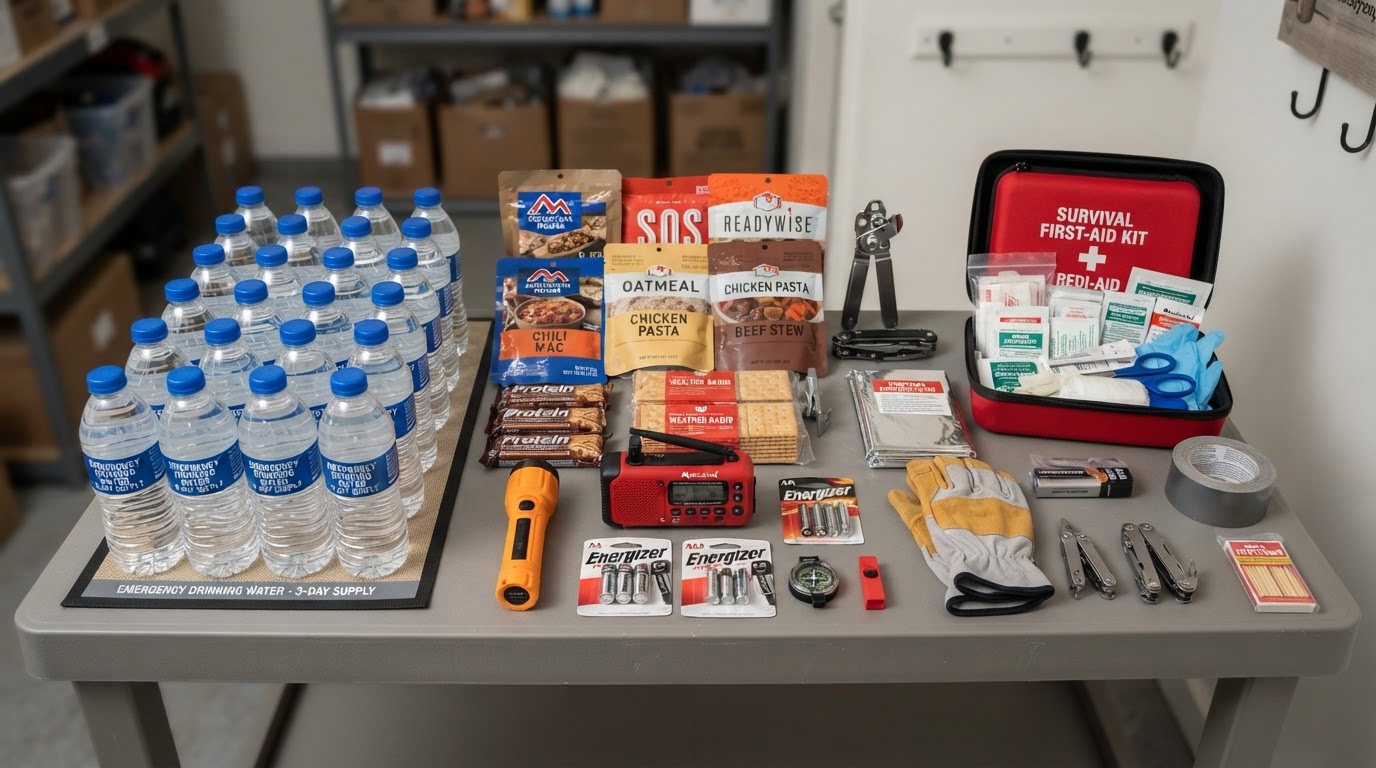
72 Hour Emergency Kit
72 Hour Emergency Kit: Supplies and Assumptions for Three Days
A 72 hour emergency kit is built to sustain your household for the first three days of a disruption, when help is most likely to arrive. This guide covers what to include and the assumptions behind the three-day standard.
Quick Answer
A 72 hour emergency kit contains three days of water, food, light, first aid, and sanitation supplies for each person in your household. The three-day standard assumes outside help can reach most households within that window after a major disaster. Build the kit, customize it, and understand its limits.
Key Takeaways
- •Three days is the minimum, not the goal for every situation.
- •The standard assumes help arrives within 72 hours after a disaster.
- •Include one gallon of water per person per day.
- •Customize for pets, medications, and household needs.
Why 72 Hours Is the Standard
Emergency agencies like FEMA and the Red Cross recommend at least 72 hours of supplies because that is the typical window for outside help to reach a community after a major disaster. Roads may be blocked, power may be down, and local responders may be overwhelmed.
The 72-hour standard is a starting point, not a ceiling. In widespread disasters, help can take longer. Many prepared households build toward two weeks once the three-day kit is solid.
What Goes in a 72 Hour Kit
Per person, per day.
- •One gallon of water for drinking and sanitation.
- •Shelf-stable food that needs little or no cooking.
- •A flashlight or headlamp with spare batteries.
- •A basic first aid kit.
- •Personal hygiene and sanitation supplies.
- •Copies of important documents and cash.
- •A change of clothes and sturdy shoes.
Assumptions and Limitations
The 72-hour kit assumes you can shelter in place or reach a safe location, that your home is intact, and that help is on the way. It does not assume you have no power, no running water, and no way to leave, though a good kit covers those too.
If you live in an evacuation-prone area, your 72-hour supplies should be portable enough to take with you. If you live somewhere help takes longer to arrive, build beyond three days.
Customizing for Your Household
Add supplies for everyone in your home, including pets. Include medications and a medication list, formula or diapers for infants, and comfort items for children. Households with medical equipment should plan for backup power.
Review the kit every six months. Replace water and food, check batteries, and update documents. A 72-hour kit only works if it is current.
72 Hour Kit Checklist (Per Person)
| Category | Quantity for 3 days | Notes |
|---|---|---|
| Water | 3 gallons | 1 gallon per day for drinking and sanitation |
| Food | 3 days of meals | Shelf-stable, little or no cooking |
| Light | 1 flashlight + batteries | Headlamps keep hands free |
| First aid | 1 basic kit | Add personal medications |
| Sanitation | Toilet paper, wipes, bags | Add a portable toilet option |
| Documents | Copies in waterproof bag | IDs, insurance, medical info |
| Cash | Small bills | Card readers may be down |
Frequently Asked Questions
Is 72 hours really enough?
It is the minimum recommended by emergency agencies. In widespread disasters, help can take longer, so many households build toward two weeks once the three-day kit is complete.
How much water is in a 72 hour kit?
One gallon per person per day, so three gallons per person for three days. Include extra for pets and any special needs.
Should a 72 hour kit be portable?
If you live in an evacuation-prone area, yes. Pack it in a backpack so you can take it with you. Otherwise, a stored home kit is fine.
How often should I replace 72 hour kit supplies?
Review every six months. Replace water and food past their dates, test batteries, and update documents and medications.