
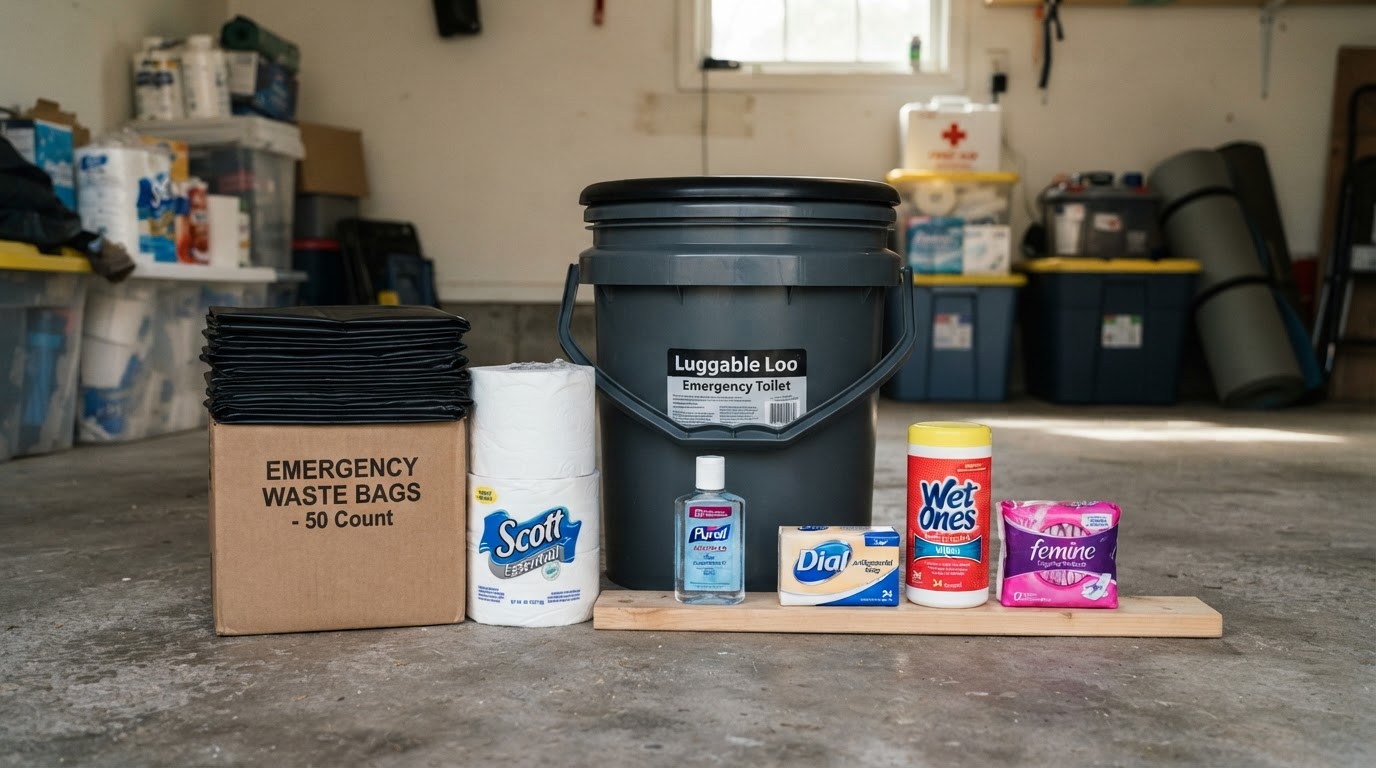
Emergency Sanitation Supplies
Emergency Sanitation Supplies: Hygiene When Plumbing Stops
Emergency sanitation supplies keep your household clean and healthy when water and plumbing stop working. This guide covers what to stock for hygiene, waste management, and preventing illness during a disruption.
Quick Answer
Emergency sanitation supplies are the items you keep to manage hygiene and waste when plumbing stops. They include a portable toilet or bucket, heavy-duty waste bags, toilet paper, hand sanitizer, soap, feminine hygiene products, and absorbent material. Poor sanitation spreads disease quickly in a disaster, so plan for it before you need it.
Key Takeaways
- •Plan for waste management when plumbing stops, not just water and food.
- •A portable toilet or bucket with bags is the core of a sanitation kit.
- •Keep hand sanitizer, soap, and toilet paper in your supplies.
- •Poor sanitation spreads disease; manage waste to protect your household.
Why Sanitation Matters in a Disaster
When plumbing stops, waste builds up. Without a way to manage it, disease spreads quickly. Diarrheal diseases are a major risk after disasters, especially in crowded or warm conditions. Planning for sanitation is as important as planning for water and food.
A sanitation kit does not need to be complicated. A bucket, bags, and absorbent material handle waste. Hand sanitizer and soap prevent the spread of germs. The goal is to keep your household clean and healthy when the systems you rely on stop.
What to Stock for Emergency Sanitation
Build a sanitation kit with these.
- •A portable toilet or a sturdy bucket with a seat lid.
- •Heavy-duty garbage bags for waste.
- •Toilet paper and wet wipes.
- •Hand sanitizer and liquid soap.
- •Feminine hygiene products.
- •Absorbent material: kitty litter, sawdust, or peat moss.
- •A small shovel for burying waste if needed.
- •Trash bags for used supplies.
- •Disposable gloves.
Managing Waste When Plumbing Stops
Line your portable toilet or bucket with a heavy-duty bag. After each use, add absorbent material to reduce odor and moisture, then tie the bag closed. Store used bags in a sealed container away from living areas and food.
If you cannot store waste, bury it at least 200 feet from water sources, following local guidelines. Do not bury waste where it can contaminate groundwater. In an urban area, follow official guidance on waste disposal during a disruption.
Personal Hygiene During a Disruption
Handwashing prevents the spread of disease. If water is scarce, use hand sanitizer with at least 60 percent alcohol, then wash with soap and water when you can. Keep your hands away from your face.
Keep a supply of soap, shampoo alternatives like no-rinse body wash, and wet wipes for bathing when showers are not available. Staying clean protects health and morale during a long disruption.
Sanitation Kit Checklist
| Item | Quantity for 3 days (family of 4) |
|---|---|
| Portable toilet or bucket | 1 |
| Heavy-duty bags | 12-20 |
| Toilet paper | 4-6 rolls |
| Hand sanitizer | 1 large bottle |
| Liquid soap | 1 bottle |
| Absorbent material | 5-10 lb |
| Wet wipes | 2-3 packs |
Frequently Asked Questions
How do I manage waste when the toilet does not work?
Use a portable toilet or a bucket lined with a heavy-duty bag. Add absorbent material after each use to reduce odor, tie the bag closed, and store it in a sealed container away from living areas and food.
What is the best absorbent material for a portable toilet?
Kitty litter, sawdust, or peat moss work well. They absorb moisture and reduce odor. Add a scoop after each use.
How do I keep clean during a water outage?
Use hand sanitizer with at least 60 percent alcohol for hands, and wet wipes or no-rinse body wash for bathing. Wash with soap and water when you can. Keeping clean prevents disease.
Where do I dispose of waste during an emergency?
Store used bags in a sealed container away from living areas. If you must bury waste, do so at least 200 feet from water sources and follow local guidelines. In urban areas, follow official disposal guidance.