
Research-based buying guide
Water Filters and Purifiers: What to Buy for Your Situation
Research-based comparison of filter and purifier types, what each removes, and where it falls short.
Filters and purifiers are not interchangeable, and no single option handles every contaminant. A filter removes biological threats like bacteria and protozoa; a purifier also addresses viruses. Which one you need depends on your water source, your household, and the risks where you live. This is research-based guidance on the categories, not hands-on testing, to help you match a product to your situation.
A filter is a supplement to stored drinking water, never a replacement for it. Store enough water for three days first, then add a filter for the longer disruption where stored water runs low. If your local water advisory mentions chemical contamination, boiling and ordinary filters will not help, and you need a different response. Always follow the specific guidance issued for your area.
Read the manufacturer's documented claims, not the marketing. A filter certified to remove bacteria and protozoa is genuinely useful for many situations, but it does not remove dissolved chemicals, heavy metals, or salt. Match the product to the actual risk, and keep spare replacement elements on hand.
Start with Your Situation
Small apartment
A compact squeeze filter or purifier bottle for one person.
Household storage
A gravity system that handles larger volumes with no pumping.
Variable outdoor sources
A pump filter that adapts to murky or shallow water.
Backup for biological risk
Chemical treatment (unscented bleach) as a low-cost secondary method.
Useful for this guide
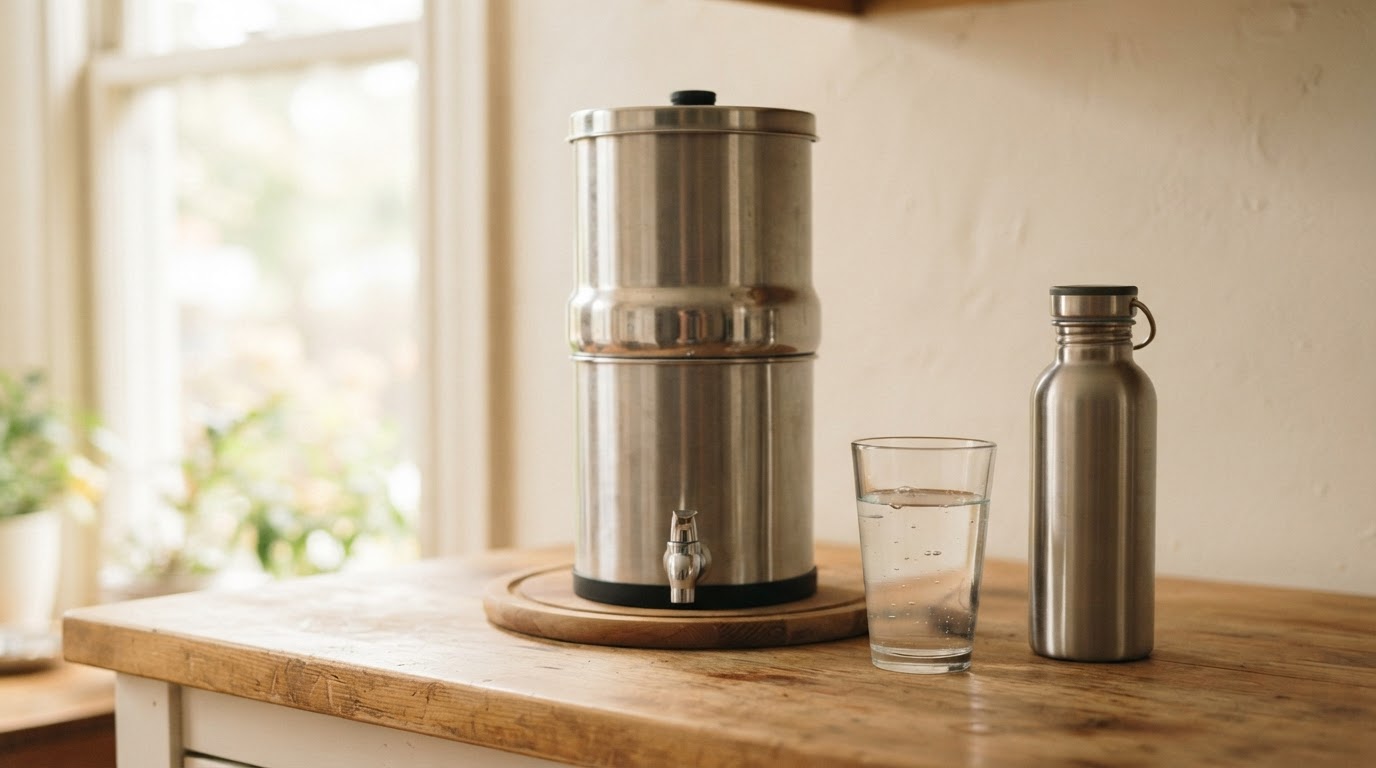
Gravity Water Filter System
Handles larger volumes with no pumping. Verify the manufacturer's pathogen claims and replacement-filter cost before buying.
Best for: Household and group use
Compare Your Options
These are product categories, not specific tested models. We do not invent prices, ratings, or stock.
| Type | Best for | Evidence | Key notes |
|---|---|---|---|
| Gravity system | Households and groups who need larger volumes without pumping. | Research-based | Slower than pumping. Bulky for a go-bag. Replacement elements add cost |
| Squeeze filter | Single-person kits and go-bags where weight matters. | Research-based | Small volumes only. Tiring for household use. Verify pore size and certified removals |
| Pump filter | Outdoor use with variable or murky water sources. | Research-based | Labor-intensive for large volumes. More moving parts. Heavier |
| Purifier bottle | One person who wants a simple, grab-and-go option. | Research-based | Limited capacity per fill. Verify virus and chemical claims. Replacement cartridges add cost |
Scroll the table horizontally on narrow screens to read every column.
What to Look For
Filter type
Gravity, pump, squeeze, straw, and purifier bottle each suit different situations. Gravity works for groups and household volumes; squeeze and straw fit personal kits; pumps handle variable sources; purifier bottles are convenient for one person. Choose based on how many people you serve and where you will use it.
Pore size and what it removes
Most filters remove bacteria and protozoa. Viruses generally require a purifier or chemical treatment, and viruses are a concern where people are crowded or where sewage may contaminate water. Read the manufacturer's documented test claims for the specific organisms, not generic marketing language.
Flow rate and capacity
Flow rate affects how fast you get water; capacity is how many gallons a filter handles before replacement. Both matter for household use. A slow flow rate is tolerable for one person but exhausting for a family. Track gallons processed so you replace the element before it fails.
Replacement-filter cost
The purchase price is only part of the cost. Check the price and availability of replacement elements before committing, and keep a spare element stored dry. A filter you cannot refit is a single-use tool.
Chemical contaminant limitations
Ordinary filters do not remove chemicals, heavy metals, dissolved salts, or agricultural runoff. No household filter makes an unknown or chemically contaminated source safe. If your water advisory mentions a chemical, follow the specific instruction, which may be bottled water only.
Cold-weather and storage
Some filters crack or clog in freezing conditions. Follow the maker's storage and cold-weather guidance, and dry filters fully before long storage to prevent mold. Store replacement elements where they will not freeze.
Useful for this guide
Gravity Water Filter System
Handles larger volumes with no pumping. Verify the manufacturer's pathogen claims and replacement-filter cost before buying.
Best for: Household and group use
Products Worth Comparing
Gravity system
Households and groups who need larger volumes without pumping.
Advantages
- Hands-off operation
- Higher capacity per session
- Good for stored water rotation
Limitations
- Slower than pumping
- Bulky for a go-bag
- Replacement elements add cost
Accessories: Replacement filter elements and a clean collection container.
Squeeze filter
Single-person kits and go-bags where weight matters.
Advantages
- Lightweight and field-serviceable
- Compact
- Inexpensive
Limitations
- Small volumes only
- Tiring for household use
- Verify pore size and certified removals
Accessories: Compatible squeeze pouches and a backflush syringe.
Pump filter
Outdoor use with variable or murky water sources.
Advantages
- Flexible across sources
- Faster than gravity per stroke
- Field-cleanable
Limitations
- Labor-intensive for large volumes
- More moving parts
- Heavier
Accessories: Pre-filter for sediment and a hose for shallow sources.
Purifier bottle
One person who wants a simple, grab-and-go option.
Advantages
- All-in-one convenience
- No separate container needed
- Portable
Limitations
- Limited capacity per fill
- Verify virus and chemical claims
- Replacement cartridges add cost
Accessories: Spare cartridges and a cleaning brush.
Common Buying Mistakes
- !Assuming a filter removes viruses. Most do not; check the documented claims.
- !Treating a filter as a substitute for stored drinking water. It is a supplement.
- !Ignoring replacement-filter cost and availability before buying.
- !Believing an ordinary pitcher filter makes any contaminated source safe.
Care and Readiness
- Backflush or clean the filter on the maker's schedule to restore flow.
- Dry the filter fully before long-term storage to prevent mold.
- Protect filters from freezing, which can crack the element.
- Track filter capacity in gallons and replace before the rated limit.
Common Questions
Does a filter replace stored water?
No. A filter is a backup when stored water runs out. Start with stored drinking water, then add a filter as a supplement for longer disruptions.
Will a household filter remove chemicals?
Ordinary filters target biological contaminants, not dissolved chemicals or heavy metals. Do not assume any filter makes chemically contaminated water safe. Follow your local advisory.
What is the cheapest backup method?
Unscented household bleach with CDC-documented dosing treats biological contamination at very low cost, though it does not address chemical contamination and has a waiting time.
Build Your Household Plan
Add this category to your plan, then work through the essentials at a pace that fits your household.
Explore the 10 EssentialsMore gear guides
Portable Power Stations: A Buyer's Guide to Capacity and Output
Match watt-hours to what you actually need to run, and understand the gap between rated and usable energy.
Choosing an Emergency Weather Radio
NOAA reception, SAME county alerting, and power sources compared so you know what you are actually buying.
Emergency Lighting: Lanterns, Headlamps, and Flashlights Compared
Match the light to the job, and prioritize usable runtime over peak brightness.
Portable Solar Panels: Realistic Expectations and Tradeoffs
Solar is a complement, not a free lunch. Match panel watts to what you actually charge.
Sources and Method
This guide compares manufacturer specifications, published documentation, and relevant official guidance. Products are not described as hands-on tested unless testing is documented. This is research-based comparison, not a substitute for manufacturer instructions or professional advice.
Some links on this page are affiliate links. We may earn a commission if you buy through them, at no extra cost to you.