
Get Home Bag
Get Home Bag: Returning Home From Work or Travel
A get home bag is the kit you keep at work or in your car so you can get home safely when a disruption strands you away. This guide covers what to pack for the journey back when normal travel is disrupted.
Quick Answer
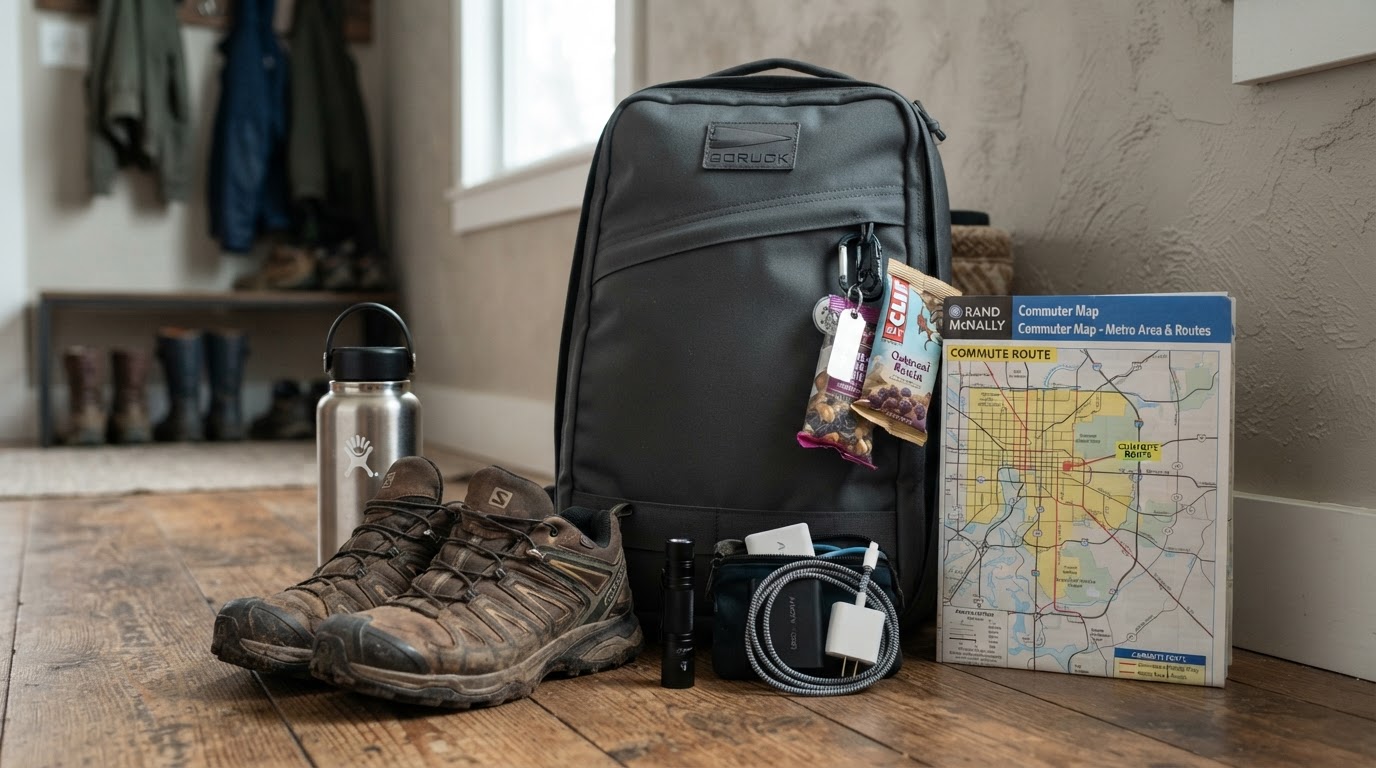
A get home bag is a compact kit kept at work or in your car that helps you return home safely when a disruption interrupts normal travel. It includes sturdy shoes, water, snacks, a flashlight, a small first aid kit, a paper map, and a way to charge your phone. It is lighter than a bug out bag because its only job is getting you home, where your main supplies are.
Key Takeaways
- •A get home bag is for the journey home, not for surviving away from home.
- •Keep one at work and one in the car if you commute far.
- •Sturdy shoes and a paper map are often the most useful items.
- •It should be lighter and smaller than a bug out bag.
How a Get Home Bag Differs From a Bug Out Bag
A bug out bag is packed to leave home and survive away from it. A get home bag is packed to return home, where your main supplies are. That difference changes what goes inside: a get home bag is lighter, focused on mobility, and built for a specific journey.
If you work close to home, a get home bag may be small. If you commute an hour or more, it needs more water, food, and planning for a long walk or disrupted transit.
What to Pack in a Get Home Bag
Focus on mobility and the journey home.
- •Sturdy walking shoes, if you normally wear dress shoes.
- •Water and shelf-stable snacks for the journey.
- •A flashlight or headlamp with batteries.
- •A small first aid kit.
- •A paper map of your route home.
- •A phone charger or power bank.
- •A small amount of cash.
- •Seasonal layers: a rain jacket or warm layer.
- •A whistle and a dust mask for urban areas.
Planning Your Route Home
Think through how you would get home if roads were closed, transit was down, or your phone had no signal. Identify two or three routes, including one that avoids highways and bridges. A paper map does not depend on a battery or a signal.
If you commute by transit, know the walking distance home and how long it would take. A get home bag turns a stressful, uncertain journey into a planned one.
Where to Keep It
Keep a get home bag at your workplace, in your locker, or at your desk. If you drive, keep one in the car. The goal is to have supplies wherever a disruption catches you.
Check it seasonally. Swap layers as the weather changes, and replace water and snacks that degrade in a hot car or office closet.
Get Home Bag vs. Bug Out Bag
| Feature | Get Home Bag | Bug Out Bag |
|---|---|---|
| Purpose | Return home | Leave home and survive away |
| Location | Work or car | Home, near an exit |
| Weight | Light | Up to 20% body weight |
| Supplies | Journey-focused | 3+ days of survival |
| Documents | Copies | Full set, waterproof |
Frequently Asked Questions
What is the difference between a get home bag and a bug out bag?
A get home bag helps you return home, where your main supplies are. A bug out bag is packed to leave home and survive away from it. The get home bag is lighter and journey-focused.
Where should I keep a get home bag?
At your workplace or in your car, wherever a disruption is most likely to catch you away from home. If you commute far, keep one in both places.
What is the most important item in a get home bag?
Sturdy shoes, if you do not wear them to work. A long walk home in dress shoes is painful and dangerous. A paper map is a close second.
How big should a get home bag be?
Small enough to carry comfortably for the distance you might walk. A daypack is usually enough. It should be lighter than a bug out bag.