
Pet Emergency Kit
Pet Emergency Kit: Supplies for Dogs, Cats, and Other Pets
A pet emergency kit is the set of supplies your animals need during a disruption or evacuation. This guide covers what to pack for food, water, comfort, and safety so your pets are cared for when you must leave home fast.
Quick Answer
A pet emergency kit is a set of supplies for your animals during a disruption. It includes food, water, a carrier or crate, a leash, medications, vaccination records, and comfort items. Build one for each pet, keep it with your go-bags, and plan where your pets will go if you evacuate, since many shelters do not accept animals.
Key Takeaways
- •Build a kit for each pet and keep it with your go-bags.
- •Include food, water, medications, and vaccination records.
- •Plan where your pets will go, since many shelters do not accept animals.
- •Keep a photo of you with your pet in case you are separated.
What to Pack in a Pet Emergency Kit
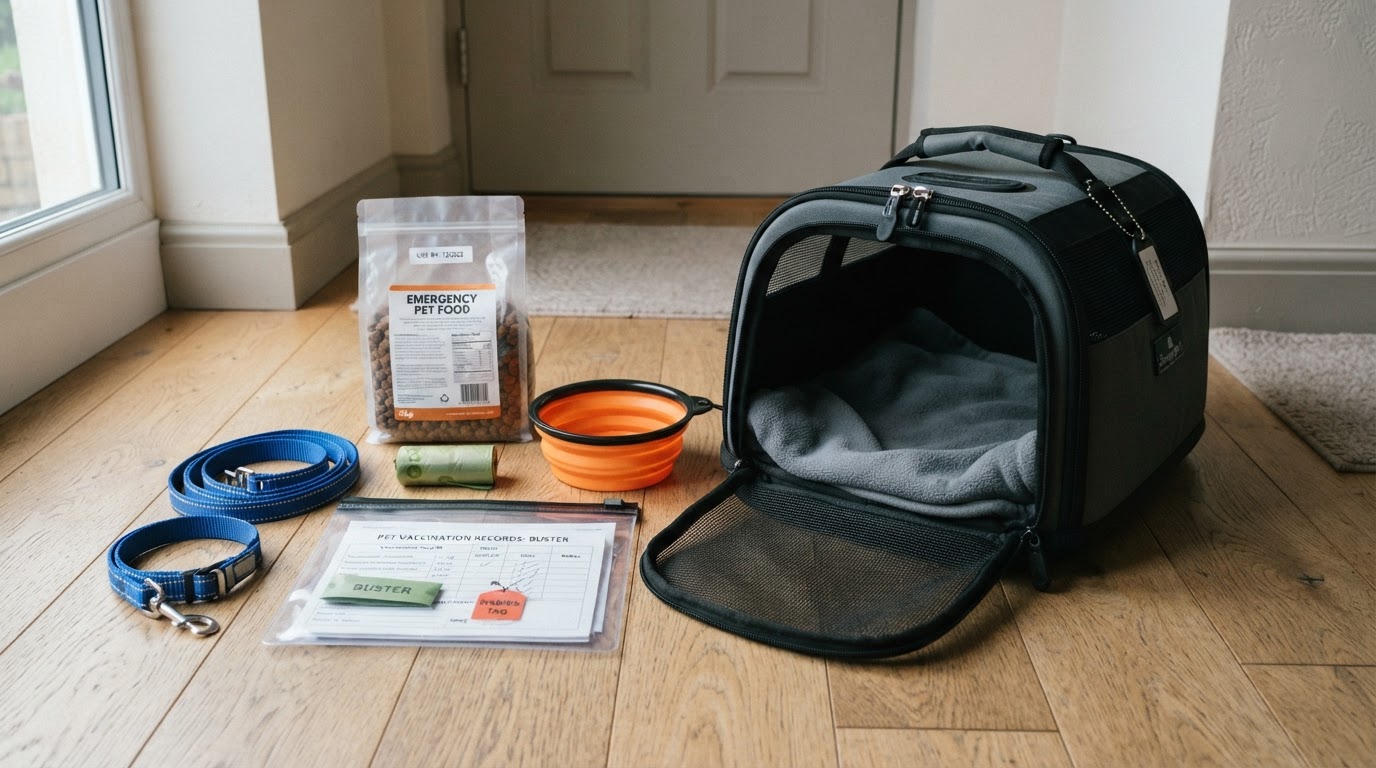
For each pet, include:
- •Food for at least three days, in a waterproof container.
- •Water for at least three days.
- •Bowls that collapse or pack flat.
- •A carrier or crate for transport and shelter.
- •A leash and a harness.
- •Medications and a copy of prescriptions.
- •Vaccination records and a photo of you with your pet.
- •Waste bags, litter, and a small litter tray for cats.
- •A familiar toy or blanket for comfort.
Planning for Evacuation With Pets
Many emergency shelters do not accept pets, so plan ahead. Identify pet-friendly hotels, friends or family outside your area, or a boarding facility. Do not leave pets behind if you evacuate; conditions can become dangerous quickly.
If you have large animals or livestock, contact your local emergency management office about evacuation plans and shelters for them. Plan early, because moving animals takes time and help.
Special Considerations by Pet Type
Dogs need a leash, harness, and waste bags. Cats need a carrier, litter, and a litter tray. Small animals like birds and reptiles need secure carriers and may need heat or specific temperatures. Keep a list of each pet's needs.
Fish and exotic pets are harder to evacuate. Have a plan and a portable container if possible. Talk to your veterinarian about emergency planning for pets with special needs.
Maintaining Your Pet Emergency Kit
Check the kit every six months. Rotate food and water, replace expired medications, and update vaccination records. Pets grow and their needs change, so adjust the kit as your pet ages.
Keep the kit near your go-bags so you grab everything at once. Practice loading your pet into the carrier so it is not a struggle during an evacuation.
Pet Kit Essentials by Animal
| Pet type | Key additions |
|---|---|
| Dog | Leash, harness, waste bags, crate |
| Cat | Carrier, litter, small litter tray |
| Bird | Secure carrier, cover, food cup |
| Reptile | Secure carrier, heat source if needed |
| Small mammal | Secure carrier, bedding, chew food |
Frequently Asked Questions
Can I bring my pet to an emergency shelter?
Many emergency shelters do not accept pets, except service animals. Plan ahead for pet-friendly hotels, friends, or boarding. Some communities have pet-friendly shelters; check with your local emergency management office.
How much water does my pet need in an emergency?
Plan for the same amount your pet drinks daily, plus extra. A rough guide is one ounce of water per pound of body weight per day for dogs and cats. Store it in a sealed container.
What documents should I keep for my pet?
Vaccination records, a copy of prescriptions, and a photo of you with your pet. The photo helps prove ownership and reunite you if you are separated.
How do I prepare a pet emergency kit for a cat?
Include a carrier, litter and a small litter tray, food, water, bowls, and a familiar blanket. Cats stress easily, so a carrier they are used to and a familiar scent help keep them calm.