
Household Emergency Preparedness
Household Emergency Preparedness: Organizing Readiness at Home
Household emergency preparedness is the practice of keeping readiness organized throughout your home, not just in a single kit. This guide covers where to store supplies, how to maintain them, and how to fit preparedness into your living space.
Quick Answer
Household emergency preparedness is the ongoing practice of organizing, storing, and maintaining the supplies and plan that keep your home ready for disruptions. It covers where to keep water and food, how to rotate them, how to fit readiness into a small space, and how to keep the whole household informed.
Key Takeaways
- •Store supplies in accessible, labeled locations, not one hidden kit.
- •Rotate food and water into regular use so nothing expires.
- •Fit preparedness to your space, even in a small apartment.
- •Keep the whole household informed about where things are.
Organizing Supplies Throughout the Home
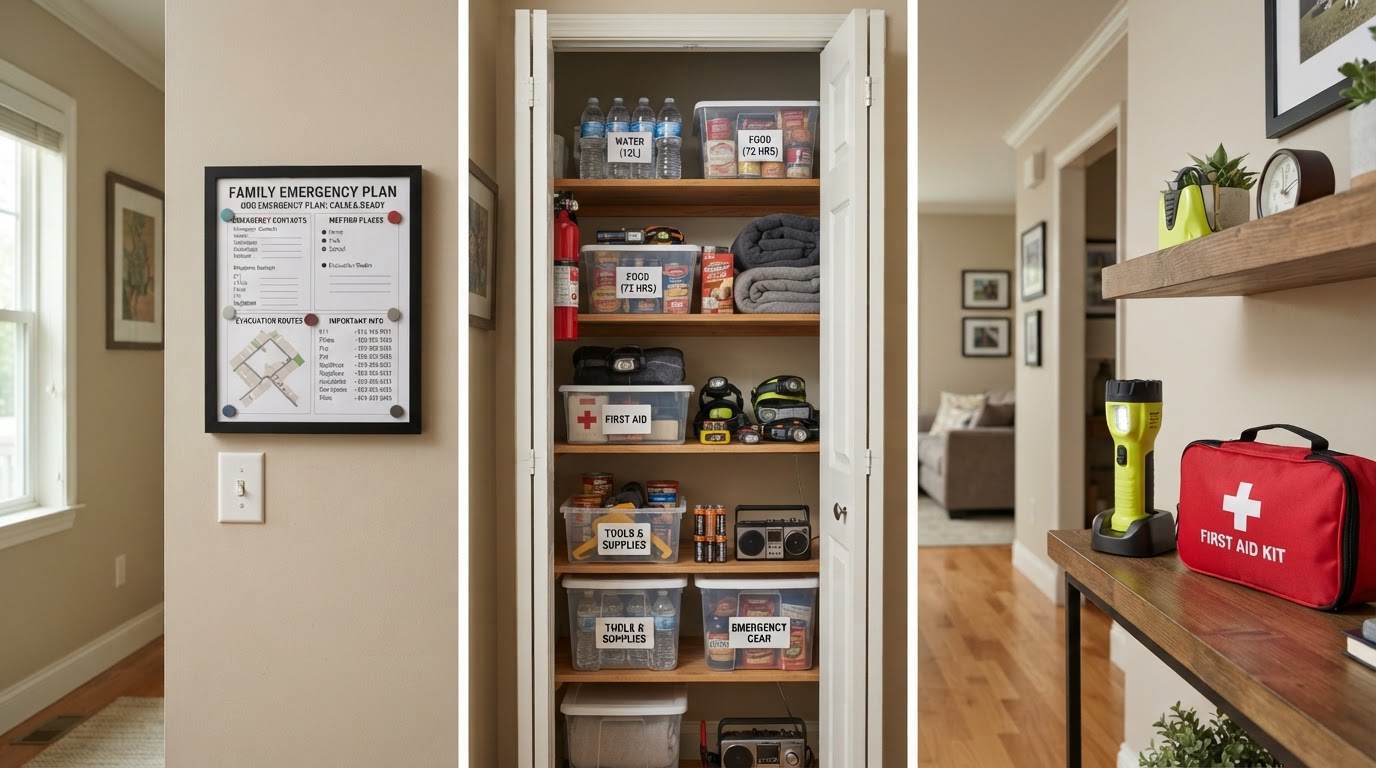
Rather than keeping everything in one kit, distribute supplies where they are used. Keep flashlights in bedrooms and the kitchen. Store water and food in a cool pantry. Keep a first aid kit in the bathroom and a smaller one in the car. This way, the right supply is close at hand when you need it.
Label storage locations so anyone in the household, including a guest or babysitter, can find what they need quickly.
Maintaining and Rotating Supplies
Supplies degrade if ignored. Food expires, water picks up flavors, and batteries die. Build rotation into your routine: use stored food in regular meals and replace it. Check batteries when you change your clocks. Test smoke and carbon monoxide alarms on the same schedule.
Keep a simple inventory with expiration dates. A twice-yearly review keeps your household readiness real rather than theoretical.
Fitting Preparedness Into Small Spaces
Apartments and small homes can be prepared too. Use under-bed storage for water and a go-bag. Use high shelves for lightweight supplies. Choose compact, multi-use items over bulky duplicates. A small space rewards thoughtful organization over sheer volume.
Renters should focus on portable supplies and an evacuation plan rather than permanent home modifications. Your readiness can move with you.
Keeping the Whole Household Informed
Preparedness only works if everyone in the home knows the plan and where supplies are. Walk through the plan with children, roommates, and regular visitors. Show them where the flashlights, first aid kit, and shutoff valves are.
A household that knows its plan responds calmly. A household that does not is left scrambling in the dark.
Where to Store Household Supplies
| Location | What to keep there |
|---|---|
| Bedrooms | Flashlight, shoes, go-bag |
| Kitchen/pantry | Water, shelf-stable food, manual can opener |
| Bathroom | First aid kit, sanitation supplies |
| Utility area | Tools, shutoff wrenches, batteries |
| Car | First aid kit, water, snacks, blanket |
Frequently Asked Questions
Should I keep all emergency supplies in one place?
No. Distribute supplies where they are used so the right item is close at hand. Keep a go-bag near an exit for evacuation.
How do I prepare in a small apartment?
Use under-bed and high-shelf storage, choose compact multi-use items, and focus on portable supplies and an evacuation plan.
How often should I check my household supplies?
Review them every six months. Rotate food and water, check batteries, and test alarms.
Do renters need different household preparedness?
Renters should focus on portable supplies and an evacuation plan rather than permanent modifications. Your readiness can move with you.