
Prepping on a Budget
Prepping on a Budget: Affordable Readiness for Any Household
Preparedness does not require a large budget. This guide shows how to prep on a budget by using what you already own, buying in priority order, and building gradually so readiness stays affordable and sustainable.
Quick Answer
Prepping on a budget means building household readiness without overspending. It starts with a free plan and contact list, uses what you already own, buys the most urgent supplies first, water, food, light, first aid, and adds depth gradually as budget allows. Most households can cover the basics for well under $100.
Key Takeaways
- •A plan and a contact list cost nothing and matter most.
- •Use what you already own before buying duplicates.
- •Buy in priority order so the most urgent needs come first.
- •Build gradually; preparedness is a habit, not a shopping spree.
Start With What Costs Nothing
The most important preparedness steps are free. Write a household plan with contacts and meeting points. Learn how to shut off your utilities. Sign up for local emergency alerts. Save important phone numbers in writing. These steps cost nothing and do more for your safety than any purchase.
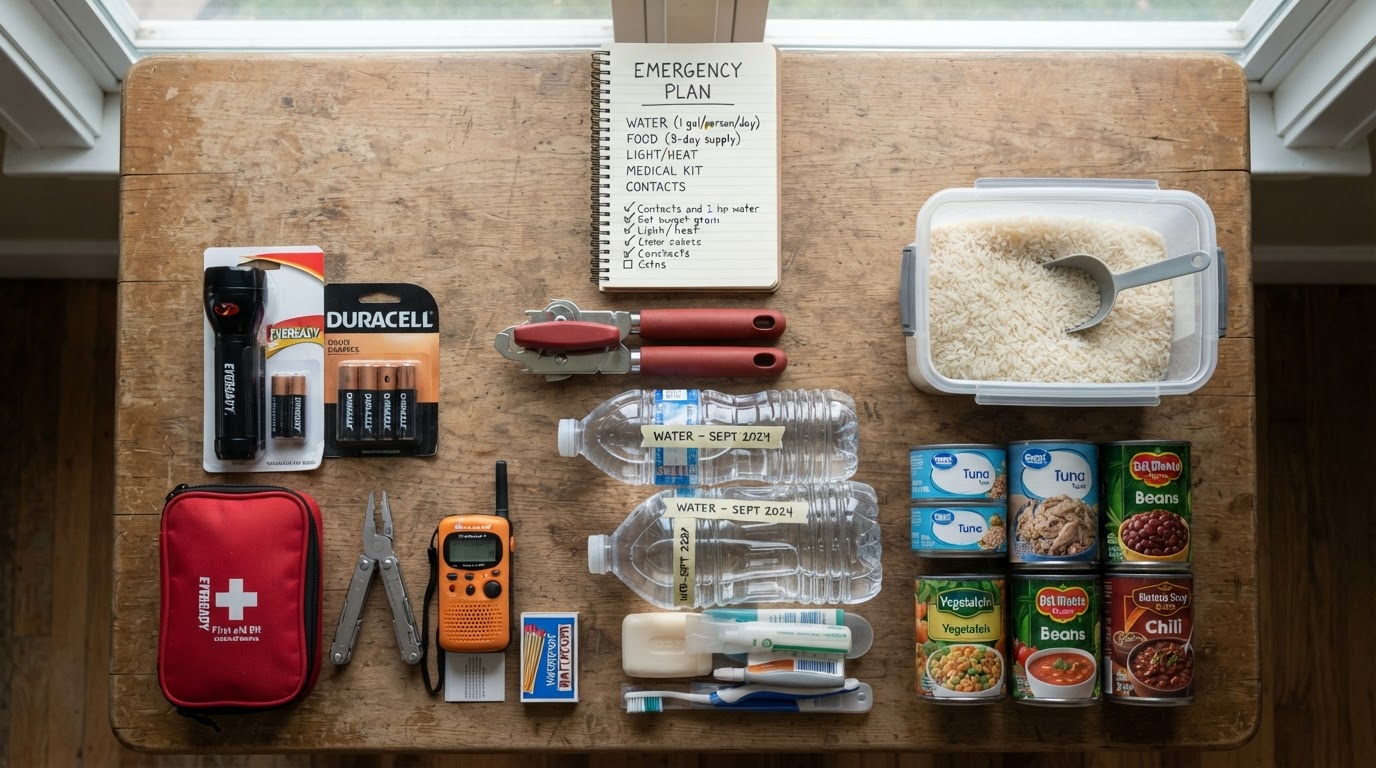
Before shopping, inventory what you already own. You likely have flashlights, batteries, a first aid kit, and shelf-stable food already. Use them.
Buy in Priority Order
Spend on the most urgent needs first, then add depth.
- •Water: inexpensive containers and tap water, or store-bought jugs.
- •Food: canned goods, rice, pasta, and other affordable staples.
- •Light: a basic flashlight and spare batteries.
- •First aid: a simple kit or build your own from pharmacy items.
- •Information: a low-cost weather radio or free local alert apps.
Affordable Alternatives to Expensive Gear
You do not need premium gear to be prepared. A basic flashlight works as well as a tactical one for a power outage. Canned food from the grocery store is as useful as freeze-dried meals for a short disruption. A power bank costs a fraction of a power station and keeps your phone running for days.
Save the larger purchases for later, when your budget allows and your needs are clearer. Depth comes with time.
Building Gradually Over Time
The most sustainable approach is to add one item or category per paycheck. Over a few months, you build a complete kit without a financial strain. Rotate food into regular meals so your preparedness spending also feeds your household normally.
Preparedness on a budget is not about cutting corners. It is about spending deliberately on what matters most, in the order that matters most.
Budget Preparedness Cost Breakdown
| Item | Budget option | Approx. cost |
|---|---|---|
| Plan and contacts | Write it yourself | Free |
| Water (3 days) | Tap water in food-grade jugs | $10-20 |
| Food (3 days) | Canned goods and staples | $20-40 |
| Light | Basic flashlight + batteries | $10-20 |
| First aid | Build your own kit | $15-30 |
| Alerts | Free local alert apps | Free |
| Power | Phone power bank | $20-40 |
Frequently Asked Questions
Can I really be prepared on a tight budget?
Yes. A plan, water, food, light, and a first aid kit can be assembled for under $100. Use what you own and buy in priority order.
What is the cheapest way to store emergency water?
Fill food-grade containers with tap water and store them in a cool, dark place. It costs almost nothing and is safe for short-term storage.
Are cheap emergency supplies reliable?
Basic supplies from a grocery or hardware store are reliable for common disruptions. You do not need premium tactical gear to handle a power outage.
How do I avoid overspending on prepping?
Buy one category at a time, in priority order, and use what you already own. Avoid fear-driven purchases and survivalist marketing.