
Best Emergency Lantern
Best Emergency Lantern: Brightness, Runtime, and Power
A reliable emergency lantern lights a room during a power outage so your household can move safely and stay comfortable. This guide explains how to compare lanterns by brightness, runtime, power source, and durability so you choose the right light for your home.
Quick Answer
The best emergency lantern for most households is a rechargeable LED lantern with multiple brightness modes, long runtime on low, a USB charging option, and durable, water-resistant construction. Compare lumens for brightness, runtime on the lowest useful setting, and how it charges. Keep a mix of lanterns for room lighting and headlamps for hands-free use.
Key Takeaways
- •Choose an LED lantern with multiple brightness modes for runtime control.
- •Runtime on low matters more than peak brightness for long outages.
- •USB charging lets you recharge from a power bank or station.
- •Keep headlamps too, so your hands stay free.
Brightness Versus Usable Runtime
Lanterns advertise peak lumens, but the brightest setting drains the battery fastest. A 360 lumen lantern on high may last 4 hours, while the same lantern on low at 50 lumens may last 40 hours or more. For a multi-day outage, low mode is what keeps you lit.
Compare runtime on the lowest useful setting, not just peak output. A lantern that runs 100 hours on low is more valuable in a long outage than one that burns 4 hours on high and goes dark.
Power Sources and Charging
Consider how each lantern stays powered.
- •Rechargeable battery with USB: convenient and rechargeable from a power bank or station.
- •Replaceable batteries: reliable if you keep spares, but you need extras.
- •Solar panel: slow but useful for extended outages without grid power.
- •Hand crank: limited light for effort, better as a backup than a primary source.
- •Hybrid models combine rechargeable with a backup crank or solar.
Room Lantern Versus Headlamp
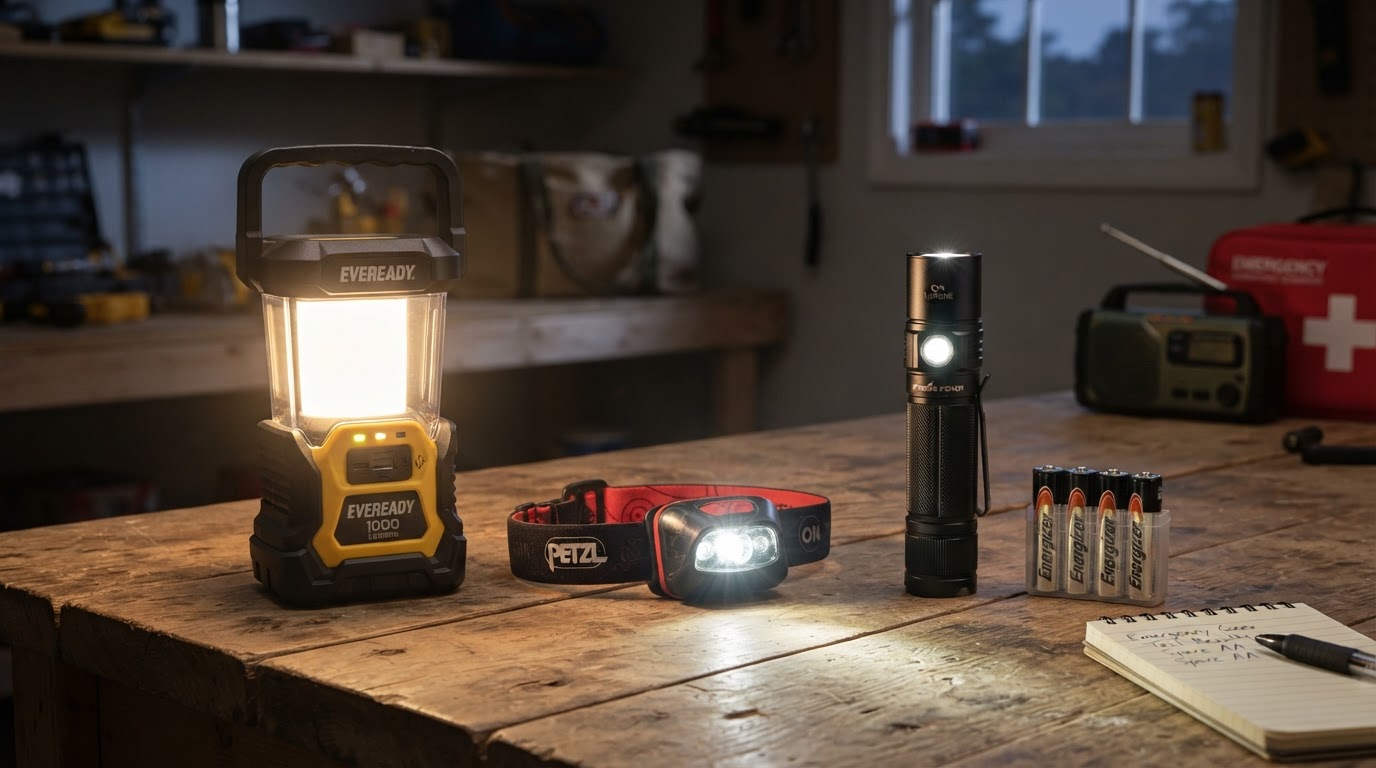
A room lantern lights a space so everyone can see and move safely. A headlamp lights what you are looking at while keeping your hands free for cooking, repairs, or carrying a child. Most households need both: a lantern for the table and a headlamp per person.
Flashlights are useful for focused light but less effective for filling a room. Choose a lantern for area lighting and headlamps for personal, hands-free light.
Durability and Storage
Store lanterns charged and check them every six months. Batteries drain over time, so top them up before storm season. Keep spare batteries if the lantern uses replaceable cells. A dead light is worse than no light because you expected it to work.
Look for water resistance if the lantern might be used outdoors. Drop resistance matters in an emergency when things get knocked over. A durable lantern lasts through years of seasonal storms.
Lantern Power Source Comparison
| Power source | Runtime | Best for | Limitation |
|---|---|---|---|
| Rechargeable + USB | Long on low | Home outages | Needs a way to recharge |
| Replaceable batteries | Depends on supply | Long outages | Keep spares on hand |
| Solar | Variable | Extended outages | Slow, needs daylight |
| Hand crank | Minutes per crank | Last resort | High effort, low output |
Frequently Asked Questions
How many lumens do I need for an emergency lantern?
For room lighting, 100 to 400 lumens on high is plenty. More important is a low mode that extends runtime. A 50 lumen low setting that lasts 40 hours is more useful in a long outage than a 400 lumen high that lasts 4 hours.
Should I get a rechargeable or battery powered lantern?
Rechargeable lanterns with USB are convenient because you can top them up from a power bank or station. Battery powered lanterns work if you keep spares. Many households keep both so they have a backup if one fails.
Do I need a lantern if I have flashlights?
A lantern fills a room with light so everyone can see and move safely. A flashlight lights only what you point it at. For a household outage, a lantern for the table plus headlamps for each person is a practical combination.
How long do rechargeable lanterns hold a charge in storage?
Most lose charge over months. Check and top them up every six months, especially before storm season. A stored lantern that is dead when you need it is worse than no lantern at all.