
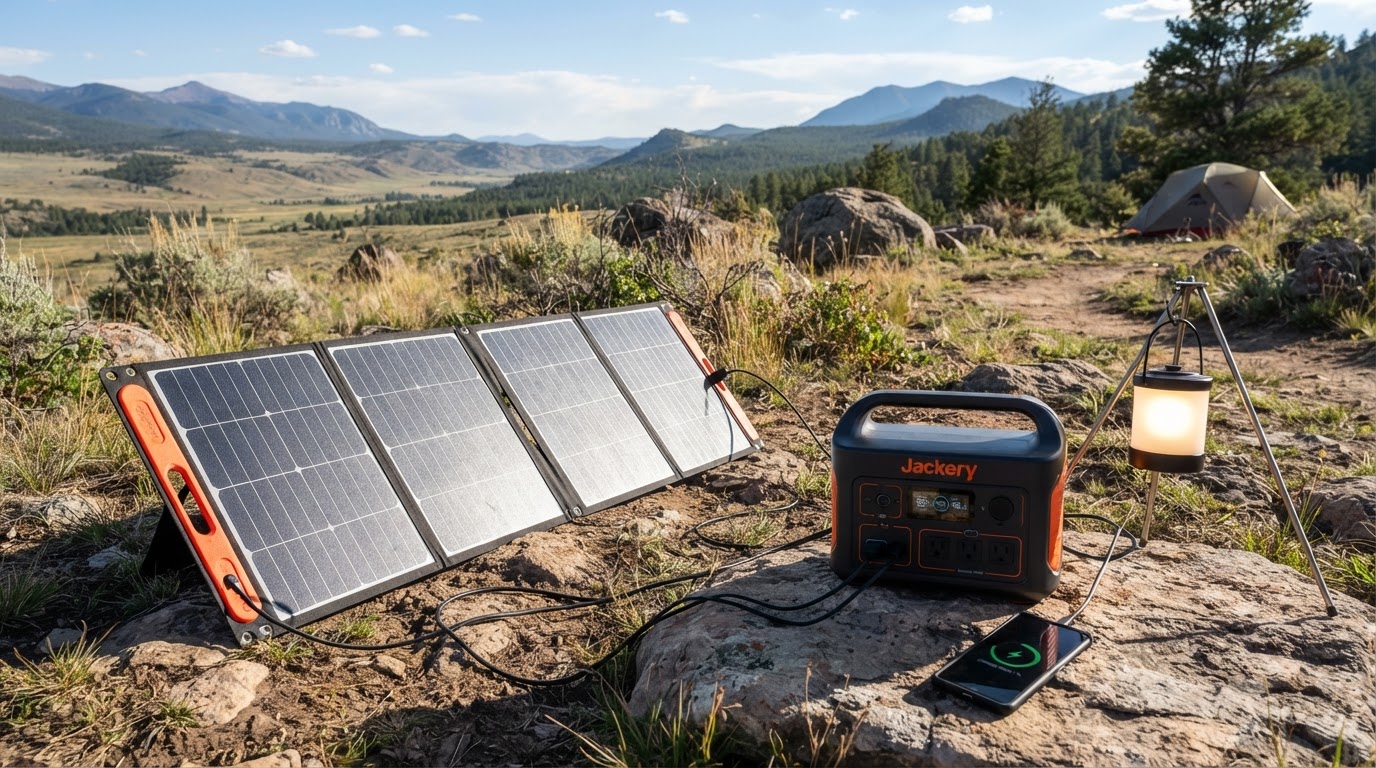
Best Solar Generator for Home Backup
Best Solar Generator for Home Backup: Panels, Batteries, and Real Output
A solar generator pairs a portable power station with solar panels to recharge during an extended outage. This guide explains how to compare systems by panel output, battery capacity, and realistic charging so you set expectations correctly before you buy.
Quick Answer
A solar generator is a portable power station paired with compatible solar panels. The best system for home backup depends on what you need to power, for how long, and how much sun you get. Real-world panel output is lower than the rated wattage due to shade, orientation, and weather. A solar generator is best for keeping phones, lights, and small devices running over a multi-day outage, not for powering a whole home.
Key Takeaways
- •A solar generator pairs a power station with compatible solar panels.
- •Real-world panel output is lower than rated wattage.
- •Size the battery around the devices you need to power.
- •Solar works best for small devices over multi-day outages, not whole homes.
What a Solar Generator Actually Is
A solar generator is not a traditional generator. It is a battery power station paired with solar panels that recharge it. The battery stores energy you use at night or during clouds. The panels refill it when the sun is out. You get silent, exhaust-free power, but limited by battery capacity and panel output.
This makes solar generators good for extended outages where you need to keep small devices running over several days. They are not designed to power a whole home or large appliances continuously.
Panel Output and Real Charging
A panel rated at 100 watts will rarely produce 100 watts in real use. Shade, the angle to the sun, cloud cover, and the season all reduce output. Expect 50 to 70 percent of rated wattage under good conditions, and less on cloudy days or in winter.
Check the power station's solar input limit. A panel that produces more than the station can accept may not charge faster, or may require a second panel to use the extra capacity. Match the panel to the station's input for the best result.
Battery Capacity and Runtime
Battery capacity in watt-hours sets how long the station runs your devices before it needs recharging. A 500-watt-hour station running a 50-watt device lasts about 10 hours, before conversion losses. Larger batteries give more runtime but cost more and weigh more.
Plan for the devices you actually need. A solar generator that keeps a phone, a light, and a radio running for days is a realistic goal. A solar generator that runs a refrigerator or air conditioner is not, unless the system is very large and the sun is reliable.
Compatibility and Expansion
- •Check solar input voltage and current limits on the station.
- •Use compatible panels and connectors; mismatched connectors do not guarantee compatibility.
- •Some stations allow expansion batteries for more capacity.
- •Consider charge controllers if building a custom setup.
Solar Generator System Comparison
| System size | Best for | Realistic output | Limitation |
|---|---|---|---|
| 100 Wh + 50 W panel | Phone charging | ~30 W in sun | Limited runtime; slow recharge |
| 300 Wh + 100 W panel | Phone, light, radio | ~60 W in sun | Short device runtime |
| 500 Wh + 200 W panel | CPAP, router, small devices | ~120 W in sun | Needs good sun for daily recharge |
| 1000 Wh + 400 W panel | Multiple devices overnight | ~250 W in sun | Heavy; higher cost |
Frequently Asked Questions
Can a solar generator power my whole home?
No. A portable solar generator is designed for small devices over extended outages, not for whole-home power. Whole-home backup requires a much larger, professionally installed system with its own considerations.
How much power will my solar panel actually produce?
Expect 50 to 70 percent of the rated wattage under good conditions, and less on cloudy days or in winter. Shade, angle, and season all reduce output. A 100-watt panel may produce 50 to 70 watts in direct sun.
Do I need a compatible solar panel for my power station?
Yes. Check the station's solar input voltage and current limits, and use compatible panels and connectors. A matching connector does not guarantee electrical compatibility. Match the panel to the station's input.
Is a solar generator better than a gas generator?
It depends. Solar generators are silent and produce no exhaust, which makes them safer indoors in some ways, but they have limited capacity and depend on the sun. Gas generators produce more power for longer but require fuel, maintenance, and safe outdoor placement.