
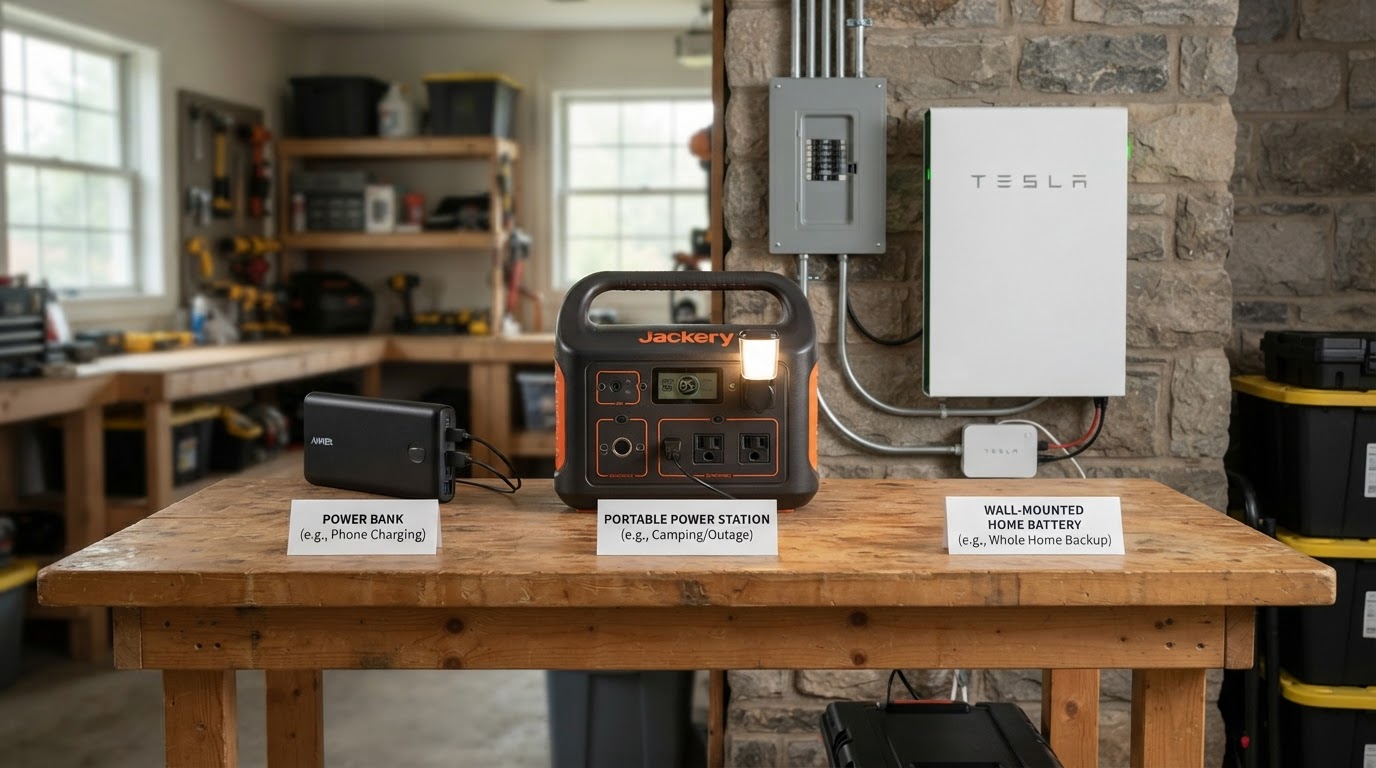
Battery Backup for Home
Battery Backup for Home: Choosing Between Portable and Installed Systems
Home battery backup ranges from a small power bank that charges your phone to a professionally installed system that keeps essential circuits running for days. This guide helps you choose the right level of backup for your household, your devices, and your budget.
Quick Answer
Battery backup for home spans three levels: a power bank for phones and small devices, a portable power station for lights and small appliances, and a professionally installed home battery system for essential circuits. The right choice depends on what you need to keep running, for how long, and your budget. Start with the devices that matter most and add capacity as your needs and budget grow.
Key Takeaways
- •Three levels: power bank, portable station, installed home battery.
- •Match the system to the devices you need to keep running.
- •Installed systems require professional assessment and setup.
- •Start small and add capacity as your needs and budget grow.
Level 1: Power Banks
A power bank is the simplest battery backup. It charges phones, tablets, and small devices. A 10,000 milliamp-hour bank can charge a phone two to three times. It is cheap, portable, and good for a short outage where you mainly need to keep your phone running.
Power banks do not run appliances, lights that plug into a wall, or medical equipment. They are a starting point, not a complete solution. Keep one charged and ready, and consider a second if your household has multiple phones.
Level 2: Portable Power Stations
A portable power station stores more energy and offers AC outlets, so it can run lights, a router, a fan, or small devices for hours. It charges from a wall outlet and some models accept solar panels for extended outages. It is silent and produces no exhaust.
Portable stations do not run large appliances or a whole home. Check the continuous and surge output for compatibility with your devices, and verify compatibility with any medical equipment before relying on it. Capacity in watt-hours sets the runtime.
Level 3: Installed Home Battery Systems
An installed home battery system connects to your electrical panel and can keep essential circuits running for hours or days. These systems require professional assessment, installation, and permitting. They are the most capable and the most expensive option.
If you rely on powered medical equipment, have frequent or long outages, or need reliable backup for essential circuits, a professional system may be worth the investment. Do not attempt to install one yourself. Work with a qualified installer who can assess your loads and electrical setup.
Choosing the Right Level
- •List the devices you need to keep running during an outage.
- •Estimate how long you need to run them.
- •Check your budget for both purchase and ongoing maintenance.
- •Consider professional installation if you need essential circuit backup.
- •Start with the devices that matter most and add capacity over time.
Home Battery Backup Levels
| Level | Powers | Runtime | Cost range | Best for |
|---|---|---|---|---|
| Power bank | Phones, tablets | 2-3 phone charges | $20-60 | Short outages, phone backup |
| Portable station | Lights, router, small devices | Hours | $300-2000 | Multi-hour outages, small devices |
| Installed system | Essential circuits | Hours to days | $5000+ | Frequent outages, medical needs |
Frequently Asked Questions
What is the cheapest home battery backup?
A power bank. For under $60, a 10,000 milliamp-hour bank charges a phone two to three times. It is a starting point for phone backup, not a complete solution for appliances or lights.
Can a portable power station run my refrigerator?
Some can, briefly, if the station has enough surge output to start the compressor. Check the fridge's running and starting wattage against the station's ratings. Runtime is limited and depends on capacity.
Do I need a professional to install a home battery?
Yes. Installed home battery systems connect to your electrical panel and require professional assessment, installation, and permitting. Do not attempt to install one yourself. Work with a qualified installer.
Is battery backup better than a gas generator?
It depends. Battery backup is silent and produces no exhaust, which makes it safer for some uses, but it has limited capacity and costs more per watt. Gas generators produce more power for longer but require fuel, maintenance, and safe outdoor placement.