
Emergency Water Storage
Emergency Water Storage: Containers, Placement, and Rotation
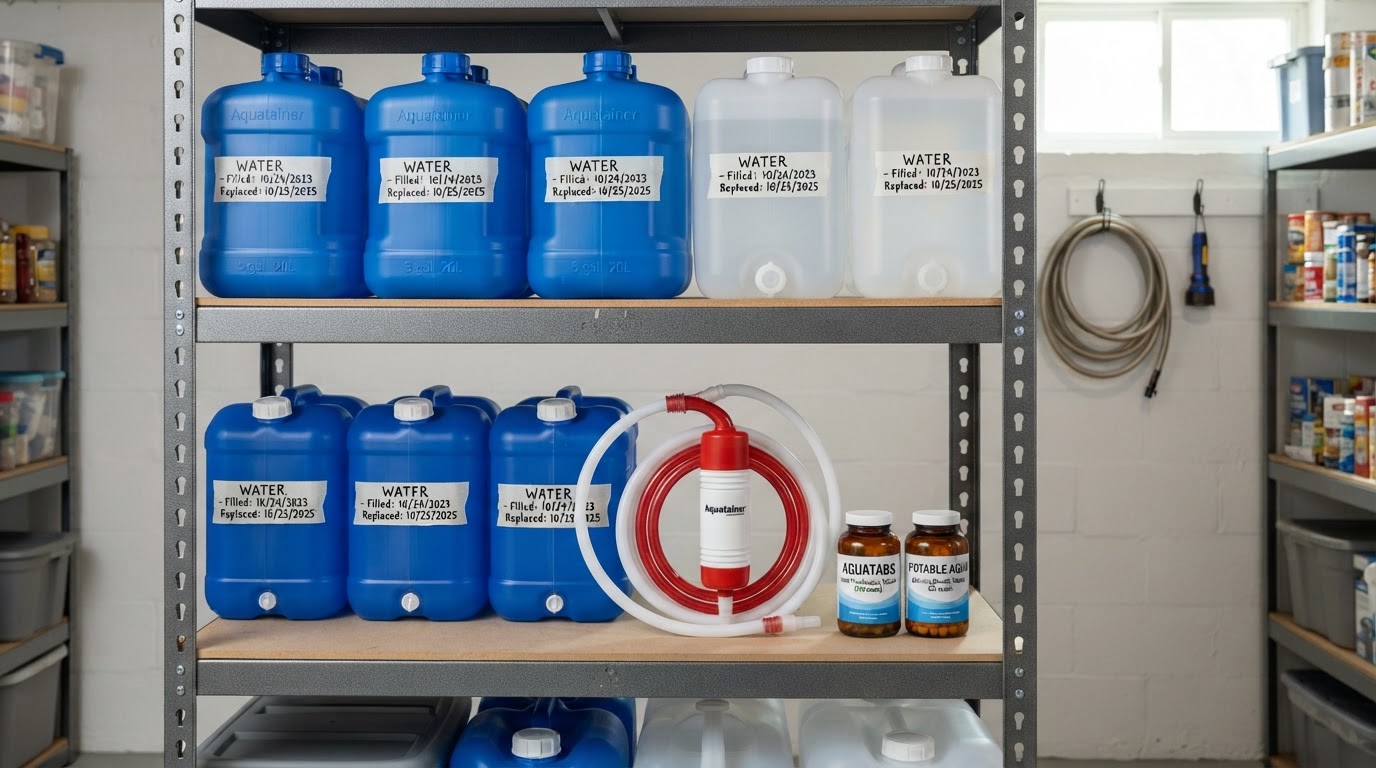
Emergency water storage is the water you keep at home for drinking, cooking, and sanitation when the tap stops. This guide covers how to choose containers, where to store them, and how to rotate water to keep it safe.
Quick Answer
Emergency water storage is the water you keep at home for disruptions. Store at least one gallon per person per day for three days to start, in food-grade containers, in a cool, dark place. Rotate stored water every six months, and never use containers that held toxic substances. The right containers and rotation keep water safe to drink.
Key Takeaways
- •Store at least one gallon per person per day for three days.
- •Use food-grade containers; never reuse toxic containers.
- •Store water in a cool, dark place away from chemicals.
- •Rotate stored water every six months.
How Much Water to Store
The minimum recommendation is one gallon per person per day for at least three days. That covers drinking and basic sanitation. For a family of four, that is 12 gallons for three days. Expand toward two weeks, or 56 gallons, as you can.
Store extra for pets, medical needs, and hot climates where you need more water. If you live in a hot area or have medical needs, plan for more than one gallon per person per day. Count everyone, including pets.
Choosing Containers
Use food-grade containers.
- •Commercially bottled water is convenient and safe.
- •Food-grade water storage containers with a tight seal.
- •Heavy-duty polyethylene containers designed for water.
- •Avoid milk jugs, which leak and are hard to clean.
- •Never use containers that held toxic substances.
Where to Store Water
Store water in a cool, dark place, away from direct sunlight, heat, and chemicals. Sunlight and heat promote algae and degrade containers. A basement, closet, or pantry works. Avoid garages and attics where temperatures swing.
Keep water off the floor on shelves if possible, and away from gasoline, pesticides, and other chemicals. Do not store water near containers of toxic substances, which can leach through plastic over time.
Rotating and Treating Stored Water
Rotate stored water every six months. Empty, clean, and refill containers. If you treat water with bleach, use unscented household bleach: 8 drops per gallon for clear water, 16 drops for cloudy water. Let it sit 30 minutes before sealing.
Commercially bottled water lasts about six months to a year; check the label. If water looks cloudy, smells bad, or has floating particles, do not drink it. When in doubt, treat or replace it.
Water Storage Container Guide
| Container | Pros | Cons |
|---|---|---|
| Commercially bottled | Safe, convenient | Costs more, expires |
| Food-grade water container | Durable, large capacity | Needs cleaning |
| Heavy-duty polyethylene | Stackable, long storage | Bulky when full |
| Milk jugs | Cheap | Leak, hard to clean, not recommended |
| Glass jars | No chemical leaching | Breakable, heavy |
Frequently Asked Questions
How much emergency water should I store?
At least one gallon per person per day for three days, as a minimum. For a family of four, that is 12 gallons. Expand toward two weeks as you can, and store extra for pets and hot climates.
What containers are safe for water storage?
Food-grade water storage containers, heavy-duty polyethylene containers, and commercially bottled water. Avoid milk jugs and never use containers that held toxic substances.
How long can I store emergency water?
Rotate stored water every six months. Commercially bottled water lasts about six months to a year; check the label. If water looks cloudy or smells bad, replace it.
How do I treat water for long term storage?
Use unscented household bleach: 8 drops per gallon for clear water, 16 drops for cloudy water. Let it sit 30 minutes before sealing. Rotate every six months.