
Emergency Water Purification
Emergency Water Purification: Methods, Limits, and When to Use Each
Emergency water purification makes suspect water safer to drink when your stored supply runs low. This guide covers the main methods, what each one removes, and the limitations of each so you choose the right approach for the situation.
Quick Answer
Emergency water purification uses boiling, chemical treatment, filtration, or ultraviolet light to make suspect water safer to drink. No method removes every contaminant. Boiling is the most reliable for biological contaminants. Chemical tablets and UV light work in specific cases. Match the method to the contaminant, follow local advisories, and understand that some water is not safe to treat at home.
Key Takeaways
- •Boiling is the most reliable method for biological contaminants.
- •Chemical tablets and UV light work in specific cases, not all.
- •No purification method removes every contaminant.
- •Follow local advisories and do not treat chemically contaminated water at home.
When to Purify Water
Purify water when your stored supply is running low and you must use a suspect source, or when local officials issue a boil water advisory. Purification addresses biological contaminants like bacteria and viruses. It does not address chemical contamination.
If water is chemically contaminated, discolored, smells of fuel or chemicals, or is under a do-not-use advisory, do not treat it at home. Follow official guidance and use an alternative supply.
Boiling: The Most Reliable Method
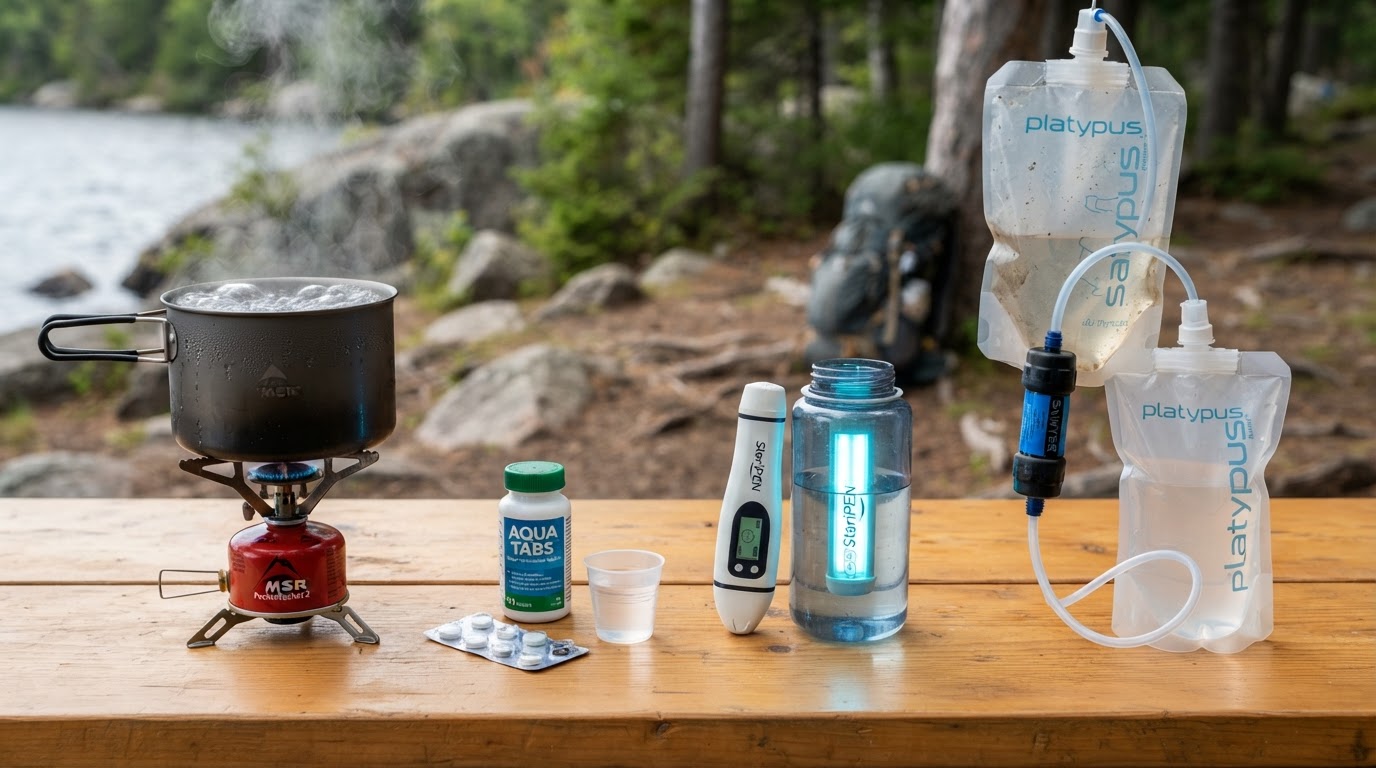
Boiling is the most reliable way to make water safer from biological contaminants. Bring water to a rolling boil for one minute. At altitudes above 6,500 feet, boil for three minutes. Boiling kills bacteria, viruses, and protozoa.
Boiling does not remove chemical contaminants, heavy metals, or sediment. If water is cloudy, let it settle and filter it through a clean cloth or coffee filter before boiling. Boiling uses fuel, so plan accordingly for longer outages.
Chemical Treatment
Chemical tablets or drops using chlorine dioxide or iodine treat water when boiling is not possible. Follow the manufacturer's instructions for dosage and contact time, which may be 30 minutes or longer. Chemical treatment is lightweight and compact.
Chemical treatment has limitations. It may not remove all parasites in cold or cloudy water. Iodine is not recommended for pregnant people or those with thyroid conditions. Some tablets leave a taste. Read the label and follow it exactly.
Filtration and UV Light
Filters reduce specific contaminants depending on their rating. Check documentation for what the filter removes. UV light pens kill biological contaminants when water is clear, but they do not remove chemical contaminants or sediment, and they require batteries.
Each method has tradeoffs. Combining methods, such as filtering and then boiling, can address multiple concerns. But no combination makes chemically contaminated water safe to drink at home.
Purification Method Comparison
| Method | Removes | Does not remove | Notes |
|---|---|---|---|
| Boiling | Bacteria, viruses, protozoa | Chemicals, heavy metals, sediment | Most reliable; uses fuel |
| Chlorine tablets | Bacteria, viruses | Some protozoa, chemicals | Follow instructions; taste impact |
| Iodine tablets | Bacteria, viruses | Some protozoa, chemicals | Not for pregnant or thyroid conditions |
| Filtration | Depends on rating | Varies; check documentation | Read the label; no filter removes all |
| UV light | Bacteria, viruses, protozoa | Chemicals, sediment | Requires clear water and batteries |
Frequently Asked Questions
Does boiling remove chemical contaminants from water?
No. Boiling kills biological contaminants but does not remove chemicals, heavy metals, or sediment. If water is chemically contaminated, follow official guidance and do not treat it at home.
How long should I boil water to make it safe?
Bring water to a rolling boil for one minute. At altitudes above 6,500 feet, boil for three minutes. Let it cool before drinking.
Are chemical tablets as good as boiling?
They work in specific cases but have more limitations. They may not remove all parasites in cold or cloudy water and may not be suitable for everyone. Boiling is more reliable when fuel is available.
Can I use a filter instead of purifying water?
A filter reduces specific contaminants depending on its rating. Check the documentation for what it removes. A filter supplements stored water but does not make every source safe, and does not replace boiling for biological concerns.