
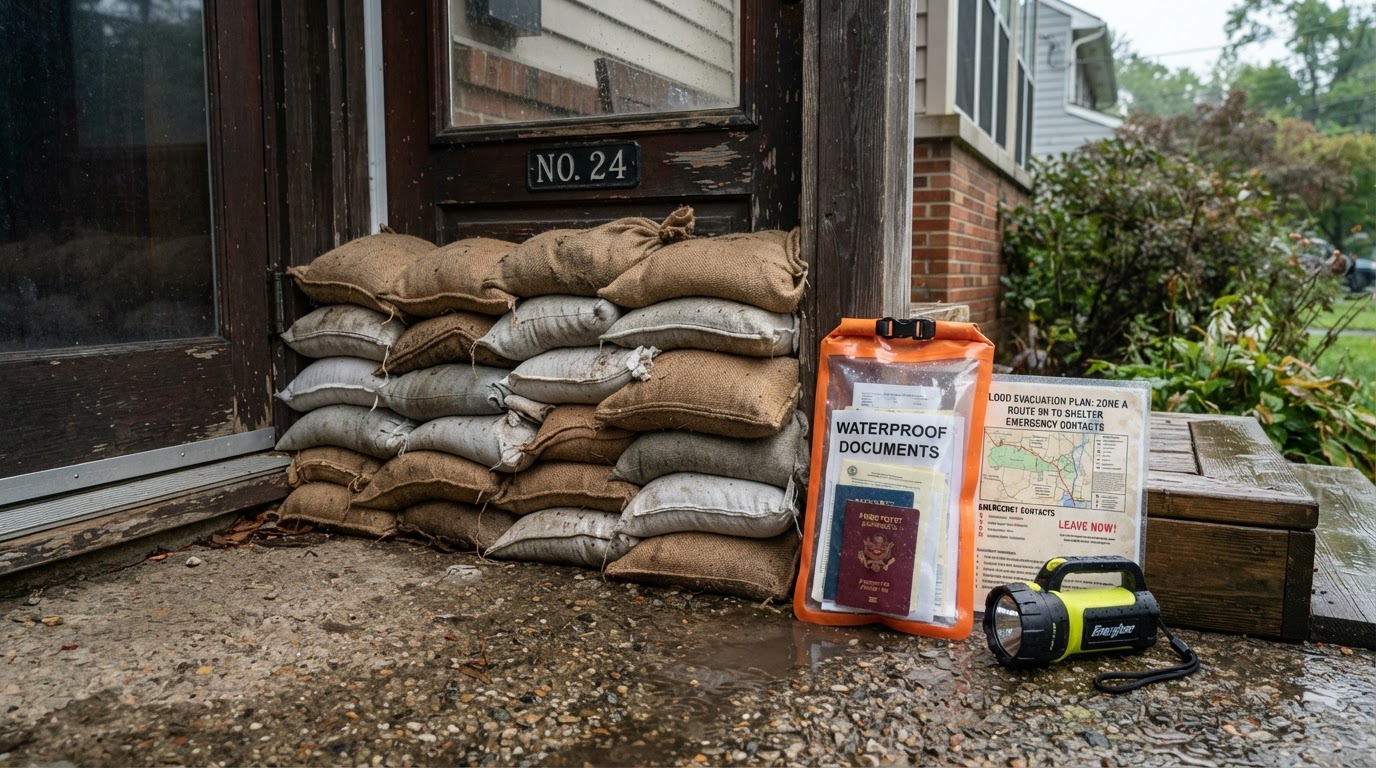
Flood Preparedness
Flood Preparedness: Assess Your Risk and Protect Your Household
Flooding is the most common natural disaster in the United States. This guide covers how to assess your flood risk, prepare your home, respond during a flood, and recover safely. It applies to households in flood zones and to those who may flood unexpectedly during severe weather.
Quick Answer
Flood preparedness is the work of assessing your flood risk, protecting your home and documents, planning your evacuation, and knowing how to recover safely. It includes checking FEMA flood maps, moving valuables to higher ground, keeping a go-bag ready, and never driving through flooded roads. Flood insurance is usually separate from homeowners insurance, so review your coverage before flood season.
Key Takeaways
- •Check FEMA flood maps to know your risk before a flood happens.
- •Move valuables and documents to higher levels before water rises.
- •Never drive or walk through flooded roads; turn around.
- •Flood insurance is usually separate; review your policy early.
Assess Your Flood Risk
Start by checking FEMA flood maps for your address. Even if you are not in a high-risk zone, flooding can happen from heavy rain, overwhelmed drainage, or snowmelt. Know whether your home is in a floodplain, near a river or coast, or downhill from drainage that could overflow.
Understand that flood risk changes with development and climate. Areas that never flooded before may now. Sign up for local emergency alerts so you hear about flood warnings early.
Protect Your Home and Documents
Do these before flood season.
- •Move valuables, electronics, and documents to higher floors.
- •Keep important documents in a waterproof container.
- •Elevate appliances like water heaters and electrical panels if possible.
- •Install or check sump pumps and keep a backup power source.
- •Clear gutters and drainage to direct water away from your foundation.
- •Review flood insurance, which is separate from standard homeowners policies.
During a Flood Warning
If a flood warning is issued, move to higher ground immediately. Do not wait. Fill your gas tank, grab your go-bag, and follow official evacuation routes. If you have time and it is safe, move valuables and disconnect utilities as local guidance directs.
Never drive or walk through flooded roads. Six inches of moving water can knock an adult down, and two feet can sweep a vehicle away. Turn around, do not drown. Floodwater is also contaminated and can carry debris, chemicals, and electrical hazards.
Recovering After a Flood
Do not return home until officials say it is safe. Floodwater may have receded but left structural damage, contaminated mud, and electrical hazards. Photograph all damage for insurance before cleanup begins. Wear protective gear during cleanup.
Follow official guidance on water safety; floodwater contaminates drinking water supplies. Do not use floodwater for drinking or cleaning. Discard food that contacted floodwater. File insurance claims promptly, because flood recovery is a long process.
Flood Preparedness by Phase
| Phase | Key actions |
|---|---|
| Before flood season | Check flood maps, review insurance, move valuables up |
| Flood watch | Prepare to evacuate, fill gas tank, grab go-bag |
| Flood warning | Move to higher ground, do not drive through water |
| After flooding | Wait for all-clear, document damage, avoid contamination |
| Recovery | File insurance claims, wear protective gear, follow water advisories |
Frequently Asked Questions
Do I need flood insurance if I am not in a flood zone?
Flooding can happen outside mapped flood zones, especially during heavy rain or overwhelmed drainage. Flood insurance is separate from standard homeowners policies. Review your risk and consider coverage even if you are not in a high-risk area.
Is it safe to drive through flooded roads?
No. Six inches of moving water can knock you down, and two feet can sweep a vehicle away. Turn around, do not drown. Floodwater also hides debris, contaminants, and downed power lines.
How do I protect documents from a flood?
Keep copies of important documents in a waterproof container on a higher floor. Store digital copies in secure cloud storage. If a flood is approaching, move documents and valuables to the highest level in your home.
When is it safe to return home after a flood?
Wait for local officials to say it is safe. Floodwater may have caused structural damage, contaminated surfaces, and created electrical hazards. Document damage with photos before cleanup and wear protective gear.