
Research-based buying guide
Portable Power Stations: A Buyer's Guide to Capacity and Output
Match watt-hours to what you actually need to run, and understand the gap between rated and usable energy.
Portable power stations are measured in watt-hours (Wh), but rated capacity is not the same as usable AC energy. Conversion losses, inverter overhead, and battery management mean you get less out than the label suggests. This guide explains how to estimate capacity for your devices, the difference between surge and continuous output, and what to check before buying. This is research-based, not a hands-on test.
A power station is silent and indoor-safe, unlike a fuel generator, which makes it useful for apartments and homes without safe outdoor space. But it holds limited energy compared to fuel, so size it around the devices you genuinely need to keep running and the runtime you want. Overbuying a large station for a short outage wastes money; undersizing for a fridge can leave you in the dark.
If anyone in your household uses medical equipment, verify the device's exact power needs with the manufacturer before buying any station. Do not assume compatibility from the wattage alone, and plan for any humidifier or heater load on a CPAP, which changes the draw substantially.
Start with Your Situation
Phones and lighting
A small station or even a power bank may be enough.
A fridge for a few hours
A mid-size station with a surge rating for motor starts.
Extended outages
A large station or a fuel generator with CO safety planning.
Medical equipment
Verify the device's exact power needs with the manufacturer before buying.
Useful for this guide
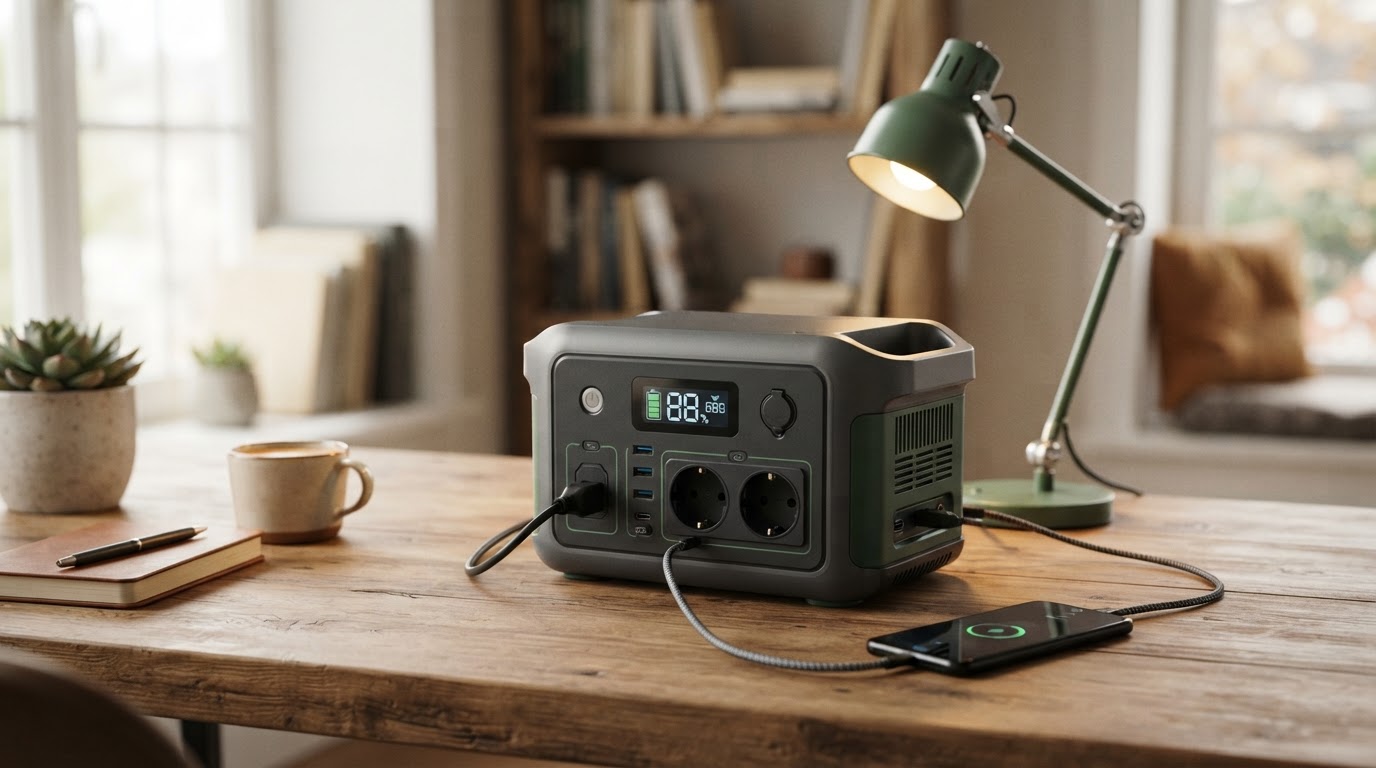
Portable Power Station
Match watt-hours to your devices and check the continuous watt rating for any appliance. Rated capacity is not the same as usable AC energy.
Best for: Phones, lights, and small appliances
Compare Your Options
These are product categories, not specific tested models. We do not invent prices, ratings, or stock.
| Type | Best for | Evidence | Key notes |
|---|---|---|---|
| Compact ~250–300 Wh station | Charging phones, lights, and small devices for short outages. | Research-based | Limited runtime for appliances. Verify continuous watts for any motor. Not for extended outages |
| Mid-size ~500–700 Wh station | Running a fridge for a few hours or multiple devices at once. | Research-based | Heavier. Check surge rating for your fridge. Recharge time is longer |
| Large ~1000+ Wh station | Extended outages or several devices over a longer period. | Research-based | Heavy and costly. Confirm inverter type and recharge time. May be more than a short outage needs |
Scroll the table horizontally on narrow screens to read every column.
What to Look For
Watt-hours versus watts
Watt-hours measure stored energy; watts measure output. A 500 Wh station running a 100 W device lasts roughly 5 hours before conversion losses, not exactly 5 hours. The bigger the station, the longer the runtime, but also the heavier and costlier.
Continuous and surge output
Continuous output is sustained power; surge is short-term motor-start power. Devices with motors, like fridge compressors, need a surge rating well above their running watts, often two to three times higher. Check both ratings against any appliance you plan to run.
Estimated runtime and conversion losses
Inverter and conversion losses mean usable AC energy is less than the rated watt-hours, often by 15 to 20 percent or more. Treat runtime figures as estimates and state your assumptions. A manufacturer's runtime claim is usually calculated under ideal conditions.
AC versus DC charging and output
AC output runs household devices but loses energy in conversion. DC and USB ports are more efficient for phones and small electronics. Use the most efficient output for each device to stretch runtime.
Battery chemistry and cycle claims
Lithium iron phosphate (LiFePO4) typically lasts more cycles than standard lithium-ion and is more stable. Compare documented cycle claims from the manufacturer, not marketing. More cycles mean a longer service life if you recharge regularly.
Solar input limits
Solar recharge is limited by the station's input rating and real-world sun. A panel bigger than the input limit wastes capacity and may not charge faster. Check the station's solar input watts and voltage before buying a panel.
Useful for this guide
Portable Power Station
Match watt-hours to your devices and check the continuous watt rating for any appliance. Rated capacity is not the same as usable AC energy.
Best for: Phones, lights, and small appliances
Products Worth Comparing
Compact ~250–300 Wh station
Charging phones, lights, and small devices for short outages.
Advantages
- Lightweight and portable
- Affordable entry
- Quiet, indoor-safe operation
Limitations
- Limited runtime for appliances
- Verify continuous watts for any motor
- Not for extended outages
Accessories: AC and USB cables; a small solar panel if the station supports solar input.
Mid-size ~500–700 Wh station
Running a fridge for a few hours or multiple devices at once.
Advantages
- Surge rating for motor starts
- More ports
- Better runtime for small appliances
Limitations
- Heavier
- Check surge rating for your fridge
- Recharge time is longer
Accessories: Solar panel matched to the input rating; a wall charger for fast recharge.
Large ~1000+ Wh station
Extended outages or several devices over a longer period.
Advantages
- Longest runtime
- Highest output
- Often supports solar expansion
Limitations
- Heavy and costly
- Confirm inverter type and recharge time
- May be more than a short outage needs
Accessories: Compatible solar panels and a transfer switch if connecting to home circuits (professionally installed).
Common Buying Mistakes
- !Equating rated watt-hours with usable AC energy. Conversion losses are real.
- !Ignoring the surge rating for motor-driven appliances like refrigerators.
- !Buying a large station when a power bank covers your actual needs.
- !Assuming a station is compatible with a medical device without verifying the device's power requirements.
Care and Readiness
- Store the station at roughly 50% charge for long idle periods, per the maker's guidance.
- Recharge every few months even when unused to protect battery health.
- Keep firmware updated if the manufacturer provides updates.
- Run the station occasionally to confirm it works and to check output.
Common Questions
How long will a station run my fridge?
It depends on the fridge's running and surge watts and the station's capacity. Treat any figure as an estimate and check the surge rating against your fridge's start-up draw, which is much higher than its running watts.
Can I use a station for a CPAP or medical device?
Only after verifying the device's exact power needs with the manufacturer. Do not assume compatibility without checking continuous watts and any humidifier or heater load, which changes the draw.
Is a station better than a generator?
Stations are quiet and indoor-safe but hold limited energy. Generators offer more runtime per dollar but require fuel, ventilation, and carbon monoxide safety planning. Choose based on your space and outage length.
Build Your Household Plan
Add this category to your plan, then work through the essentials at a pace that fits your household.
Explore the 10 EssentialsMore gear guides
Water Filters and Purifiers: What to Buy for Your Situation
Research-based comparison of filter and purifier types, what each removes, and where it falls short.
Choosing an Emergency Weather Radio
NOAA reception, SAME county alerting, and power sources compared so you know what you are actually buying.
Emergency Lighting: Lanterns, Headlamps, and Flashlights Compared
Match the light to the job, and prioritize usable runtime over peak brightness.
Portable Solar Panels: Realistic Expectations and Tradeoffs
Solar is a complement, not a free lunch. Match panel watts to what you actually charge.
Sources and Method
This guide compares manufacturer specifications, published documentation, and relevant official guidance. Products are not described as hands-on tested unless testing is documented. This is research-based comparison, not a substitute for manufacturer instructions or professional advice.
Some links on this page are affiliate links. We may earn a commission if you buy through them, at no extra cost to you.