
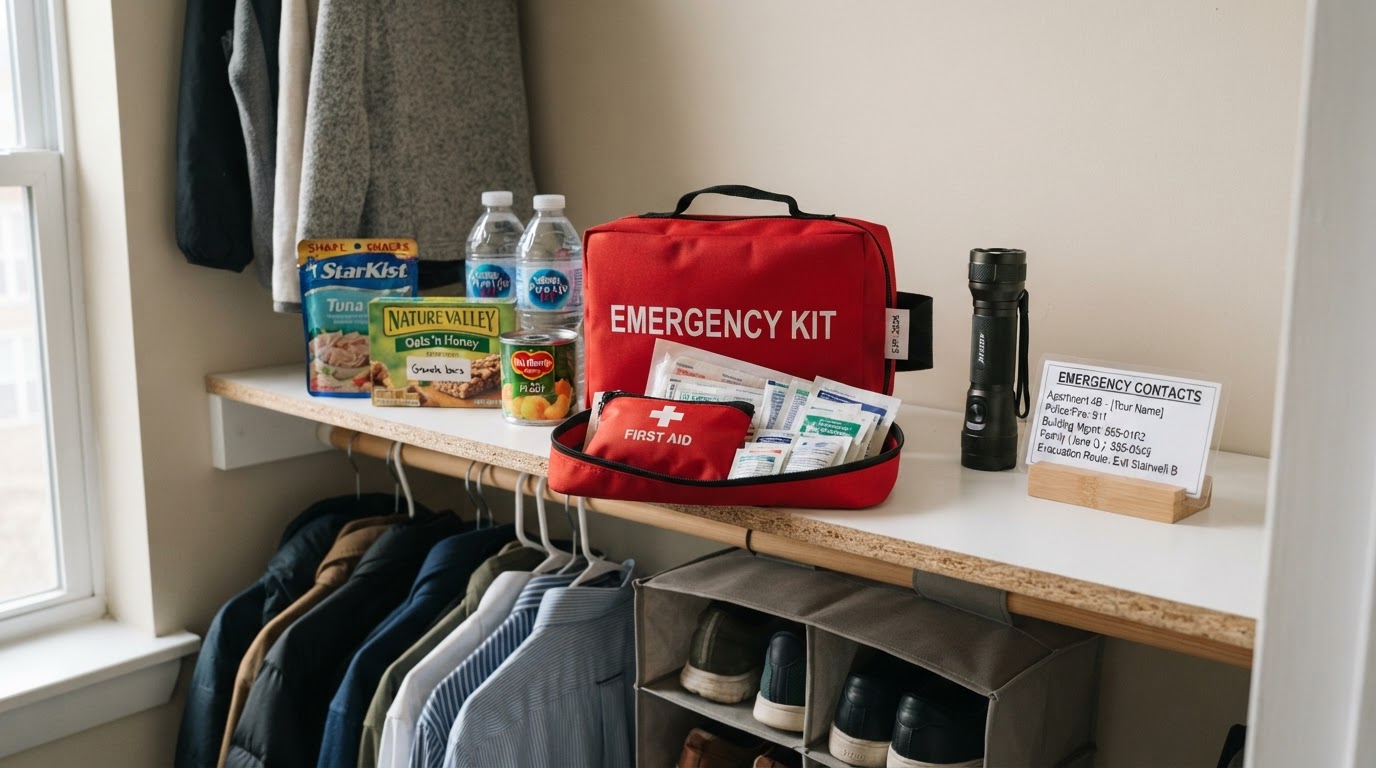
Apartment Emergency Preparedness
Apartment Emergency Preparedness: Readiness for Renters
Apartment living changes the preparedness equation. You have less space, less control over the building, and a lease to respect. This guide covers compact supplies, portable kits, and a plan that fits apartment life.
Quick Answer
Apartment emergency preparedness is readiness tailored to renters and small spaces. It focuses on compact, portable supplies, a clear evacuation plan, building-specific hazards, and storage that fits a small home. The goal is the same as any household: a plan, water, food, light, first aid, and a way to receive alerts.
Key Takeaways
- •Compact, portable supplies work better in apartments than bulky kits.
- •Know your building's evacuation routes and shelter areas.
- •Respect lease restrictions and coordinate with building management.
- •A go-bag is especially important for renters who may need to leave fast.
Why Apartment Preparedness Is Different
Apartments limit your space and your control. You cannot modify the building, you may not have outdoor space for a generator, and you share walls, plumbing, and exits with neighbors. Your plan has to account for all of that.
The good news is that apartment dwellers often need less: smaller water supplies, compact kits, and a strong evacuation plan. Portability matters more than volume.
Compact Supplies for Small Spaces
Choose items that store easily and serve multiple uses.
- •Stackable water containers that fit under a bed or in a closet.
- •Shelf-stable food in compact packaging.
- •A headlamp that doubles as a hands-free light.
- •A portable power bank for phones and small devices.
- •A compact first aid kit and a small sanitation kit.
Building Evacuation and Shelter
Know your building's evacuation routes, fire exits, and stairwells. Identify the safest interior room for sheltering during severe weather, away from windows. If you live above the ground floor, plan for the possibility that elevators will be out.
Coordinate with building management about emergency procedures, alarms, and any designated shelter areas. Do not assume; confirm.
Lease Restrictions and Neighbor Coordination
Respect your lease. Most leases restrict generators, fuel storage, and structural modifications. A portable power station is a safer, lease-friendly alternative to a gas generator. Coordinate with neighbors, especially if you may need help during an evacuation or if you can offer help to others.
A connected apartment community is more resilient than isolated households. A simple introduction today can become mutual support during a disruption.
Apartment Preparedness Kit Contents
| Item | Compact choice | Storage spot |
|---|---|---|
| Water | Stackable 3-5 gal containers | Under bed or closet |
| Food | Compact shelf-stable meals | Pantry or high shelf |
| Light | Headlamp + small lantern | Bedside drawer |
| Power | Power bank (10,000-20,000 mAh) | Go-bag |
| First aid | Compact kit | Bathroom cabinet |
| Documents | Waterproof folder | Go-bag |
Frequently Asked Questions
Can I store a generator in an apartment?
No. Gas generators produce carbon monoxide and are unsafe indoors, and most leases prohibit them. Use a portable power station instead.
How much water can I realistically store in an apartment?
Start with a few stackable 3 to 5 gallon containers under a bed or in a closet. Even three days per person is achievable in a small space.
What if I live on an upper floor?
Plan for elevators being out. Keep a go-bag you can carry down stairs, and identify the safest interior room for sheltering.
Should I coordinate with neighbors for emergencies?
Yes. A connected building is more resilient. Introduce yourself and discuss evacuation and mutual help, especially with neighbors who may need assistance.