
Survival Essentials
Survival Essentials: The Core Items Every Household Needs
Survival essentials are the handful of items and skills that matter most when services are interrupted. This guide covers them in priority order so you spend on what counts and skip what does not.
Quick Answer
Survival essentials are the core items a household needs to stay safe and reasonably comfortable during a disruption: water, food, light, first aid, a way to receive information, warmth, sanitation, and a plan. They are prioritized by how quickly a lack of each one becomes dangerous, with water always first.
Key Takeaways
- •Water is the single most important survival essential.
- •A plan and the skills to use your supplies matter as much as the items.
- •Warmth and sanitation are often overlooked but become urgent fast.
- •You can assemble the essentials gradually and affordably.
The Rule of Threes and Why Water Comes First
A common preparedness guideline is the rule of threes: you can survive about three minutes without air, three hours without shelter in extreme conditions, three days without water, and three weeks without food. The order tells you what to prepare first.
Water tops the list because dehydration sets in quickly and affects judgment, strength, and health. Store one gallon per person per day, and learn at least one backup treatment method for when stored water runs low.
The Core Survival Essentials in Order
Build your supplies in this priority order.
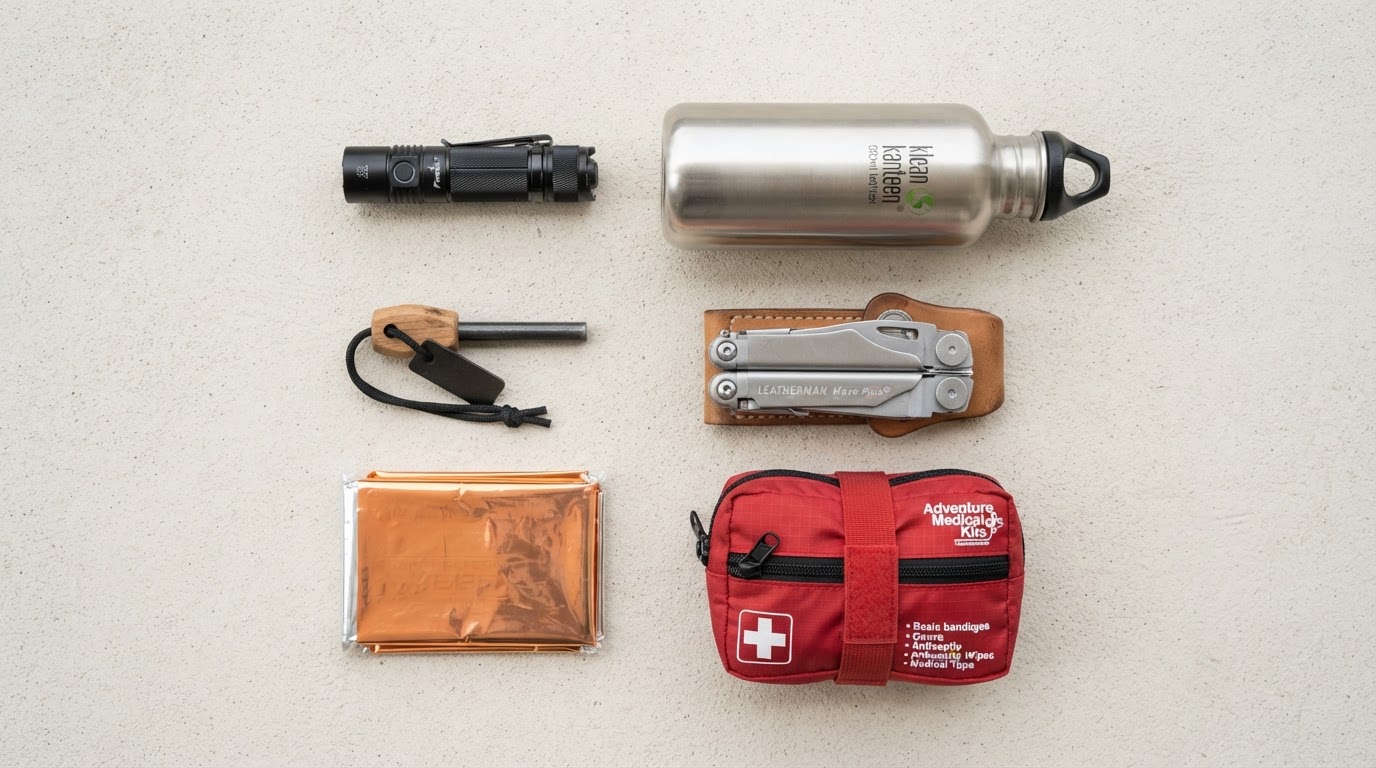
- •Water: stored supply plus a filter or purification method.
- •Food: shelf-stable items that need little or no cooking.
- •Shelter and warmth: bedding, appropriate clothing, and a way to stay warm without power.
- •Light: flashlights or headlamps with spare batteries.
- •First aid: a kit and the knowledge to use it.
- •Information: a weather radio and local alerts.
- •Sanitation: waste bags, hygiene supplies, and a portable toilet option.
Skills Are Survival Essentials Too
Items are only useful if you know how to use them. A first aid kit helps no one if you have never opened it. A generator is dangerous if you do not understand carbon monoxide risks. Treat skills as essentials alongside the gear.
Prioritize a few practical skills: basic first aid, shutting off utilities, using a fire extinguisher, and purifying water. Each one takes an evening to learn and pays off for years.
What Is Not a Survival Essential
Much of what is marketed as survival gear is not essential. Tactical gear, exotic tools, and large caches of weapons do not address the disruptions most households actually face. They add cost and complexity without improving readiness.
Focus on the basics that cover the widest range of scenarios. A reliable flashlight, a few days of water, and a written plan will serve you in far more situations than specialized equipment.
Survival Essentials Priority and Timing
| Essential | How long without it becomes urgent |
|---|---|
| Water | 1-3 days |
| Shelter and warmth | Hours in extreme weather |
| First aid | Immediate for injuries |
| Food | 1-2 weeks |
| Light | First night without power |
| Information | First hours of an event |
| Sanitation | 1-2 days |
Frequently Asked Questions
What is the most important survival essential?
Water. You can go longer without food, but dehydration becomes dangerous within a day or two.
Do I need tactical gear to be prepared?
No. Practical household supplies cover the disruptions most people face. Tactical gear is rarely essential.
How many days of supplies count as essentials?
Start with three days. Then build toward two weeks as space and budget allow for longer disruptions.
Are skills really as important as supplies?
Yes. Supplies you cannot use safely are a liability. Learn first aid, utility shutoff, and water treatment alongside your kit.