
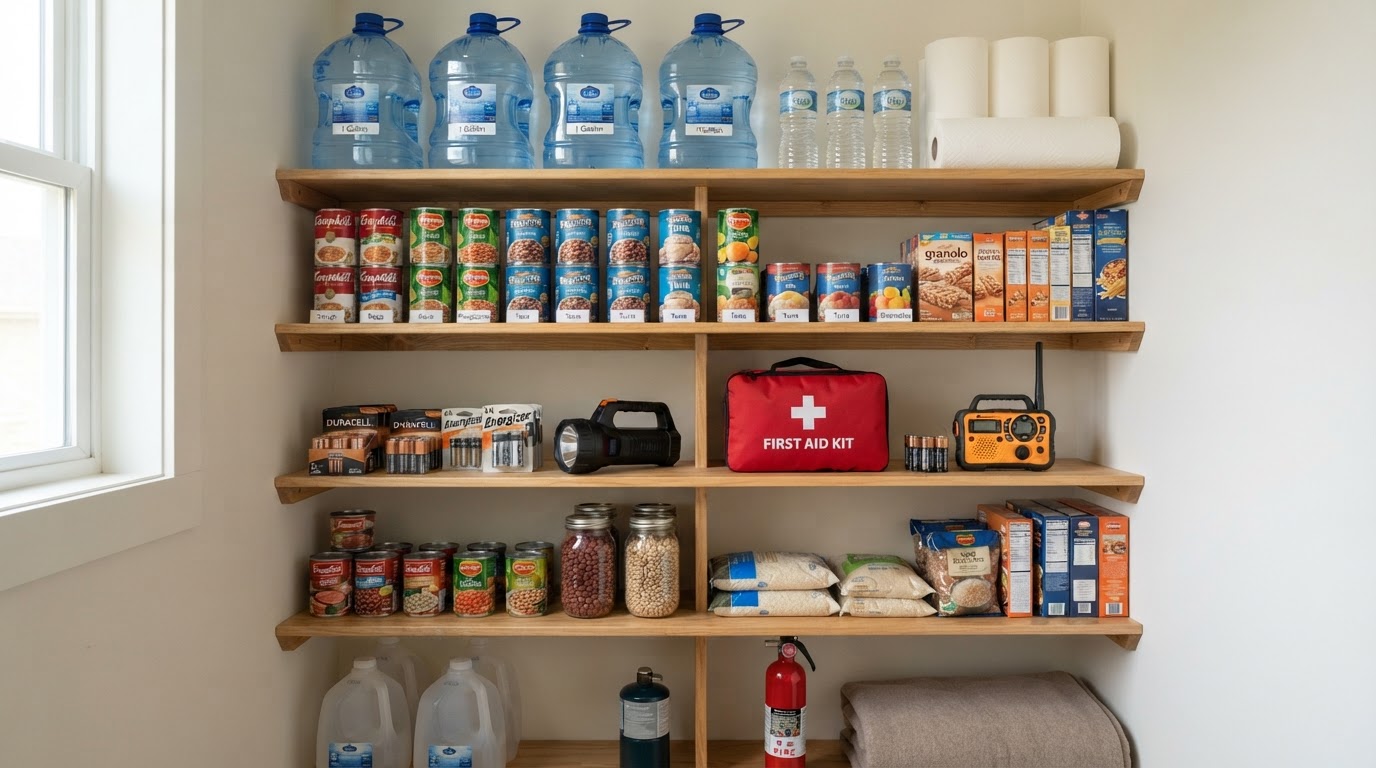
Emergency Supplies
Emergency Supplies: What to Buy and in What Order
Emergency supplies keep your household safe and comfortable during a disruption. This guide explains what to buy, in what order, and how to avoid overspending on gear that is not yet useful.
Quick Answer
Emergency supplies are the items your household needs to handle a disruption for at least three days. The priority order is water, food, light, first aid, a way to receive information, sanitation supplies, and backup power. Buy in that order, use what you already own, and build gradually rather than all at once.
Key Takeaways
- •Buy emergency supplies in priority order, not all at once.
- •Water and food come before any specialized gear.
- •Use what you already own before buying duplicates.
- •Rotate supplies so nothing expires unused.
The Priority Order for Emergency Supplies
Not all supplies are equally urgent. Water becomes critical within a day or two. Food matters within days. Light matters the first night. Buy in the order that matches how quickly a lack of each item becomes dangerous.
This priority order also matches your budget. You can cover the most urgent needs inexpensively, then add depth as money and space allow.
What You May Already Own
Check your home before shopping. You likely have some of these already.
- •Flashlights, headlamps, or lanterns in a drawer or garage.
- •Extra batteries of the sizes your devices use.
- •A basic first aid kit in the bathroom or car.
- •Canned goods, pasta, rice, and other shelf-stable food.
- •Reusable water bottles and food-grade containers.
- •A manual can opener and basic tools.
Building Beyond the Basics
Once the core three-day supplies are in place, add depth for longer disruptions. A portable power station keeps phones and medical devices running. A weather radio delivers alerts when cell service is down. A portable stove lets you heat food when the power is out, used safely outdoors only.
Add these as your budget allows. There is no need to buy everything in one month. A steady pace keeps preparedness affordable and sustainable.
Storing and Rotating Supplies
Supplies only help if they are fresh and accessible. Store water in a cool, dark place away from chemicals. Rotate food into your regular meals so nothing expires. Check batteries and replace them on a schedule.
Keep a written inventory of what you have and when it expires. A twice-yearly review keeps your supplies ready rather than forgotten.
Emergency Supplies Buying Order
| Priority | Supply | Why it comes first |
|---|---|---|
| 1 | Water (1 gal/person/day) | Dehydration is dangerous within 1-3 days. |
| 2 | Shelf-stable food | Energy and comfort during a disruption. |
| 3 | Light (flashlight/headlamp) | Needed the first night without power. |
| 4 | First aid kit | Immediate need for any injury. |
| 5 | Weather radio and alerts | Information in the first hours of an event. |
| 6 | Sanitation supplies | Urgent within 1-2 days. |
| 7 | Backup power (power bank/station) | Keeps devices running over days. |
Frequently Asked Questions
How much should I spend on emergency supplies to start?
Cover water, food, light, and a first aid kit first, often under $100. Add depth over time as budget allows.
Should I buy a prebuilt emergency kit?
A prebuilt kit can be a convenient start, but review and customize it for your household. Most need additions for medications, pets, and personal needs.
How do I keep emergency supplies from expiring?
Rotate food and water into regular use, check batteries every six months, and keep a written inventory with expiration dates.
Where should I store emergency supplies?
Store them in a cool, dry, accessible place. Keep some supplies in a go-bag near an exit in case you need to leave quickly.