
Prepping for Beginners
Prepping for Beginners: Priorities, Basics, and Common Mistakes
Prepping for beginners is about building confidence, not fear. This guide explains the core concepts, the first priorities, and the mistakes that trip up new preppers so you can start with a clear path.
Quick Answer
Prepping for beginners means starting with the basics: a household plan, a few days of water and food, reliable light, a first aid kit, and a way to receive alerts. The goal is to handle realistic disruptions well, not to prepare for extreme scenarios. Begin small, use what you own, and build gradually.
Key Takeaways
- •A plan and a contact list come before any gear.
- •Three days of water and food is a strong first milestone.
- •Learn one new skill at a time rather than buying everything at once.
- •Avoid fear-driven purchases and survivalist stereotypes.
The Core Concepts of Prepping
Prepping rests on a few simple ideas. First, disruptions happen, from a short power outage to a multi-day storm. Second, a little preparation greatly reduces the stress they cause. Third, the best plan is one your household can actually carry out.
You do not need to predict the future. You need to be able to stay safe, informed, and reasonably comfortable when normal services are interrupted for a few days. That is a realistic, achievable goal for almost any household.
Your First Priorities as a New Prepper
Work through these in order before buying specialized gear.
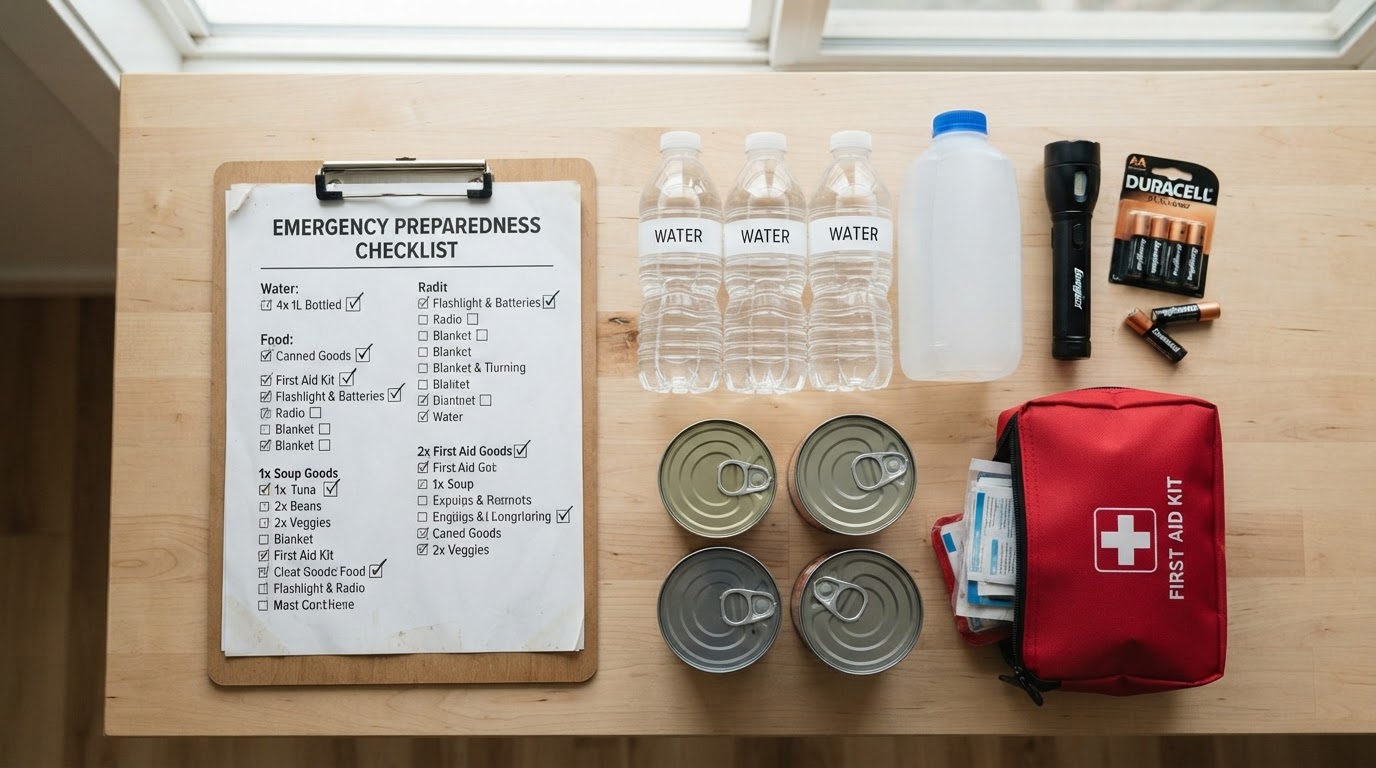
- •Write a household plan: contacts, a meeting point, and an out-of-area check-in person.
- •Store water: one gallon per person per day for at least three days.
- •Set aside food your household already eats, shelf-stable and easy to prepare.
- •Add light: a flashlight or headlamp with spare batteries.
- •Build a basic first aid kit and learn how to use it.
Beginner Mistakes to Avoid
Many new preppers buy a large kit of unfamiliar gear and never learn to use it. Others prepare only for staying home and forget an evacuation plan. Some focus on rare disasters and ignore the common power outage that is far more likely.
The most common mistake is letting fear drive the spending. Preparedness works best when it is calm, gradual, and tailored to your real life. Buy one thing, learn to use it, then move on.
How Prepping Fits a Normal Life
Prepping does not require a bunker or a second home. It looks like a pantry with a little extra, a flashlight in the bedroom drawer, a written contact list on the fridge, and a family that knows where to meet. These are ordinary habits with an extraordinary payoff when something goes wrong.
As you get comfortable with the basics, you can add depth: a longer food supply, a portable power station, a weather radio, and skills like first aid and utility shutoff. Depth comes with time, not with a single shopping spree.
Beginner Prepping Milestones
| Milestone | What it looks like |
|---|---|
| Week 1 | Written contact list and a household meeting point. |
| Week 2 | Three days of water stored for everyone, including pets. |
| Week 3 | Three days of shelf-stable food and a manual can opener. |
| Week 4 | Flashlight, first aid kit, and local emergency alerts set up. |
| Month 2 | A go-bag for each person and an evacuation route planned. |
| Month 3 | A weather radio and a first family drill. |
Frequently Asked Questions
Do I need to be a survivalist to start prepping?
No. Prepping is practical household readiness. It does not require wilderness skills or extreme scenarios, just a plan and a few days of supplies.
How much money do I need to start prepping?
You can make meaningful progress for under $50 by using what you own and adding water, a flashlight, a first aid kit, and a written plan.
What should a beginner buy first?
Water, then food, then light, then a first aid kit. A plan and a contact list cost nothing and should come before any purchase.
How do I keep prepping from feeling overwhelming?
Work in small steps over time. Set one milestone per week and celebrate progress. Preparedness is a habit, not a deadline.