Emergency Cooking Supplies
Emergency Cooking Supplies: Outdoor Stoves, Fuel, and Safe Use
Emergency cooking supplies let you prepare hot food and boil water when the power is out. This guide covers outdoor stoves, fuel storage, basic cookware, and the safety rules that keep your household out of danger.
Quick Answer
Emergency cooking supplies include an outdoor stove, compatible fuel stored safely, basic cookware, and a fire starter. The single most important rule is to never use fuel-burning stoves indoors, in a garage, or near open windows, because carbon monoxide can build up unseen. Plan for outdoor cooking only, and keep a safe spot ready before the power goes out.
Key Takeaways
- •Cook outdoors only; never use fuel-burning stoves indoors or in a garage.
- •Match fuel type to your stove and store it safely away from heat.
- •Keep basic cookware, a manual can opener, and fire starter with your supplies.
- •Practice setting up and using your stove before you need it.
Why Cooking Supplies Matter in an Outage
When the power is out, your electric stove and microwave stop working. An outdoor stove lets you cook hot meals, boil water, and heat food, which can lift morale and extend your food options beyond cold shelf-stable items. But cooking with fuel carries real risks, so the safety rules matter as much as the equipment.
Planning means having a safe outdoor cooking spot identified before the outage, the right fuel stored properly, and the basic tools to prepare a meal.
Choosing an Outdoor Stove
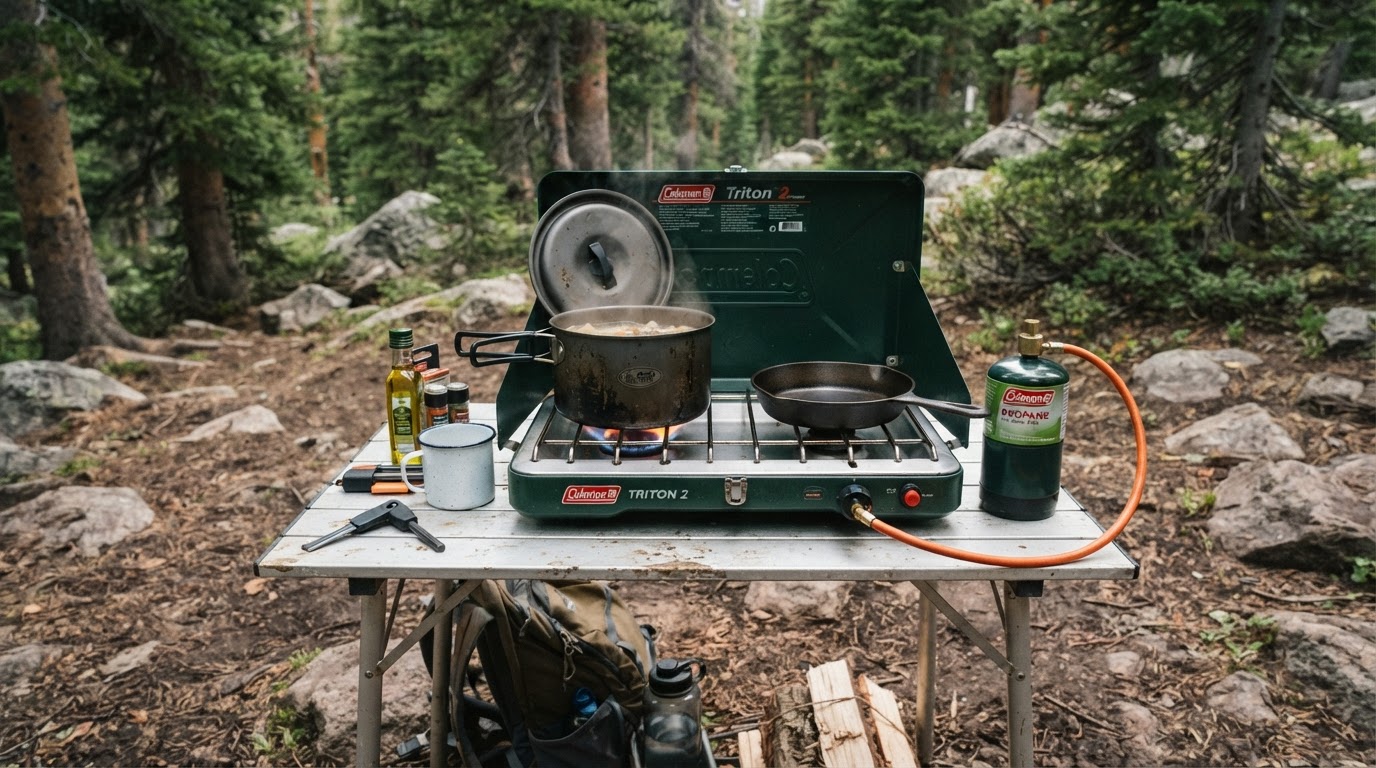
- •Canister stoves: simple, self-sealing, good for short use and small pots.
- •Liquid fuel stoves: versatile, refillable, good for longer use and cold weather.
- •Propane stoves: stable, higher output, good for larger pots and families.
- •Wood or solid fuel stoves: no liquid fuel to store, but depend on fuel availability.
Fuel Storage and Safety
Store fuel in its original container, away from heat sources and living spaces. Follow the manufacturer's storage guidance and any local rules for fuel storage. Keep fuel in a well-ventilated area, not in a closed cabinet or near a water heater.
Never use a fuel-burning stove, grill, or camp stove indoors, in a garage, or near open windows or doors. Carbon monoxide is invisible, odorless, and deadly. The CDC and fire services warn against indoor use of outdoor cooking equipment. Plan for outdoor cooking only.
Basic Cookware and Accessories
Keep a pot or two that fit your stove, a frying pan, a manual can opener, and utensils with your emergency cooking supplies. A kettle or pot for boiling water doubles for purification if needed. Store matches or a lighter in a waterproof container.
Include a few basic pantry items that need little cooking, like instant oats, soup, or rice, so you can make a real meal without a full kitchen. A windscreen can help in breezy conditions, but use it only as the manufacturer allows.
Emergency Cooking Kit Checklist
| Item | Purpose | Safety note |
|---|---|---|
| Outdoor stove | Cooking and boiling water | Use outdoors only; never indoors |
| Compatible fuel | Powering the stove | Store away from heat; follow guidance |
| Pot and pan | Cooking meals | Check sizes fit your stove |
| Manual can opener | Opening canned food | Electric openers do not work |
| Matches or lighter | Starting the stove | Keep in a waterproof container |
| Windscreen | Efficiency in wind | Use only as manufacturer allows |
Frequently Asked Questions
Can I use a camping stove indoors during a power outage?
No. Never use a fuel-burning stove, grill, or camp stove indoors, in a garage, or near open windows. Carbon monoxide is invisible, odorless, and deadly. Plan for outdoor cooking only.
What fuel type is best for emergency cooking?
It depends on your needs. Canister stoves are simple and good for short use. Propane stoves are stable and good for families. Liquid fuel stoves are versatile and refillable. Match the fuel to your stove and store it safely.
How should I store cooking fuel?
Store fuel in its original container, away from heat sources and living spaces, in a well-ventilated area. Follow the manufacturer's guidance and any local rules. Never store it near a water heater or in a closed cabinet.
Do I need special cookware for an outdoor stove?
You need pots and pans that fit your stove's size and output. Check that your cookware sits stably on the stove. A kettle or pot for boiling water doubles for purification if needed.