
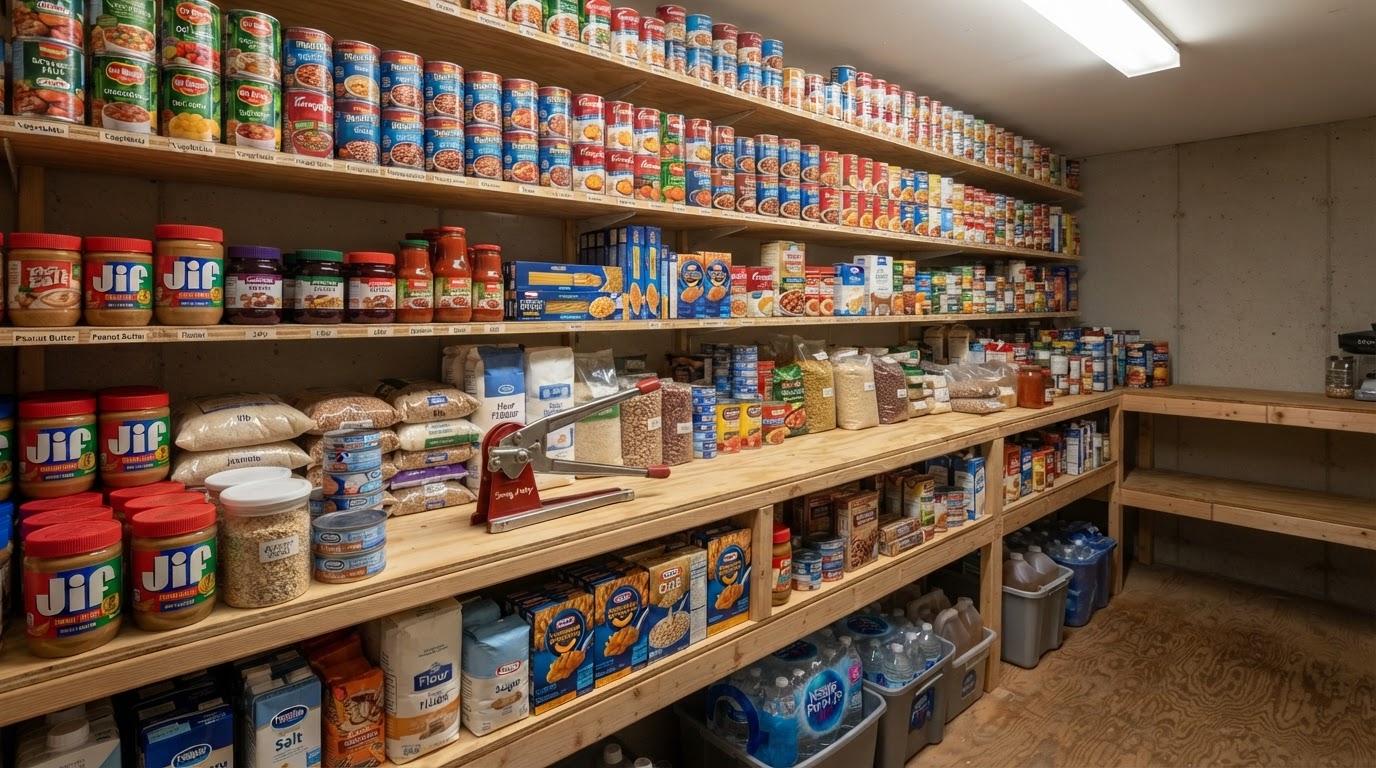
Emergency Food Supply
Emergency Food Supply: Building a Practical Household Reserve
An emergency food supply is the food you keep at home to sustain your household during a disruption. This guide covers how to build one from foods you already eat, how to store and rotate it, and how to expand it over time without waste.
Quick Answer
An emergency food supply is a reserve of shelf-stable food kept at home for disruptions. Build it from foods your household already eats, store enough for at least three days to start, and rotate supplies into regular meals so nothing expires. The best supply is one you will actually eat and maintain, not a bucket of unfamiliar food that sits until it expires.
Key Takeaways
- •Build your supply from foods your household already eats.
- •Start with three days, then expand to two weeks over time.
- •Rotate supplies into regular meals so nothing expires.
- •Include a manual can opener and foods that need little or no cooking.
Starting With What You Eat
The best emergency food supply is built from foods your household already eats. Familiar foods reduce stress during a disruption and are easy to rotate into regular meals. A bucket of freeze-dried food you have never tried may sit until it expires.
Start by listing the shelf-stable foods you eat weekly: pasta, rice, canned goods, peanut butter, oats. Buy a little extra each shopping trip. Within a few weeks, you have a meaningful supply without a large upfront cost.
How Much to Store
Start with three days of food for everyone in your household, including pets. That is the minimum recommended by emergency agencies. Once you have three days, expand toward two weeks, which covers most disruptions.
Calculate calories, not just servings. An adult needs roughly 2,000 calories per day, more in cold or active conditions. A family of four needs about 8,000 calories per day, or 24,000 for three days. Read labels and count.
What to Include
A practical supply includes:
- •Canned proteins: tuna, chicken, beans.
- •Grains: rice, pasta, oats, crackers.
- •Canned vegetables and fruits.
- •Peanut butter and nuts.
- •Shelf-stable milk or powdered milk.
- •Comfort foods and familiar snacks.
- •A manual can opener.
- •Foods that need little or no cooking.
Storing and Rotating Your Supply
Store food in a cool, dry, dark place. Heat and moisture shorten shelf life. Keep supplies off the floor and away from pests. Label everything with purchase dates.
Rotate supplies using the first-in, first-out method: use the oldest items first and replace them. This keeps your supply fresh and ensures you eat what you store. A supply you never rotate is a supply that may expire before you need it.
Three-Day Food Supply for a Family of Four
| Category | Example | Quantity |
|---|---|---|
| Protein | Canned beans, tuna | 12-16 cans |
| Grains | Rice, pasta, oats | 5-8 lb |
| Vegetables | Canned vegetables | 8-12 cans |
| Fruit | Canned fruit | 4-8 cans |
| Fats | Peanut butter, oil | 2-3 jars |
| Other | Crackers, snacks | As desired |
Frequently Asked Questions
How much emergency food should I store?
Start with three days for everyone in your household, then expand to two weeks. Count calories, not just servings: about 2,000 per adult per day. A family of four needs about 24,000 calories for three days.
What is the best emergency food?
Foods your household already eats. Familiar foods reduce stress and are easy to rotate. Canned proteins, grains, peanut butter, and canned vegetables form a practical base.
How long does emergency food last?
It depends on the food and storage conditions. Canned goods often last years. Check labels and rotate supplies into regular meals so nothing expires. Store in a cool, dry place.
Should I buy freeze-dried food buckets?
They are convenient for long storage, but try them before relying on them. Many households prefer building a supply from familiar foods. If you buy buckets, rotate and taste them.