
Bug Out Bag Checklist
Bug Out Bag Checklist: What to Pack and How to Manage Weight
A bug out bag is the portable kit you grab when you must leave home fast. This checklist covers what to pack, how to keep it light enough to carry, and how to customize it for your household.
Quick Answer
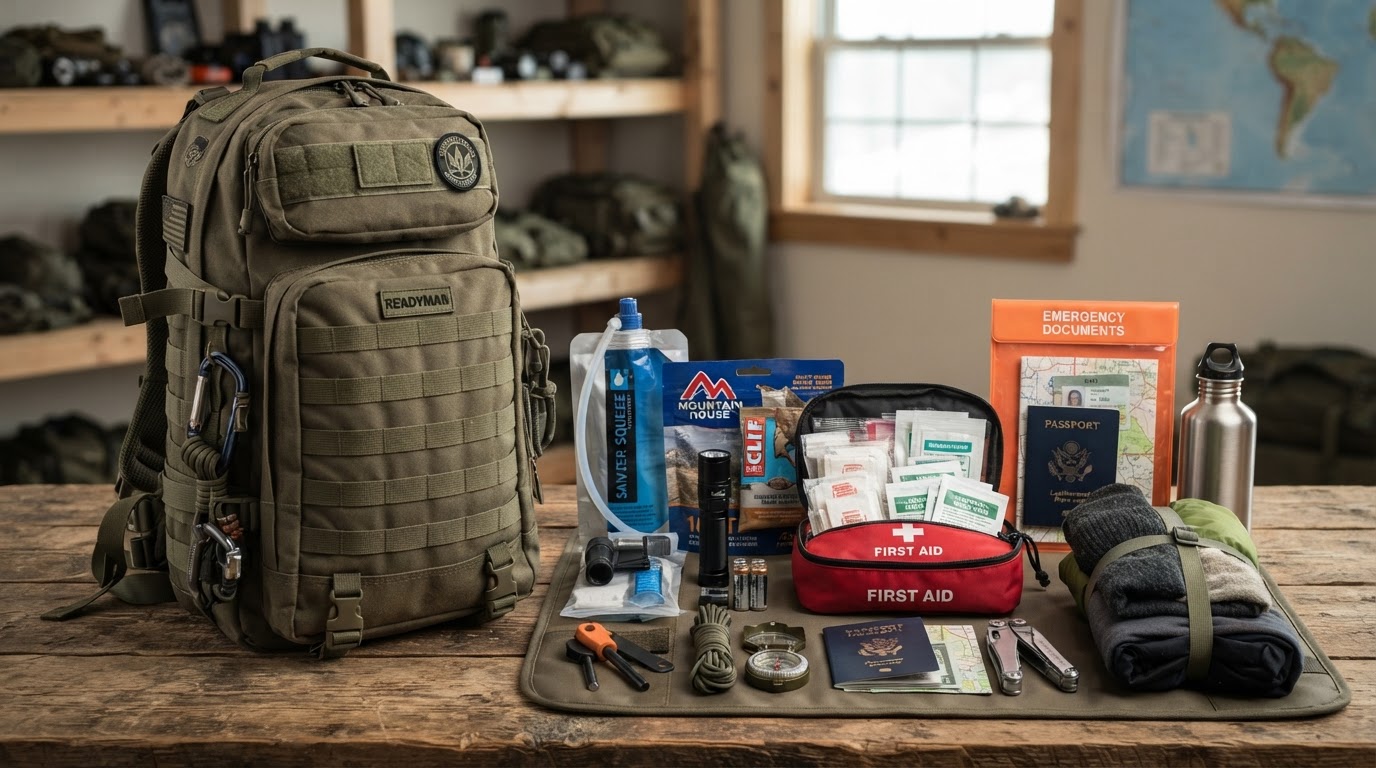
A bug out bag is a portable emergency kit packed for evacuation. The checklist includes water, food, a first aid kit, light, a change of clothes, copies of documents, cash, and a way to receive information. Pack one per person, keep it under 20 percent of body weight, and customize it for your household and likely scenarios.
Key Takeaways
- •One bug out bag per person, not one shared bag.
- •Keep the bag under 20 percent of the carrier's body weight.
- •Documents and cash matter as much as food and water.
- •Practice carrying your bag before you need to.
The Bug Out Bag Checklist
Pack these essentials for each person.
- •Water: one gallon per day, or a filter plus bottles.
- •Shelf-stable food for at least three days.
- •First aid kit and personal medications.
- •Flashlight or headlamp with spare batteries.
- •A change of clothes and sturdy shoes.
- •Copies of documents in a waterproof container.
- •Cash in small bills.
- •A multi-tool and a whistle.
- •A weather radio or a way to receive alerts.
- •Hygiene supplies and a small towel.
Managing Weight So You Can Actually Carry It
A bug out bag only helps if you can carry it. A common guideline is to keep the bag under 20 percent of the carrier's body weight. For a 160-pound adult, that is about 32 pounds. For a child, the bag should be much lighter.
Cut weight by choosing multi-use items, removing duplicates, and skipping heavy comfort items. Water is heavy; consider a filter to supplement a smaller stored supply. Test the bag on a walk before relying on it.
Customizing for Your Household and Region
Your bag should reflect where you live and where you would go. A cold-climate bag needs warm layers and a sleeping bag. A warm-climate bag needs sun protection and extra water. Families with children need formula, diapers, and comfort items.
Think through your likely evacuation: where would you go, how would you get there, and what would you need on the way. Pack for that specific journey, not a generic disaster.
Maintaining Your Bug Out Bag
Keep your bug out bag in an accessible spot near an exit. Check it every six months: rotate food and water, replace batteries, and update documents and seasonal clothing.
Practice grabbing it and leaving. A drill reveals what is missing, what is too heavy, and what does not fit. An untested bag is a guess.
Bug Out Bag Weight Guide
| Carrier weight | Suggested max bag weight |
|---|---|
| 100 lb | 20 lb |
| 140 lb | 28 lb |
| 160 lb | 32 lb |
| 180 lb | 36 lb |
| 200 lb | 40 lb |
Frequently Asked Questions
How heavy should a bug out bag be?
A common guideline is under 20 percent of the carrier's body weight. Test the bag on a walk to confirm you can carry it for the distance you might need to.
Should I have one bug out bag or one per person?
One per person who can carry one. Children can carry a lighter bag with their own essentials. This spreads the weight and ensures everyone has their documents and medications.
Where should I keep my bug out bag?
Near an exit, in a spot everyone knows. Some households keep one in the car too, in case they need to leave from somewhere other than home.
How often should I update my bug out bag?
Every six months. Rotate food and water, replace batteries, update documents, and swap seasonal clothing as the weather changes.