Emergency First Aid Kit
Emergency First Aid Kit: What to Include and How to Use It
An emergency first aid kit treats minor injuries when professional help may be delayed. This guide covers what to include, how to customize it for your household, and how to know when to call for help.
Quick Answer
An emergency first aid kit is a set of supplies to treat minor injuries during a disruption. It includes bandages, gauze, antiseptic, tape, scissors, gloves, and a first aid guide. Customize it with personal medications and household needs, take a first aid course, and know when to call 911 instead of treating it yourself.
Key Takeaways
- •A first aid kit treats minor injuries, not serious emergencies.
- •Customize it with personal medications and household needs.
- •Take a first aid course so you know how to use the supplies.
- •Know when to call 911 instead of treating it yourself.
What to Include in a First Aid Kit
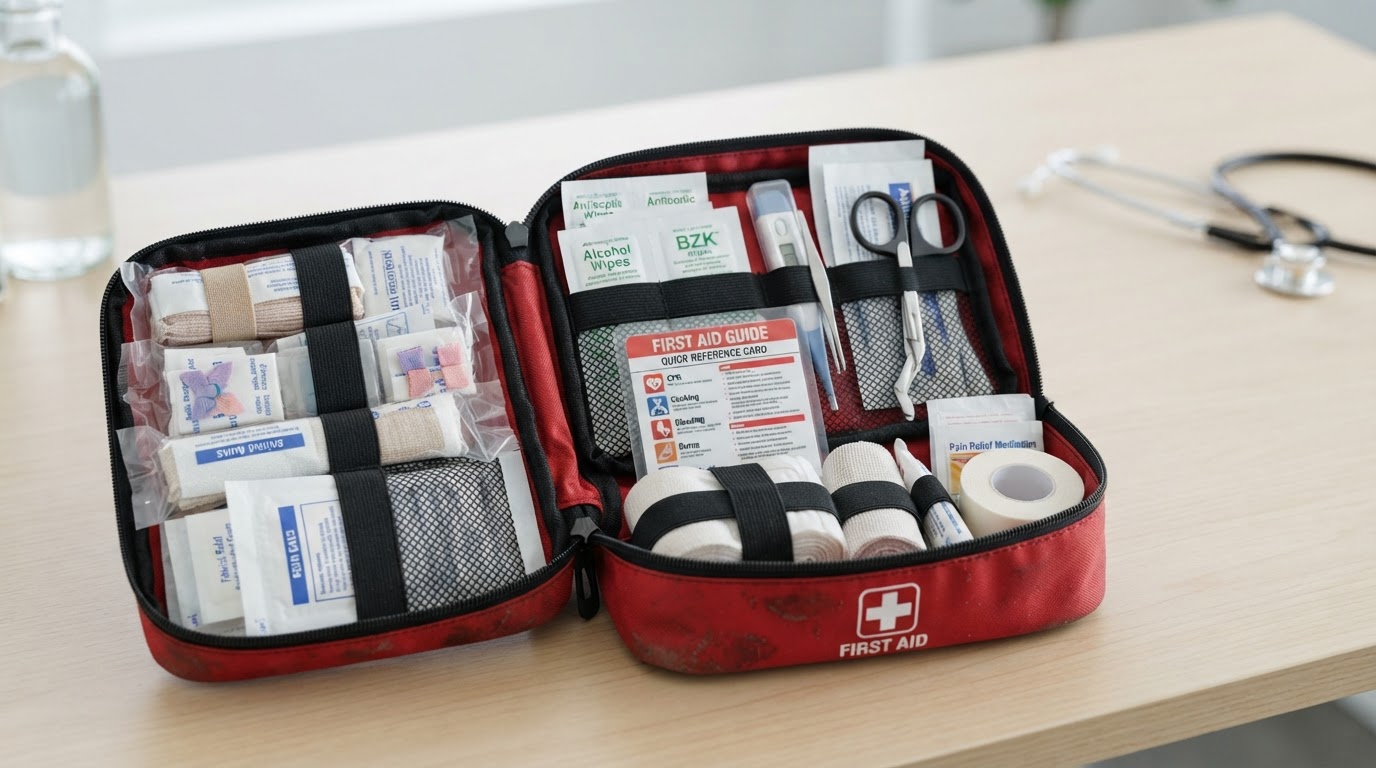
A basic kit covers most minor injuries.
- •Adhesive bandages in several sizes.
- •Sterile gauze pads and rolled gauze.
- •Adhesive tape and a triangular bandage.
- •Antiseptic wipes and antibiotic ointment.
- •Scissors and tweezers.
- •Disposable gloves.
- •A digital thermometer.
- •A first aid reference guide or card.
- •Pain relievers and any personal medications.
- •A cold compress.
Customizing for Your Household
Add supplies for your household's specific needs. Include prescription medications, allergy medication, and any medical devices. Households with children need child-safe versions of medications and supplies. Households with older adults may need extra supplies for chronic conditions.
Keep a list of medical conditions, medications, and allergies in the kit. In an emergency, this information helps responders and caregivers.
Training: A Kit Is Only Useful If You Know How to Use It
A first aid kit is only as good as the person using it. Take a first aid and CPR course from the Red Cross or a similar organization. Knowing how to control bleeding, treat a burn, and perform CPR turns supplies into action.
Keep your training current. Skills fade, and guidelines change. A refresher course every few years keeps you ready.
When to Call 911 Instead of Treating It Yourself
A first aid kit treats minor injuries. It does not replace professional care. Call 911 for severe bleeding that will not stop, difficulty breathing, chest pain, severe burns, head injuries, suspected stroke, or any condition that could be life-threatening.
When in doubt, call. First aid keeps a situation stable until help arrives; it does not replace it.
First Aid Kit vs. Medical Emergency
| Situation | Use kit or call 911 |
|---|---|
| Minor cut | Kit |
| Small burn | Kit |
| Severe bleeding | Call 911, then kit |
| Difficulty breathing | Call 911 |
| Chest pain | Call 911 |
| Suspected stroke | Call 911 |
Frequently Asked Questions
What should be in a basic first aid kit?
Bandages, gauze, tape, antiseptic, scissors, tweezers, gloves, a thermometer, a first aid guide, and pain relievers. Add personal medications and household-specific supplies.
Do I need first aid training to use a kit?
A kit is most useful with training. Take a first aid and CPR course so you know how to control bleeding, treat burns, and perform CPR. Skills fade, so refresh every few years.
When should I call 911 instead of using a first aid kit?
Call 911 for severe bleeding, difficulty breathing, chest pain, severe burns, head injuries, or any life-threatening condition. First aid keeps a situation stable until help arrives.
How often should I check my first aid kit?
Every six months. Replace expired medications, restock used supplies, and update any personal medical information. A kit with expired supplies is not reliable.