
Tornado Preparedness
Tornado Preparedness: Shelter, Alerts, and Supplies
Tornadoes form fast and give little warning. This guide covers how to prepare so your household can shelter safely, receive alerts, and recover after a tornado. It applies to households in tornado prone areas and to anyone who may face a tornado warning.
Quick Answer
Tornado preparedness is the work of identifying a safe shelter, setting up alerts, and assembling supplies so your household can respond when a tornado warning is issued. It includes knowing your safe room, keeping a NOAA weather radio with automatic alerts, and practicing where to go. Tornadoes give little warning, so prepare before severe weather season and act immediately when a warning sounds.
Key Takeaways
- •Identify a safe shelter: a basement or interior room on the lowest floor.
- •Keep a NOAA weather radio with automatic alerts and S.A.M.E.
- •Sign up for local wireless emergency alerts on your phone.
- •Practice your shelter plan so everyone knows where to go.
Identify Your Safe Shelter
Know where to go before a warning is issued.
- •A basement is the best shelter if you have one.
- •An interior room on the lowest floor, away from windows, is the next best.
- •A bathroom or closet offers added structural protection.
- •Mobile homes are not safe in a tornado; plan to shelter elsewhere.
- •If driving, do not shelter under an overpass; find a sturdy building or ditch.
Receiving Tornado Alerts
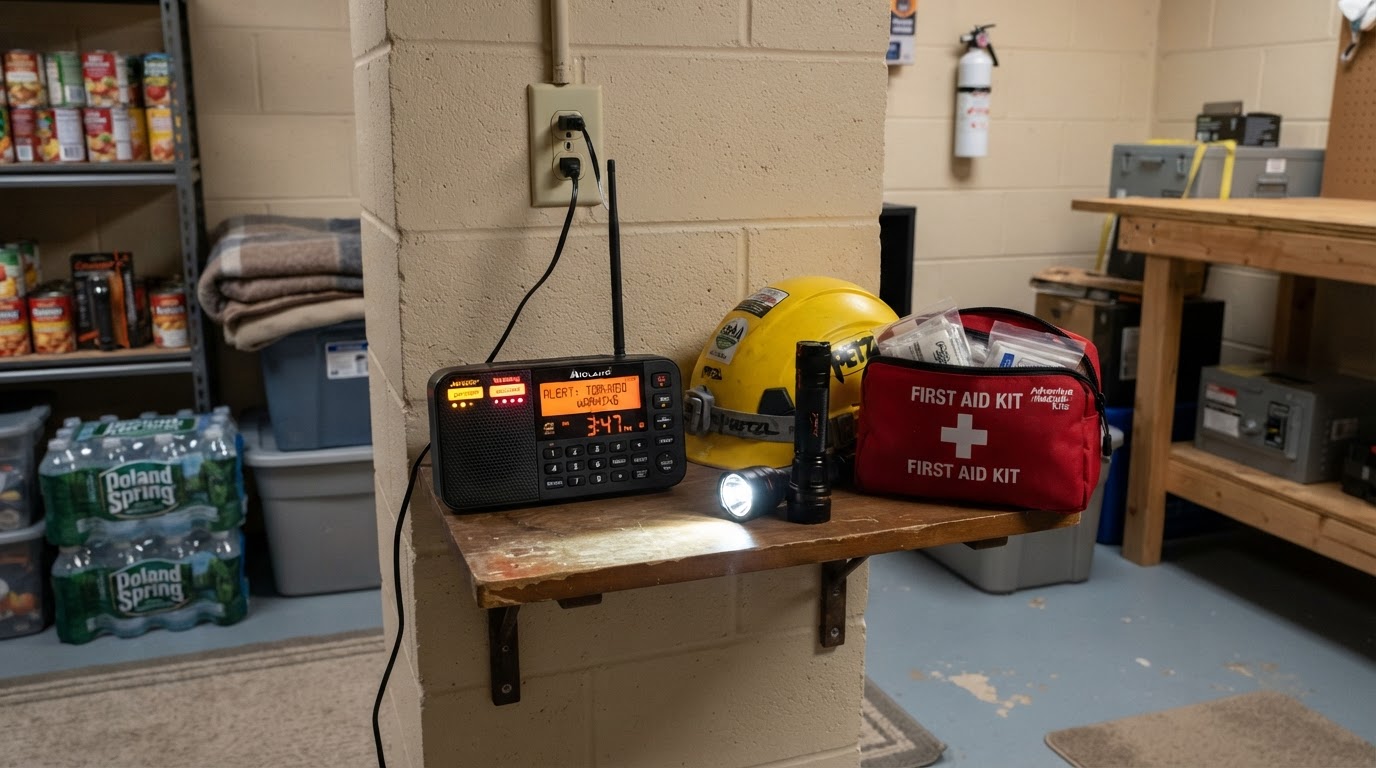
A tornado watch means conditions are favorable; a tornado warning means one has been spotted or indicated by radar. Act on warnings immediately. Keep a NOAA weather radio with automatic alerts so you hear warnings even if you are asleep or away from your phone.
Sign up for Wireless Emergency Alerts on your phone. These are free and send warnings for imminent threats in your area. Do not rely on outdoor sirens alone, because they may not be audible indoors or may not sound for your specific area.
Tornado Emergency Supplies
Keep supplies in or near your safe shelter: a flashlight, a first aid kit, sturdy shoes, a helmet for each person, and a whistle. Helmets protect against head injuries from flying debris, which is a leading cause of tornado deaths.
Keep a charged power bank with your kit so your phone stays on for updates after the storm. A weather radio with battery backup provides alerts if power and cell service are down after the tornado passes.
After a Tornado
Stay in your shelter until the warning expires and officials say it is safe. Check yourself and others for injuries. Watch for downed power lines, gas leaks, and structural damage before leaving your shelter.
Document damage with photos for insurance. Avoid candles; use flashlights to prevent fire risk near gas leaks. Keep your phone charged for emergency communication, and check on neighbors if it is safe to do so.
Tornado Shelter and Alert Checklist
| Area | What to prepare |
|---|---|
| Shelter | Basement or interior room on lowest floor, away from windows |
| Alerts | NOAA weather radio with alerts, wireless emergency alerts |
| Shelter supplies | Flashlight, first aid, helmets, sturdy shoes, whistle |
| Power | Charged power bank, spare batteries |
| After | Document damage, watch for hazards, check on neighbors |
Frequently Asked Questions
Where is the safest place to shelter during a tornado?
A basement is best. If you do not have one, go to an interior room on the lowest floor, away from windows. A bathroom or closet offers added structural protection. Mobile homes are not safe; plan to shelter elsewhere.
What is the difference between a tornado watch and a warning?
A watch means conditions are favorable for tornadoes. A warning means a tornado has been spotted or indicated by radar. Act on warnings immediately by sheltering in your safe location.
Should I shelter under an overpass if I am driving?
No. Overpasses create wind tunnels that increase danger. Find a sturdy building, or if none is available, find a low ditch and cover your head. Never try to outrun a tornado in a vehicle.
Why should I keep helmets in my tornado shelter?
Flying debris is a leading cause of tornado injuries and deaths. A helmet protects your head. Keep one per person in or near your shelter, along with sturdy shoes for walking over debris.