
Earthquake Preparedness Kit
Earthquake Preparedness Kit: Supplies and Planning
An earthquake preparedness kit is the set of supplies and preparations that keep your household safe before, during, and after an earthquake. This guide covers what to include, how to secure your home, and how to respond when the ground shakes.
Quick Answer
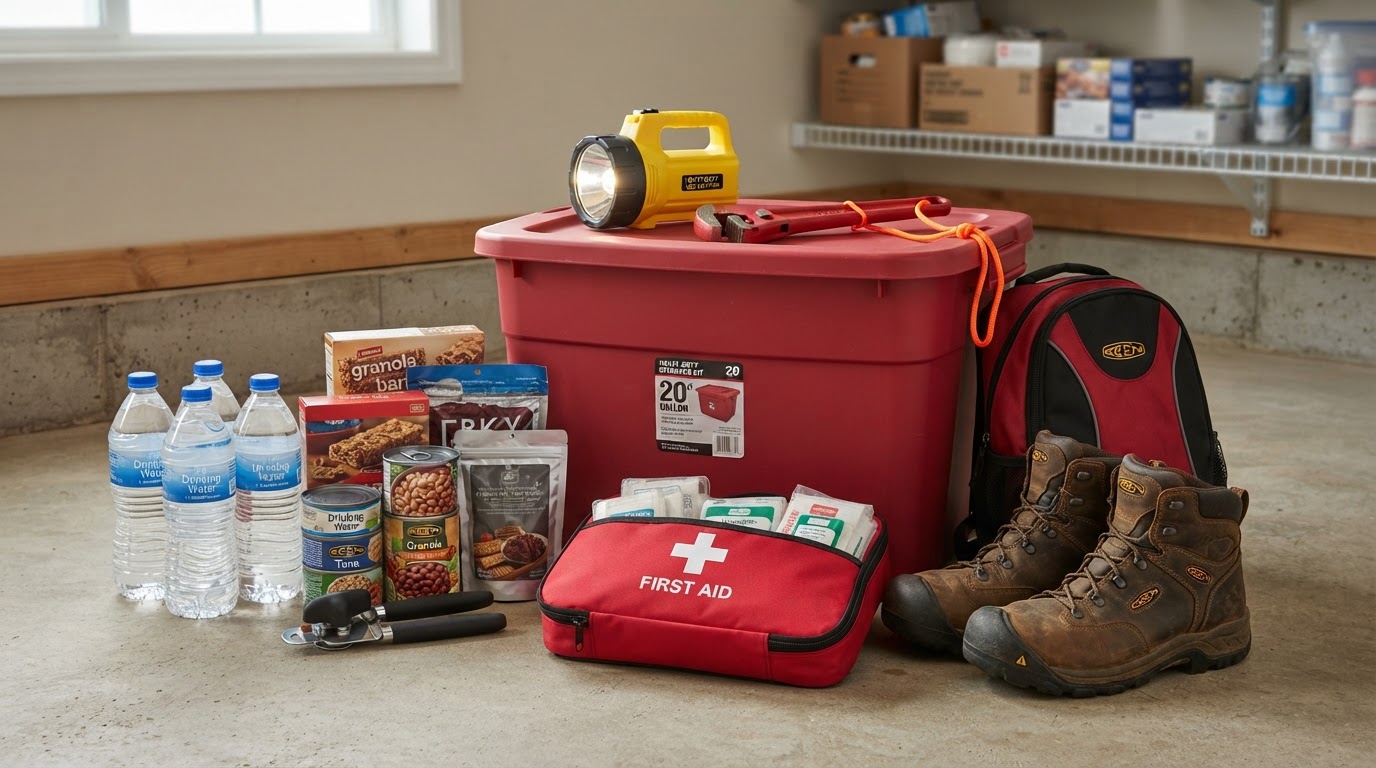
An earthquake preparedness kit is a set of supplies for surviving the aftermath of an earthquake, when power, water, and roads may be disrupted. It includes water, shelf-stable food, a first aid kit, flashlights, sturdy shoes, a wrench for shutting off gas, and copies of documents. Secure heavy furniture to walls and practice drop, cover, and hold on so your household knows what to do when shaking starts.
Key Takeaways
- •Secure heavy furniture and water heaters to walls before a quake.
- •Keep sturdy shoes and a flashlight under each bed.
- •Practice drop, cover, and hold on so everyone reacts automatically.
- •Know how to shut off gas if you smell a leak after a quake.
Securing Your Home Before a Quake
Preparation prevents injuries.
- •Anchor bookshelves, cabinets, and heavy furniture to wall studs.
- •Secure your water heater to prevent tipping and gas or water leaks.
- •Move heavy items to lower shelves.
- •Identify safe spots in each room: under sturdy desks, away from windows.
- •Know where gas, water, and electrical shutoffs are and how to operate them.
What to Put in an Earthquake Kit
A home kit covers sheltering in place after a quake when roads and utilities may be out for days. Include water, shelf-stable food, a first aid kit, flashlights, a radio, and sturdy shoes for walking over broken glass and debris.
Keep a flashlight and sturdy shoes under each bed, because quakes often strike at night and broken glass on the floor is a common injury. Add a whistle to signal for help and a wrench for shutting off gas. Copies of documents and cash belong in the kit too.
During an Earthquake: Drop, Cover, and Hold On
When shaking starts, drop to the ground, take cover under a sturdy desk or table, and hold on until the shaking stops. If you are in bed, stay there and protect your head with a pillow. Do not run outside during the shaking; falling debris and glass cause injuries.
If you are outside, move to an open area away from buildings, power lines, and trees. If you are driving, pull over safely and stop away from overpasses and power lines. Stay in the vehicle until the shaking stops.
After an Earthquake
Check yourself and others for injuries. Do not use matches or lighters; a gas leak may be present. If you smell gas, shut off the main gas valve and leave the building. Check for structural damage, gas leaks, and electrical hazards before returning inside.
Expect aftershocks, which can cause further damage. Keep your shoes on to protect against broken glass. Follow local emergency alerts and be prepared to evacuate if your home is damaged. Document damage for insurance.
Earthquake Kit Contents
| Item | Purpose | Notes |
|---|---|---|
| Water (3 days) | Drinking and sanitation | 1 gallon per person per day |
| Shelf-stable food | Nutrition without cooking | Rotate into regular meals |
| First aid kit | Treat injuries from glass and debris | Add personal medications |
| Flashlights | Light without fire risk | One per room, with batteries |
| Sturdy shoes | Protect feet from glass and debris | Under each bed |
| Gas shutoff wrench | Shut off gas if leaking | Know where the valve is |
| Whistle | Signal for help if trapped | Louder than shouting |
Frequently Asked Questions
Should I run outside during an earthquake?
No. Falling debris and glass near building exteriors cause many injuries. Drop, cover, and hold on under a sturdy desk inside. If you are already outside, move to an open area away from buildings and power lines.
How do I shut off gas after an earthquake?
Keep a wrench near the gas shutoff valve and know where it is. If you smell gas or hear a hissing sound, shut off the main valve and leave the building. Do not use matches or lighters. If in doubt, leave and call your utility or 911.
What should I keep under my bed for an earthquake?
A flashlight and sturdy shoes. Quakes often strike at night, and broken glass on the floor is a common injury. Being able to see and walk safely right after shaking stops is essential.
Why do I need to secure furniture before an earthquake?
Unsecured bookshelves, cabinets, and water heaters can tip during shaking and cause serious injuries or gas and water leaks. Anchor heavy furniture to wall studs and secure your water heater before a quake happens.