
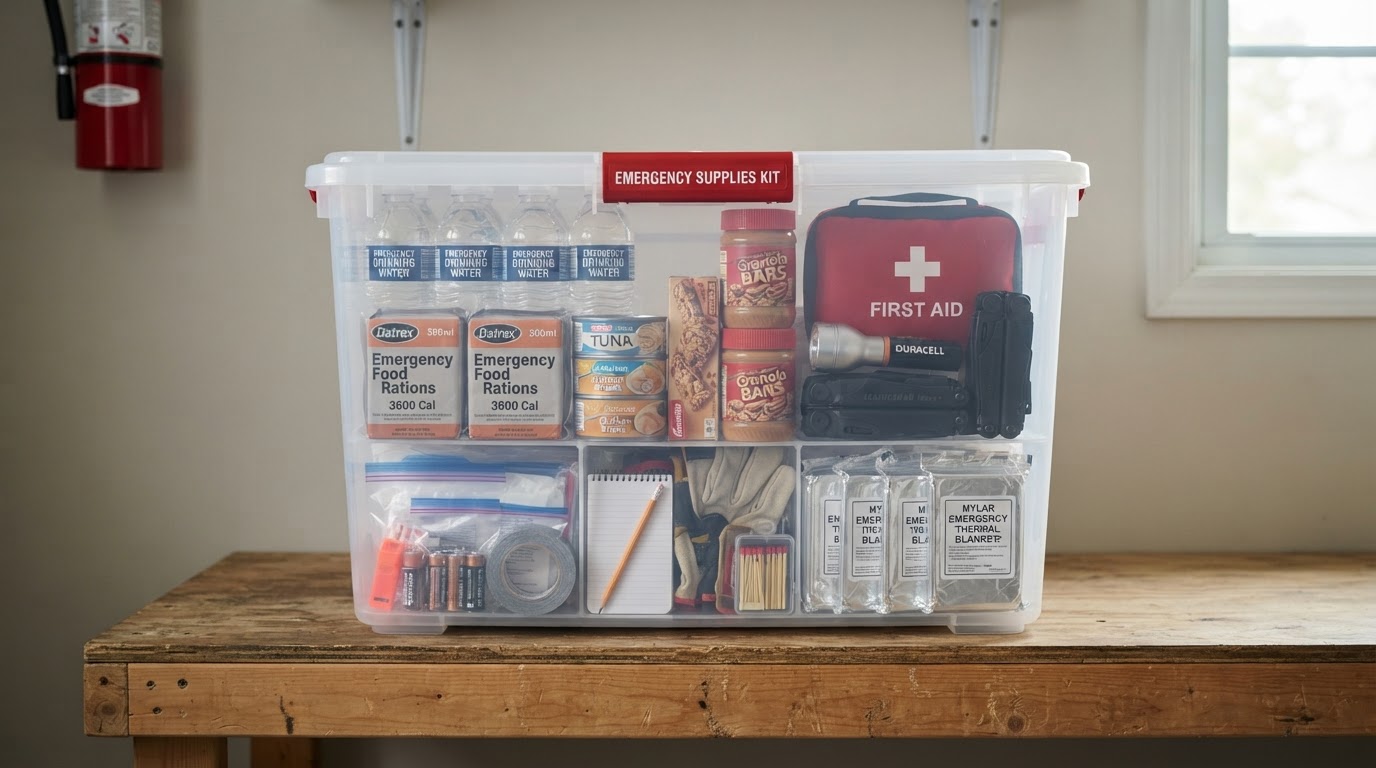
Emergency Survival Kit
Emergency Survival Kit: Choosing the Right Type for Your Household
An emergency survival kit is the collection of supplies your household relies on when normal services stop. This guide helps you choose the right type, customize it for your family, and keep it ready.
Quick Answer
An emergency survival kit is a set of supplies gathered to sustain a household during a disruption. The right kit depends on where you will use it: a home kit is larger and deeper, a car kit handles roadside needs, and a go-bag is portable for evacuation. Choose by use case, customize for your household, and rotate contents regularly.
Key Takeaways
- •Match the kit to where and how it will be used.
- •A home kit, a car kit, and a go-bag serve different purposes.
- •Customize every kit for your household, pets, and medications.
- •Inspect and rotate kit contents every six months.
Types of Emergency Survival Kits
Most households need more than one kit.
- •Home kit: the largest, with water, food, light, first aid, and sanitation for several days.
- •Go-bag: portable, one per person, for evacuation with documents and essentials.
- •Car kit: roadside safety, jumper cables, water, and a blanket.
- •Work or everyday carry kit: compact supplies for getting home from work.
Choosing the Right Kit for Your Situation
Start with a home kit because most disruptions keep you at home. Then add a go-bag for each person so you can evacuate quickly. A car kit covers roadside emergencies and being stranded away from home.
If you live in an apartment or rent, prioritize portable kits you can carry. If you own a home, you can store a larger, deeper home kit. The right kit is the one that fits your space, budget, and likely scenarios.
What Every Survival Kit Needs
- •Water: one gallon per person per day for at least three days.
- •Shelf-stable food and a manual can opener.
- •Flashlight or headlamp with spare batteries.
- •First aid kit and a basic reference guide.
- •Copies of important documents in a waterproof container.
- •Cash in small bills.
- •Whistle, dust mask, and basic tools.
Customizing and Maintaining Your Kit
No prebuilt kit is complete out of the box. Add medications, pet supplies, comfort items for children, and any personal needs. Label everything and keep an inventory with expiration dates.
Inspect your kit every six months. Replace expired food and water, test batteries, and update documents. A kit you never check is a kit that may fail when you need it.
Kit Type Comparison
| Kit type | Best for | Key contents | Portability |
|---|---|---|---|
| Home kit | Sheltering in place | Water, food, light, first aid, sanitation | Stored, not carried |
| Go-bag | Evacuation | Documents, clothes, water, snacks, light | One person carries |
| Car kit | Roadside emergencies | Jumper cables, water, blanket, tools | Stays in vehicle |
| Everyday carry | Getting home from work | Small light, charger, snacks, cash | Pocket or bag |
Frequently Asked Questions
Should I buy a prebuilt emergency survival kit?
A prebuilt kit is a convenient start, but review and customize it. Most need additions for medications, pets, and personal needs, and the food and water should be checked for expiration dates.
How many kits should a household have?
At minimum, a home kit and a go-bag for each person. Add a car kit if you drive. The goal is to cover sheltering, evacuation, and being away from home.
How long do emergency kit supplies last?
Commercially bottled water lasts about six months to a year. Shelf-stable food varies; check labels. Replace anything past its date during your twice-yearly review.
Where should I keep my emergency survival kit?
Keep the home kit in a cool, dry, accessible place. Keep go-bags near an exit. Keep a car kit in the trunk. Everyone in the household should know where they are.