
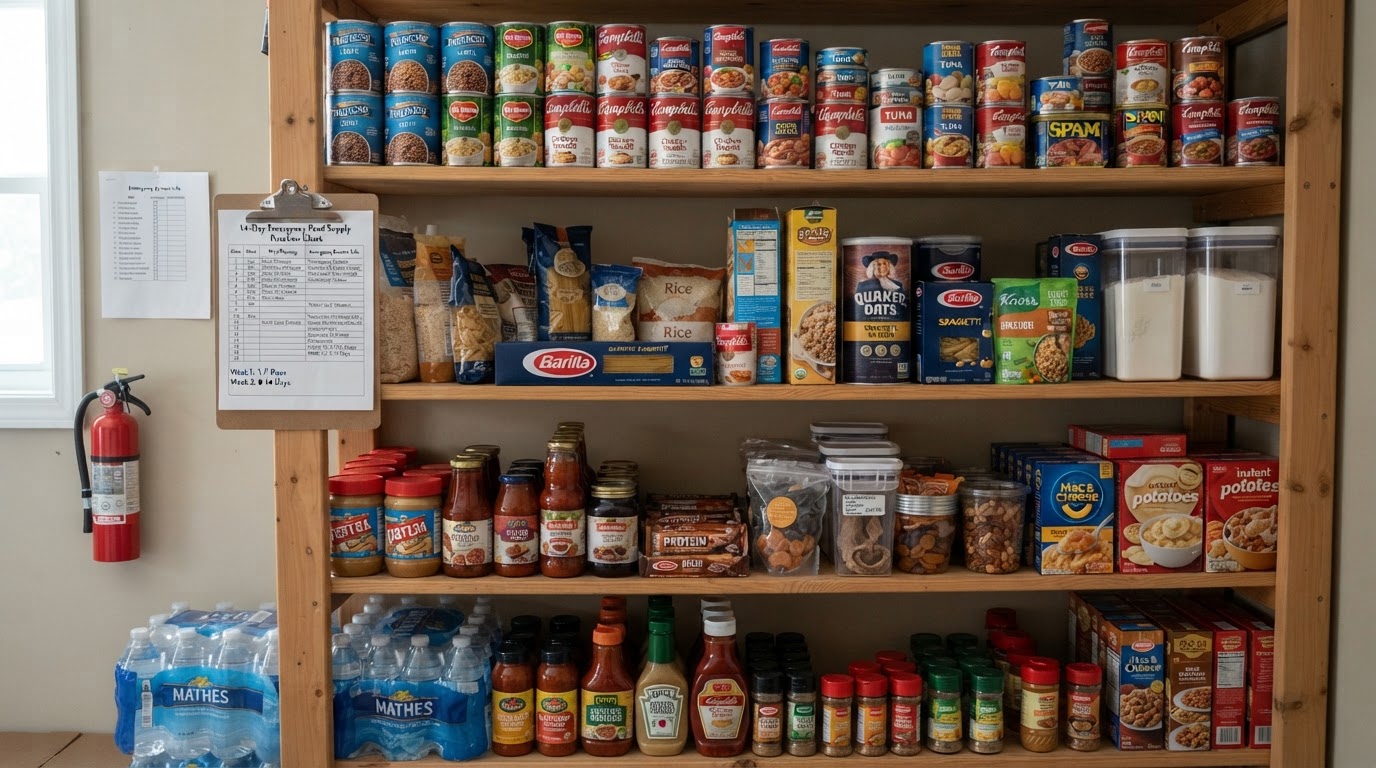
Two Week Emergency Food Supply
Two Week Emergency Food Supply: A Realistic 14-Day Household Plan
A two week emergency food supply covers longer disruptions, from a severe storm to a supply interruption. This guide gives you a realistic 14-day plan built from foods your household already eats, with storage, rotation, and household-specific considerations.
Quick Answer
A two week emergency food supply is 14 days of shelf-stable food your household will actually eat. Build it from familiar foods like canned goods, dry staples, and ready-to-eat items, plan about 2,000 calories per person per day, include a manual can opener, and rotate supplies into regular meals so nothing expires. Start with three days, then expand to two weeks over time as budget and storage allow.
Key Takeaways
- •Plan about 2,000 calories per person per day.
- •Build from familiar shelf-stable foods your household eats.
- •Include a manual can opener and foods that need little cooking.
- •Rotate supplies into regular meals so nothing expires.
Why Two Weeks
Most emergency guidance starts with three days. Two weeks covers longer disruptions that follow severe storms, supply chain interruptions, or illness that keeps your household home. It is a more comfortable cushion that reduces stress when grocery runs are not possible.
Two weeks of food is also more realistic for families. If one person gets sick, a storm closes roads, or a supply disruption empties shelves, you have time to adapt without panic.
Building a 14-Day Plan
Start by listing meals your household already eats that use shelf-stable ingredients. Think pasta with canned sauce, rice and beans, oatmeal, canned soup, peanut butter sandwiches, and crackers. Plan for about 2,000 calories per person per day, more for active people or growing children.
Add variety to keep morale up during a stressful time. Include some comfort foods and familiar snacks. A supply of foods no one likes is not a useful supply.
What to Store
- •Canned proteins: tuna, chicken, beans, chili.
- •Dry staples: rice, pasta, oats, flour.
- •Canned vegetables and fruits.
- •Ready-to-eat items: crackers, peanut butter, nuts, granola bars.
- •Foods that need little or no cooking: canned soup, instant oats.
- •A manual can opener, and seasonings to keep meals from getting dull.
Storage, Rotation, and Household Needs
Store food in a cool, dry place away from direct sunlight. Rotate supplies into regular meals and replace what you use, so nothing expires unnoticed. Mark dates on cans and move older items to the front.
Plan for dietary restrictions, allergies, and household-specific needs. If you have an infant, include formula and baby food. If someone has celiac disease, stock gluten-free staples. A two-week supply that does not fit your household is not a real plan.
Two Week Supply for a Family of Four
| Category | Approx. quantity | Notes |
|---|---|---|
| Canned proteins | 28 cans | Tuna, chicken, beans, chili |
| Dry staples | 20 lbs total | Rice, pasta, oats |
| Canned vegetables | 28 cans | Variety for nutrition |
| Ready-to-eat | 40 items | Crackers, bars, peanut butter |
| Canned fruit | 14 cans | For variety and morale |
| Beverages | As needed | Shelf-stable juice, tea, coffee |
| Manual can opener | 1-2 | Electric openers do not work |
Frequently Asked Questions
How many calories should I plan per person per day?
About 2,000 calories per person per day is a reasonable baseline. Plan more for active people, growing children, or anyone with higher needs. Adjust for your household.
Should I use freeze-dried food for a two-week supply?
Freeze-dried food lasts for years and is light, but it costs more and needs water and often heat to prepare. A practical two-week supply combines it with familiar, cheaper canned and dry foods. Try freeze-dried meals before relying on them.
How do I keep a two-week supply from expiring?
Rotate it. Move older items to the front and use them in regular meals. Replace what you use. Check dates every few months. A supply you never touch will expire unnoticed.
Do I need to plan for cooking?
Include foods that need little or no cooking, like canned soup and instant oats, in case the power is out. If you have a safe outdoor stove, you can cook hot meals, but never use a fuel-burning stove indoors.