
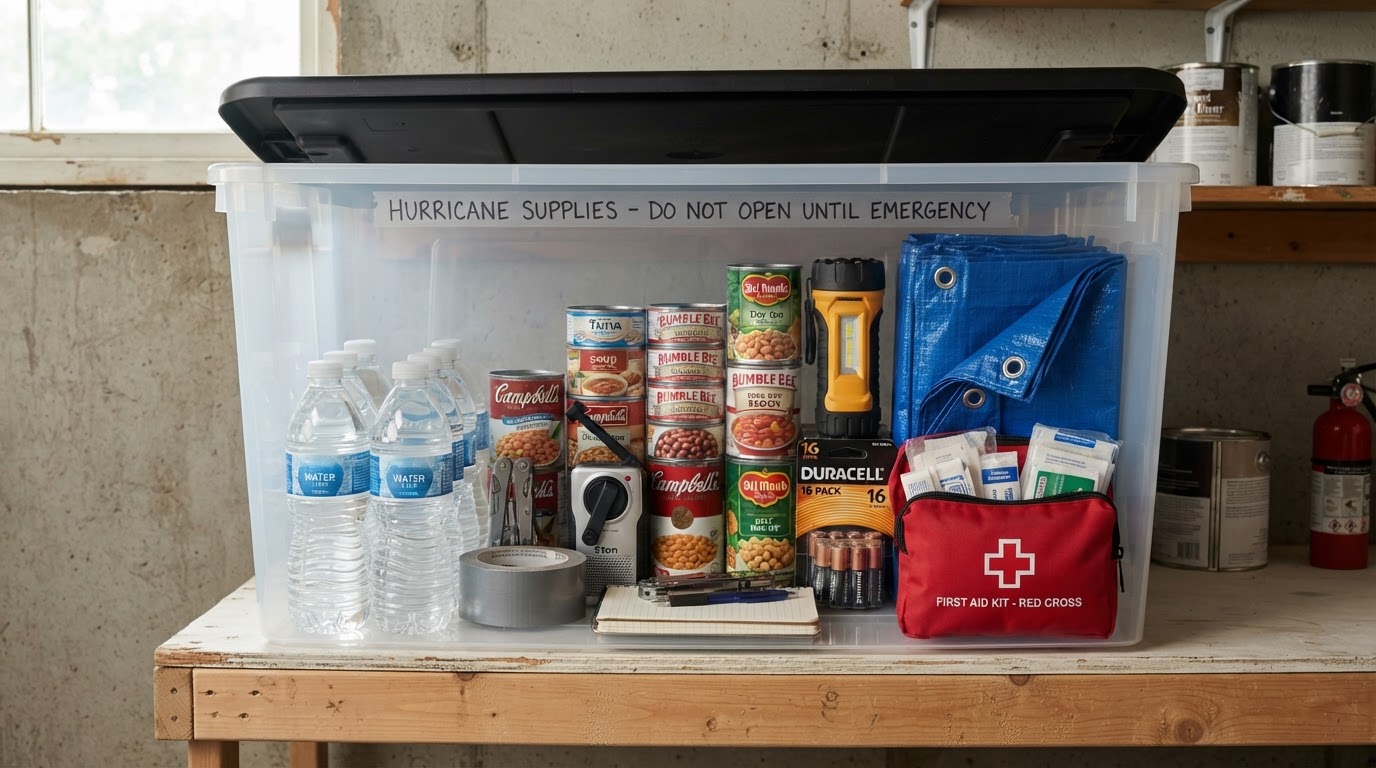
Hurricane Supplies
Hurricane Supplies: What to Buy and What to Skip
Hurricane supplies are the items that keep your household safe and functional before, during, and after a storm. This guide covers what to buy, what to skip, and how to organize supplies for a hurricane prone household.
Quick Answer
Hurricane supplies are the items your household needs to shelter through a storm or evacuate if ordered. The core list includes water, shelf-stable food, a weather radio, flashlights or lanterns, a first aid kit, copies of documents, cash, and storm-specific items like tarps and a manual can opener. Buy early, store in waterproof containers, and rotate supplies each season.
Key Takeaways
- •Buy hurricane supplies before the season, not when a storm is named.
- •Water, food, light, a radio, and first aid are the core.
- •Add storm-specific items: tarps, rope, and a manual can opener.
- •Keep copies of documents and cash in a waterproof container.
Core Hurricane Supplies
These cover almost any storm scenario.
- •Water: one gallon per person per day for at least three days, more if evacuating.
- •Shelf-stable food that needs little or no cooking.
- •A manual can opener.
- •A NOAA weather radio with battery backup.
- •Flashlights or lanterns with spare batteries.
- •A first aid kit and personal medications.
- •Copies of IDs, insurance, and medical info in a waterproof container.
- •Cash in small bills for when card readers are down.
Storm-Specific Additions
Hurricanes add specific needs beyond a general emergency kit. Tarps cover damaged roofs. Rope secures items before the storm and helps with cleanup after. A sturdy pair of work gloves protects hands during debris cleanup. A whistle signals for help if trapped.
If you live in a flood prone area, consider a way to elevate valuables and documents. Sandbags or flood barriers may be useful, but prepare them before a storm is imminent, because supplies run out fast.
What to Skip
Skip expensive tactical gear marketed with fear. A reliable flashlight and a few days of water serve you better than specialized equipment you have never used. Avoid large generators unless you have researched safe operation, fuel storage, and carbon monoxide risks.
Do not overbuy perishable food. A hurricane may knock out power for days, so refrigerated food spoils. Focus on shelf-stable items you will actually eat and rotate into normal meals so nothing expires unused.
Organizing and Rotating Supplies
Store supplies in waterproof containers in an accessible location. Label everything with dates. Rotate food and water into regular use and replace them so your supply stays fresh.
Review your hurricane supplies at the start of each season. Replace expired items, test flashlights and the radio, and update documents. A supply you checked in June is far more reliable than one you last touched three years ago.
Hurricane Supplies Buying Priority
| Priority | Item | Why it comes first |
|---|---|---|
| 1 | Water (1 gal/person/day) | Essential within a day; needed for drinking and sanitation |
| 2 | Shelf-stable food | Sustains you without power or cooking |
| 3 | Weather radio | Receives alerts when phones and power are down |
| 4 | Flashlights and batteries | Needed the first night without power |
| 5 | First aid kit | Treats minor injuries during and after the storm |
| 6 | Documents and cash | Needed for insurance, identification, and purchases |
Frequently Asked Questions
When should I buy hurricane supplies?
Before hurricane season starts, ideally. Supplies sell out and prices rise as a storm approaches. Build your kit gradually over the spring so you are ready by June.
How much water should I store for a hurricane?
At least one gallon per person per day for three days, plus extra for pets. If you may evacuate, store more. Fill your bathtub for sanitation if local guidance recommends it, but do not drink that water.
Should I buy a generator for hurricanes?
A portable power station or generator can keep essential devices running during a long outage. If you buy a fuel generator, learn safe placement outdoors, far from windows, and the carbon monoxide risks before the storm. Never run a fuel generator indoors or in a garage.
What supplies do I need if I evacuate for a hurricane?
A go-bag per person with water, food, medications, documents, a change of clothes, cash, and a flashlight. Fill your gas tank early and plan your route and destination before the evacuation order.