
Long Term Food Storage
Long Term Food Storage: Conditions, Packaging, and Rotation
Long term food storage keeps food safe and edible for years. This guide covers the storage conditions, packaging, and rotation methods that extend shelf life and reduce waste.
Quick Answer
Long term food storage keeps food edible for years by controlling temperature, moisture, light, and pests. Store food in a cool, dry, dark place in airtight containers, and rotate it using first-in, first-out so nothing expires. The right conditions and packaging matter more than the food itself for how long it lasts.
Key Takeaways
- •Cool, dry, dark storage extends shelf life.
- •Airtight containers protect food from moisture and pests.
- •Rotate supplies using first-in, first-out.
- •Label everything with purchase or pack dates.
The Four Enemies of Stored Food
Heat, moisture, light, and pests shorten shelf life.
- •Heat: every 18F (10C) increase roughly halves shelf life.
- •Moisture: causes mold and spoilage; keep food dry.
- •Light: degrades nutrients and packaging; store in the dark.
- •Pests: insects and rodents contaminate food; seal it.
Storage Conditions
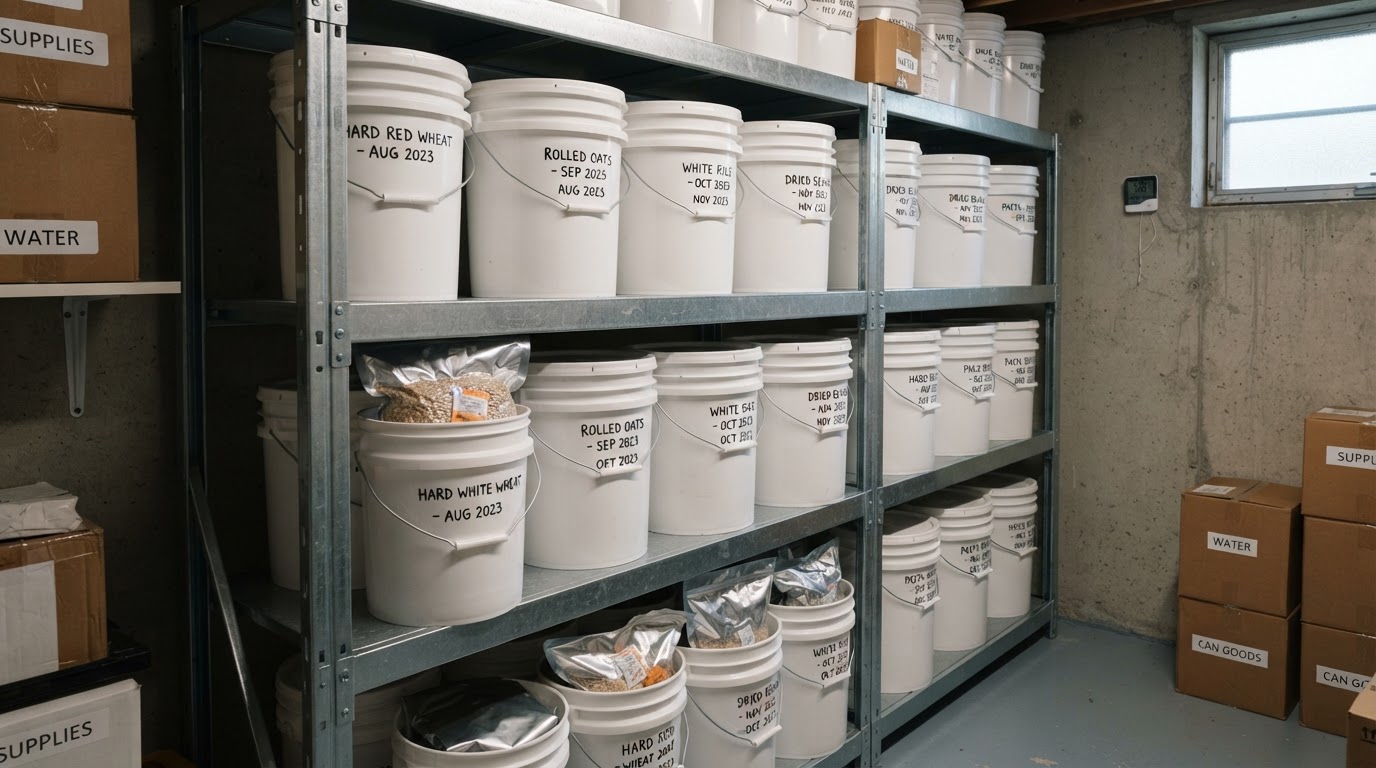
The ideal storage temperature is below 70F (21C), in a dry place away from direct light. A basement, closet, or pantry works. Avoid garages and attics, where temperatures swing widely. Stable, cool conditions extend shelf life the most.
Keep food off the floor on shelves to allow air circulation and protect from pests. A thermometer and hygrometer help you monitor conditions. If humidity is high, use desiccants or a dehumidifier.
Packaging for Long Term Storage
For dry goods like rice, beans, and grains, use airtight containers: mylar bags with oxygen absorbers, food-grade buckets with gasket lids, or glass jars. Oxygen absorbers remove oxygen that causes oxidation and pests. Seal bags and buckets tightly.
For canned goods, keep them in their original cans. Check for dents, rust, or swelling, which can signal spoilage. Do not store cans where they freeze, which can damage the seals.
Rotation: First-In, First-Out
Rotate food so the oldest is used first. Label everything with the purchase or pack date. When you add new food, put it behind the older food. Use the older food in regular meals and replace it.
Rotation keeps your supply fresh and ensures you eat what you store. A supply you never rotate is a supply that may expire before you need it. Make rotation a habit, not a project.
Shelf Life of Common Storage Foods
| Food | Ideal shelf life | Storage |
|---|---|---|
| White rice | 30 years | Mylar + oxygen absorber |
| Dry beans | 30 years | Mylar + oxygen absorber |
| Rolled oats | 30 years | Mylar + oxygen absorber |
| Canned goods | 1-5 years | Original can, cool and dry |
| Pasta | 20-30 years | Mylar + oxygen absorber |
| Honey | Indefinite | Sealed container |
Frequently Asked Questions
What is the best temperature for long term food storage?
Below 70F (21C), in a dry place away from direct light. Stable, cool conditions extend shelf life the most. Avoid garages and attics where temperatures swing widely.
How do I package dry goods for long term storage?
Use mylar bags with oxygen absorbers, food-grade buckets with gasket lids, or glass jars. Remove oxygen to prevent oxidation and pests. Seal tightly and label with the pack date.
How long does white rice last in storage?
Up to 30 years in mylar bags with oxygen absorbers, stored cool and dry. Brown rice lasts less, about 6 to 12 months, because of its oil content.
How do I rotate long term food storage?
Use first-in, first-out: label everything with a date, put new food behind older food, and use the oldest in regular meals. Rotation keeps your supply fresh.