
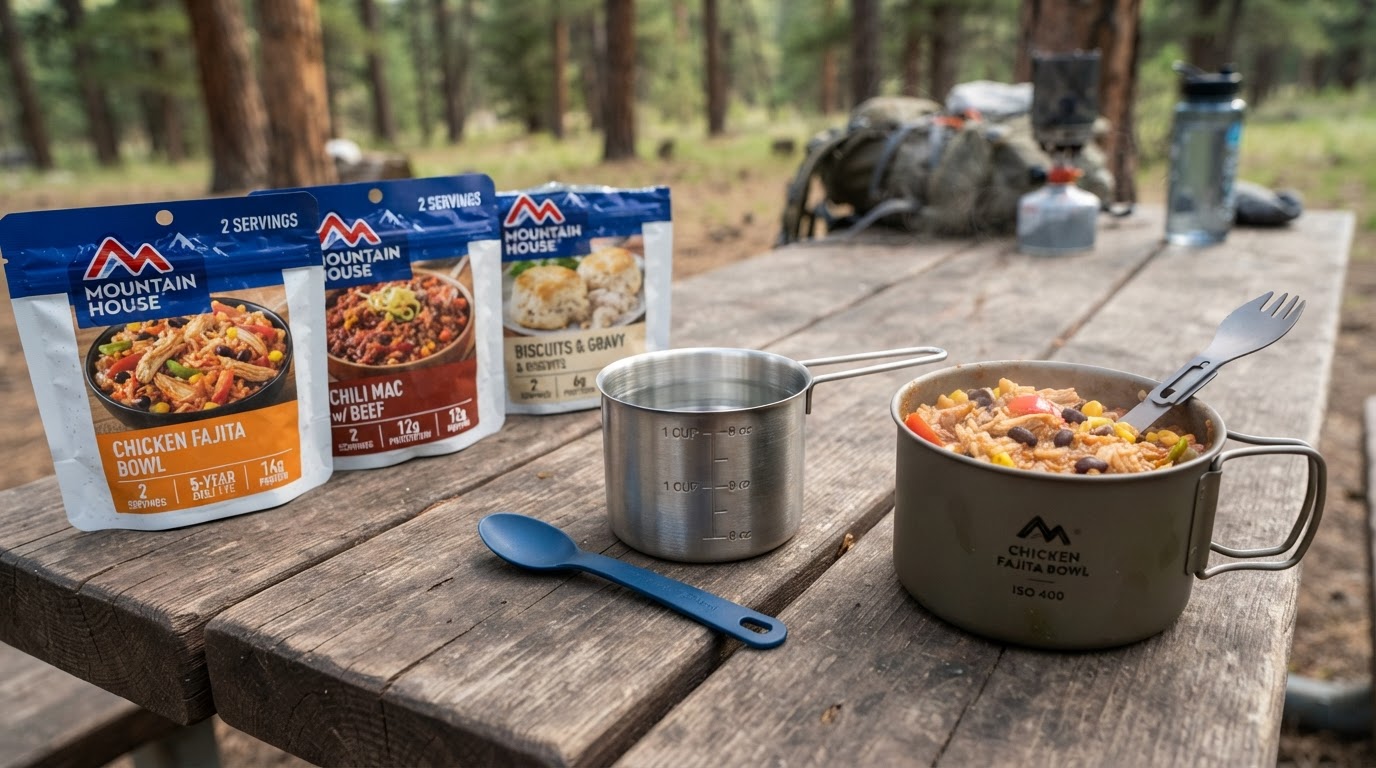
Freeze Dried Emergency Food
Freeze Dried Emergency Food: Preparation, Water, and Tradeoffs
Freeze dried emergency food offers long shelf life and light weight, but it needs water and often heat to prepare. This guide covers preparation needs, storage, and the tradeoffs to understand before relying on it.
Quick Answer
Freeze dried emergency food is food that has been dehydrated by freezing to remove moisture, giving it a shelf life of up to 25 years. It is light and compact but requires water and often heat to prepare. Before relying on it, understand the water needs, preparation steps, taste, and cost, and try it before you need it.
Key Takeaways
- •Freeze dried food lasts up to 25 years and is light and compact.
- •It needs water and often heat to prepare.
- •Try it before relying on it for an emergency.
- •Supplement it with familiar foods and extra water.
How Freeze Drying Works
Freeze drying freezes food, then removes moisture through sublimation, turning ice directly into vapor. This preserves nutrients, flavor, and texture better than traditional dehydration, and gives the food a very long shelf life.
Because most of the moisture is removed, freeze dried food is light and compact, making it easy to store. The tradeoff is that it needs water to rehydrate before eating.
Preparation Needs
Most freeze dried meals need hot water. You add boiling water, stir, seal, and wait 8 to 10 minutes. In a power outage, you need a way to heat water and enough water to prepare the food. Check how much water each meal requires.
Some freeze dried foods can be eaten dry as a snack, but meals need rehydration. Cold water works but takes longer and tastes different. Plan for hot water if you want the intended flavor and texture.
Water Requirements
Freeze dried food needs water to prepare, which adds to your water needs. A single meal may need 1 to 2 cups of water. For a household eating three meals a day, that is 3 to 6 cups per person per day, on top of drinking water.
Store extra water if you rely on freeze dried food. A filter can supplement stored water, but it does not make chemically contaminated water safe. Plan your water supply to cover both drinking and food preparation.
Taste, Cost, and Tradeoffs
Freeze dried food preserves flavor well, but taste varies by brand and meal. Try a kit before relying on it. Some meals are surprisingly good; others are bland or have an off texture. Variety helps morale and nutrition.
Freeze dried food is more expensive per calorie than canned goods or dry staples. It is convenient for long storage and light weight, but a practical supply combines it with familiar, cheaper foods. Do not rely on it alone.
Freeze Dried vs. Other Emergency Food
| Type | Shelf life | Water needed | Cost per calorie |
|---|---|---|---|
| Freeze dried meals | Up to 25 years | Yes, hot water | High |
| Dehydrated meals | Up to 25 years | Yes, hot water | Medium |
| Canned goods | 1-5 years | No | Low |
| Dry staples (rice, beans) | 20-30 years | Yes, cooking | Lowest |
Frequently Asked Questions
Does freeze dried food need water to prepare?
Yes. Most meals need hot water to rehydrate. You add boiling water, stir, and wait. In a power outage, you need a way to heat water and enough water for both drinking and food preparation.
How long does freeze dried food last?
Up to 25 years in cool, dry storage. Heat and moisture shorten shelf life. Store in sealed pouches with oxygen absorbers and check packaging for damage.
Can I eat freeze dried food without cooking?
Some freeze dried foods can be eaten dry as a snack, but meals need rehydration. Cold water works but takes longer and tastes different. Plan for hot water for the intended flavor.
Is freeze dried food worth the cost?
It is convenient for long storage and light weight, but it is more expensive per calorie than canned goods or dry staples. A practical supply combines it with familiar, cheaper foods.