
Best Emergency Food Kits
Best Emergency Food Kits: How to Compare Packaged Options
Emergency food kits offer a convenient way to store days or weeks of food. This guide explains how to compare kits by calories, shelf life, taste, and preparation needs so you choose one that fits your household.
Quick Answer
The best emergency food kit depends on your household, budget, and storage space. Compare kits by total calories, shelf life, preparation needs, and taste. A kit that claims 200 servings may provide far fewer calories than expected. Try a kit before relying on it, and supplement it with familiar foods you already eat.
Key Takeaways
- •Compare kits by total calories, not just serving counts.
- •Check shelf life and storage conditions.
- •Try a kit before relying on it for an emergency.
- •Supplement any kit with familiar foods and a manual can opener.
Serving Count vs. Calories
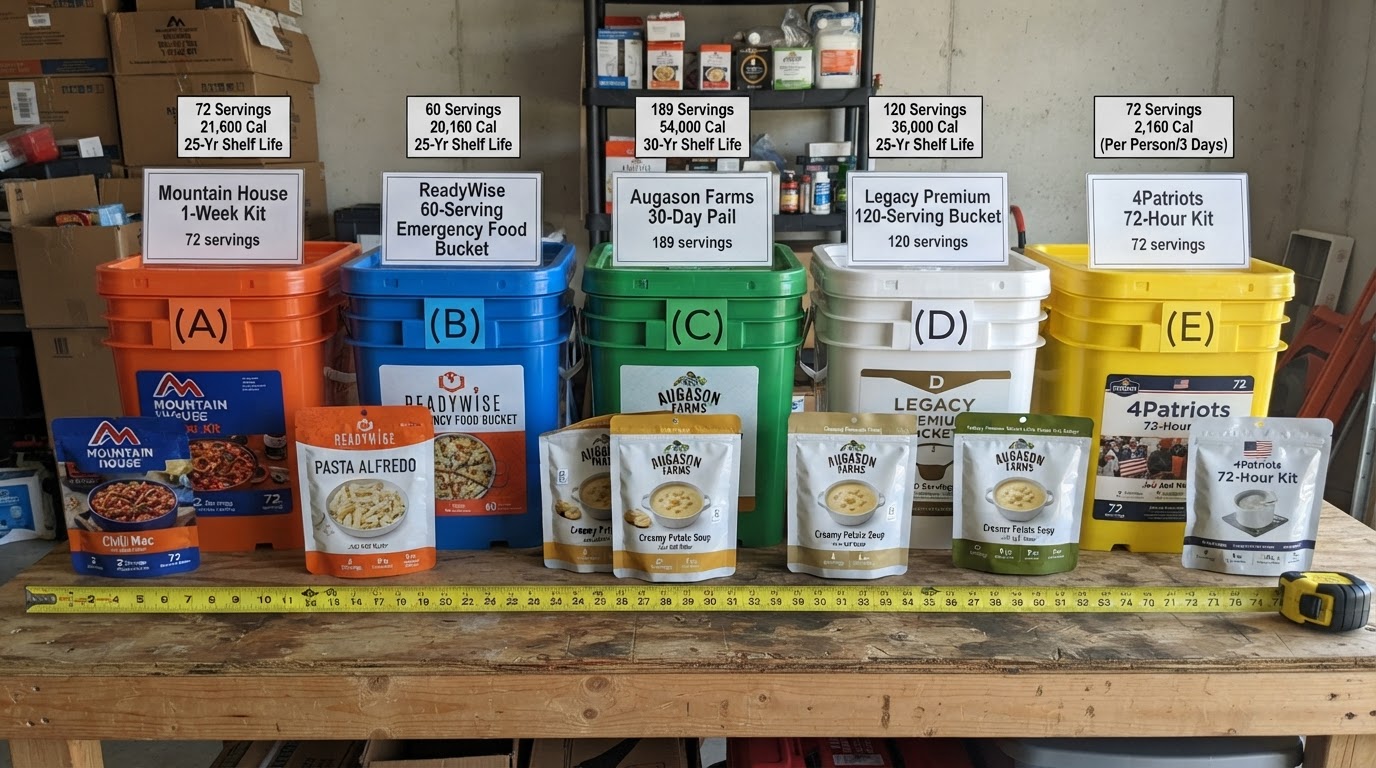
Emergency food kits often advertise serving counts, but servings vary. A 200-serving kit may provide 100 to 200 calories per serving, far less than a meal. Compare total calories across the kit and divide by the number of days and people it claims to cover.
An adult needs about 2,000 calories per day. A kit claiming 30 days of food for one person should provide about 60,000 calories. Read the nutrition label and do the math before buying.
Shelf Life and Storage
Freeze-dried and dehydrated kits often claim 25-year shelf life, but that depends on storage conditions. Heat and moisture shorten shelf life. Store kits in a cool, dry place, and check packaging for damage.
Some kits use oxygen absorbers and sealed pouches to extend shelf life. Once a pouch is open, the food lasts weeks to months, not years. Plan to use or repackage opened food.
Preparation Needs
Most freeze-dried and dehydrated meals need hot water and a waiting period. In a power outage, you need a way to heat water and enough water to prepare the food. Check how much water each meal requires.
Some kits include ready-to-eat meals that need no cooking. These are convenient but often more expensive and shorter-lived. Choose based on your cooking setup and water supply.
Taste and Variety
Taste matters in an emergency. Stress is high, and unfamiliar or bad food adds to it. Try a kit before relying on it. Buy a single pouch or a small kit, prepare it, and see if your household will eat it.
Variety helps morale and nutrition. A kit with one or two meals repeated for weeks is harder to eat than one with several options. Supplement any kit with familiar snacks and comfort foods.
Comparing Emergency Food Kit Types
| Type | Shelf life | Preparation | Pros |
|---|---|---|---|
| Freeze-dried meals | Up to 25 years | Hot water | Long storage, light |
| Dehydrated meals | Up to 25 years | Hot water | Long storage, cheaper |
| Ready-to-eat meals | 3-5 years | None | Convenient, no cooking |
| Canned goods | 1-5 years | Can opener | Familiar, cheap |
Frequently Asked Questions
How many calories should an emergency food kit have?
About 2,000 per adult per day. A kit claiming 30 days for one person should provide about 60,000 calories. Compare total calories, not serving counts.
Do emergency food kits really last 25 years?
Freeze-dried and dehydrated kits can last up to 25 years in cool, dry storage. Heat and moisture shorten shelf life. Check packaging and store properly.
Do I need to cook emergency food kit meals?
Most freeze-dried and dehydrated meals need hot water. In a power outage, you need a way to heat water and enough water to prepare meals. Some kits include ready-to-eat options.
Should I rely only on an emergency food kit?
Supplement any kit with familiar foods, snacks, and a manual can opener. A kit is convenient, but variety and comfort foods help morale and nutrition during a disruption.