
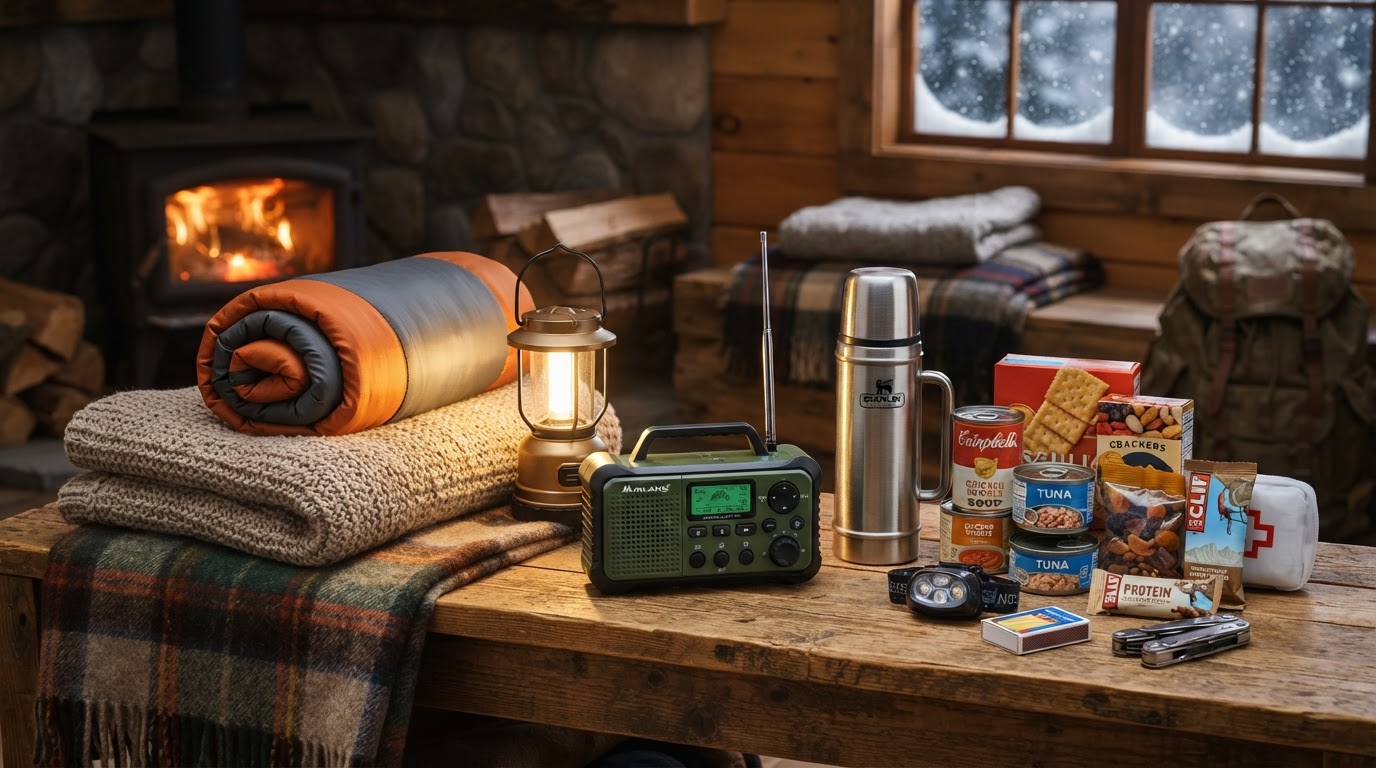
Winter Storm Preparedness Checklist
Winter Storm Preparedness Checklist: Heat, Power, and Safety
A winter storm can knock out power, close roads, and strand you at home for days in the cold. This checklist covers what to prepare before a winter storm, how to stay warm and safe during it, and what to do afterward.
Quick Answer
A winter storm preparedness checklist is a list of preparations and actions for staying warm, fed, and safe during a winter storm. It includes heating supplies, warm clothing and bedding, food and water, backup power and light, and a plan for travel safety. Carbon monoxide safety is critical: never use generators, grills, or camp stoves indoors, and never heat your home with an oven or gas stove.
Key Takeaways
- •Prepare heating alternatives and warm bedding before the storm.
- •Keep food that needs no cooking and a way to heat water safely.
- •Charge devices and keep a power bank and flashlights ready.
- •Never use generators, grills, or stoves indoors; carbon monoxide is deadly.
Before the Storm: Heat and Warmth
Prepare these before winter arrives.
- •Insulate windows and doors with weather stripping or plastic film.
- •Gather warm blankets, sleeping bags, and warm clothing.
- •Have a safe backup heat source and know how to use it.
- •Keep a carbon monoxide detector with fresh batteries.
- •Service your heating system and chimney before the season.
Food and Water Supplies
Keep shelf-stable food that needs no cooking, because a power outage may disable your stove. Include foods that can be eaten cold and a manual can opener. Store water in case pipes freeze, and know how to prevent pipes from freezing by letting fauc drip during extreme cold.
If you use a camp stove for cooking or heating water, use it outdoors only. Carbon monoxide from fuel-burning appliances is deadly indoors. Keep a way to heat water for warm drinks, which help maintain body temperature.
Power, Light, and Communication
A power outage during a winter storm can last for days. Keep flashlights and lanterns with spare batteries. A power bank keeps your phone charged for alerts and communication. A NOAA weather radio provides warnings when cell service fails.
Charge your devices before the storm arrives. If you use a portable power station, keep it charged and understand what it can power. Conserve heat by gathering in one room and closing off unused spaces.
Travel Safety and After the Storm
Avoid driving during a winter storm. If you must drive, keep a winter car kit with a blanket, water, snacks, a flashlight, and a phone charger. Let someone know your route and expected arrival time.
After the storm, clear snow from vents and exhaust pipes before using any fuel-burning appliances. Check on neighbors, especially older adults. Be careful shoveling snow, which can be strenuous. Watch for ice and downed power lines.
Winter Storm Checklist by Area
| Area | What to prepare |
|---|---|
| Heat | Insulation, blankets, safe backup heat, carbon monoxide detector |
| Food | Shelf-stable, no-cook food, manual can opener, water |
| Power | Flashlights, power bank, NOAA weather radio |
| Travel | Winter car kit, avoid driving, share your route |
| Safety | No indoor fuel devices, clear vents, check on neighbors |
Frequently Asked Questions
Can I heat my home with my oven or gas stove during a power outage?
No. Using an oven or gas stove for heating produces carbon monoxide, which is deadly. Use only a safe, properly ventilated backup heat source and keep a carbon monoxide detector with fresh batteries.
How do I keep pipes from freezing during a winter storm?
Let faucets drip during extreme cold to keep water moving. Open cabinet doors under sinks to let warm air reach pipes. Insulate pipes where possible. If pipes freeze, do not use open flame to thaw them.
What should I keep in a winter car kit?
A blanket, water, shelf-stable snacks, a flashlight, a phone charger, a first aid kit, and an ice scraper. If you may be stranded, add warm clothing, a shovel, and sand or kitty litter for traction.
How do I stay warm during a winter power outage?
Gather in one room, close off unused spaces, and use blankets and sleeping bags. Wear layers and a hat. Avoid using ovens or gas stoves for heat because of carbon monoxide risk. Keep a carbon monoxide detector with fresh batteries.