
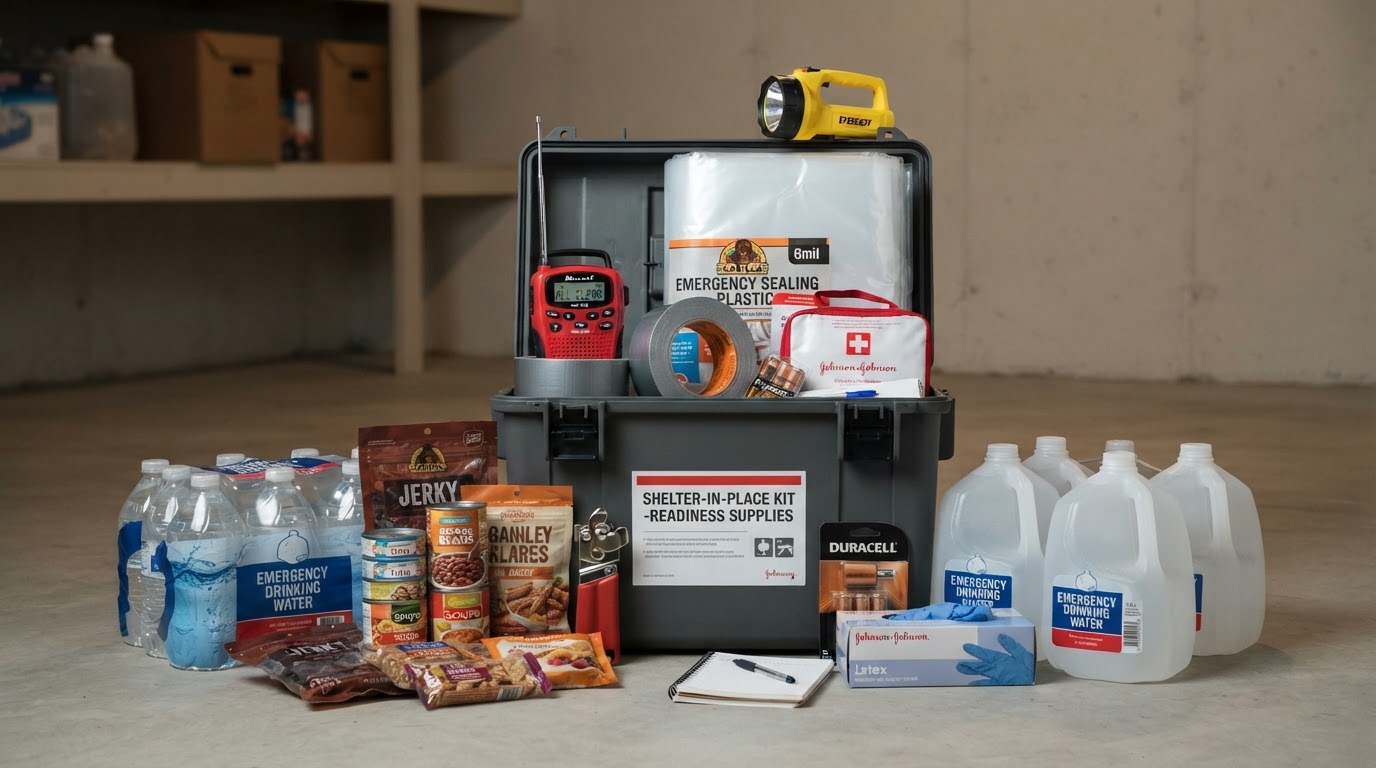
Shelter in Place Supplies
Shelter in Place Supplies: What to Keep at Home
Shelter in place supplies are what you keep at home to stay safe and comfortable when you cannot or should not leave. This guide covers what to stock for air quality, water, food, power, and sanitation during a shelter-in-place order.
Quick Answer
Shelter in place supplies are the items you keep at home to sustain your household when you must stay inside during a disruption. They include water, food, a weather radio, plastic sheeting and tape for sealing windows, a first aid kit, sanitation supplies, and backup light. The specific supplies depend on the hazard, so tailor your kit to your local risks.
Key Takeaways
- •Shelter in place means staying home during a hazard, not evacuating.
- •Stock water, food, light, a radio, and sanitation supplies.
- •Add plastic sheeting and duct tape for air-quality emergencies.
- •Tailor supplies to your local hazards, such as wildfire smoke or chemical spills.
When to Shelter in Place
Officials may order shelter in place when leaving is more dangerous than staying, such as during a hazardous materials incident, severe weather, or a security emergency. The order means stay where you are, close doors and windows, and wait for the all-clear.
Shelter in place is different from evacuation. In an evacuation you leave; in a shelter in place you stay. Your supplies should support both, because you may not know which one you will need.
Core Shelter in Place Supplies
Keep these at home for any shelter-in-place order.
- •Water: one gallon per person per day for at least three days.
- •Shelf-stable food that needs little or no cooking.
- •A weather radio or a way to receive alerts.
- •Flashlights or lanterns with spare batteries.
- •A first aid kit and personal medications.
- •Sanitation supplies: toilet paper, wipes, and a portable toilet option.
- •Plastic sheeting and duct tape for sealing windows if needed.
- •A dust mask or respirator for air-quality hazards.
Supplies for Air-Quality Emergencies
During a wildfire, chemical spill, or hazardous materials incident, the air inside your home may become dangerous. Plastic sheeting and duct tape can seal a room against contaminated air. Choose an interior room with few windows and doors.
For wildfire smoke, a properly fitted N95 or P100 respirator protects against fine particles. Ordinary masks do not protect against gases or chemical vapors. Follow official guidance on when to seal your home and when to evacuate instead.
Comfort and Sanity During a Long Stay
A shelter-in-place order can last hours or days. Keep comfort supplies: books, games, and activities for children, a way to charge devices, and familiar foods. Boredom and stress are real challenges during a long stay.
If the power is out, have a plan for food safety. Keep refrigerator and freezer doors closed to preserve cold. A thermometer in the fridge helps you know when food is no longer safe.
Shelter in Place Supplies by Hazard
| Hazard | Key additions |
|---|---|
| Severe weather | Radio, blankets, water, food |
| Wildfire smoke | N95 respirators, air purifier, seal gaps |
| Chemical spill | Plastic sheeting, duct tape, sealed room |
| Power outage | Flashlights, power bank, food safety plan |
| Pandemic | Extra hygiene supplies, food, medications |
Frequently Asked Questions
What is the difference between shelter in place and evacuation?
Shelter in place means staying home during a hazard. Evacuation means leaving. Officials decide which is safer based on the hazard. Prepare for both, because you may not know which you will need.
How much water should I store for shelter in place?
At least one gallon per person per day for three days, as a minimum. For shelter-in-place scenarios that could last longer, store more. Include water for pets.
Do I need plastic sheeting and duct tape?
For air-quality emergencies like a chemical spill, plastic sheeting and duct tape can seal a room against contaminated air. If you live near industrial areas or highways, keep them on hand.
Will a mask protect me from wildfire smoke?
A properly fitted N95 or P100 respirator protects against fine particles in smoke. Ordinary cloth or surgical masks do not. No mask protects against gases or chemical vapors; follow official guidance for those.