
Extreme Heat Preparedness
Extreme Heat Preparedness: Stay Cool and Safe
Extreme heat is deadly, especially for older adults, young children, and people with chronic conditions. This guide covers how to prepare for a heat wave so your household stays cool, hydrated, and safe, even if the power goes out.
Quick Answer
Extreme heat preparedness is the work of staying cool, hydrated, and informed during a heat wave. It includes having plenty of drinking water, identifying a cool space, preparing for the possibility of a power outage during peak demand, and checking on vulnerable people. Heat illness is dangerous and can escalate quickly, so know the signs and take symptoms seriously.
Key Takeaways
- •Store extra drinking water and drink more than usual during a heat wave.
- •Identify a cool space, such as a public cooling center or a shaded room.
- •Prepare for power outages during peak cooling demand.
- •Check on older adults, young children, and people with chronic conditions.
Staying Cool and Hydrated
Heat safety starts with water and shade.
- •Store extra drinking water and drink more than usual during heat.
- •Identify the coolest room in your home or a nearby public cooling center.
- •Use shades or curtains to block direct sun during the hottest hours.
- •Wear loose, light-colored clothing.
- •Avoid strenuous activity during peak heat hours.
Preparing for a Power Outage
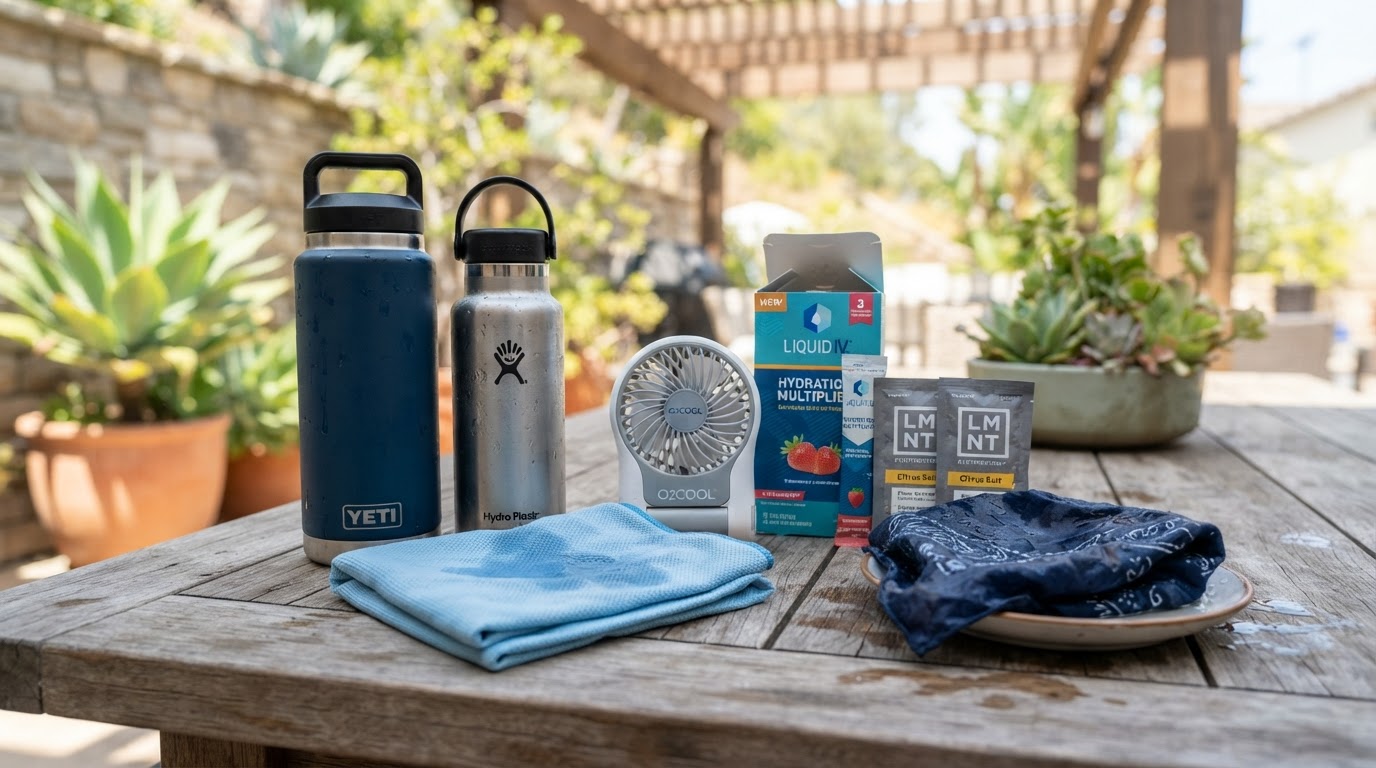
During extreme heat, power demand spikes as everyone runs air conditioning, and outages can occur. If the power goes out, your home can become dangerously hot quickly. Keep a battery-operated fan, a cooling towel, and extra water in case cooling fails.
A portable power station can run a small fan or charge your phone for alerts. Do not assume your air conditioning will work through a heat wave. Identify a backup cool space like a library, mall, or community cooling center, and know how to get there safely.
Protecting Vulnerable People
Older adults, young children, pregnant people, and people with chronic conditions are at higher risk during extreme heat. Check on them regularly during a heat wave. Make sure they have water, access to a cool space, and are not overexerting.
Never leave children or pets in a parked vehicle, even for a short time. A car's interior can reach deadly temperatures within minutes. If you see a child or pet alone in a hot vehicle, call 911.
Recognizing Heat Illness
Heat exhaustion includes heavy sweating, weakness, dizziness, nausea, and a rapid pulse. Move to a cool space, drink water, and rest. Heat stroke is a medical emergency and includes a high body temperature, confusion, loss of consciousness, and hot, dry skin. Call 911 for heat stroke.
Know the difference. Heat exhaustion needs cooling and hydration. Heat stroke is life-threatening and needs emergency care. When in doubt, seek help. Heat illness can escalate faster than people expect, especially for vulnerable individuals.
Heat Illness Signs
| Condition | Key signs | What to do |
|---|---|---|
| Heat exhaustion | Heavy sweating, dizziness, nausea, weakness | Cool space, water, rest |
| Heat stroke | High temp, confusion, hot dry skin, unconsciousness | Call 911 immediately |
| Heat cramps | Muscle cramps during activity in heat | Stop activity, drink water, rest |
| Dehydration | Thirst, dry mouth, dark urine, fatigue | Drink water, rest in shade |
Frequently Asked Questions
How much water should I drink during a heat wave?
Drink more than usual, even if you do not feel thirsty. Carry water with you. Avoid alcohol and caffeine, which can increase dehydration. If you are sweating heavily, consider an electrolyte drink.
What is a cooling center?
It is a public air-conditioned space designated during heat waves, such as a library, community center, or mall. Local governments announce locations during heat emergencies. Identify one near you before a heat wave.
What are the signs of heat stroke?
A high body temperature, confusion, loss of consciousness, and hot, dry skin. Heat stroke is a medical emergency. Call 911 immediately and start cooling the person with water and air while waiting for help.
Can a power outage during extreme heat be dangerous?
Yes. Without air conditioning, indoor temperatures can reach dangerous levels quickly. Identify a backup cool space, keep water on hand, and use battery fans or cooling towels. Check on vulnerable people during an outage.