
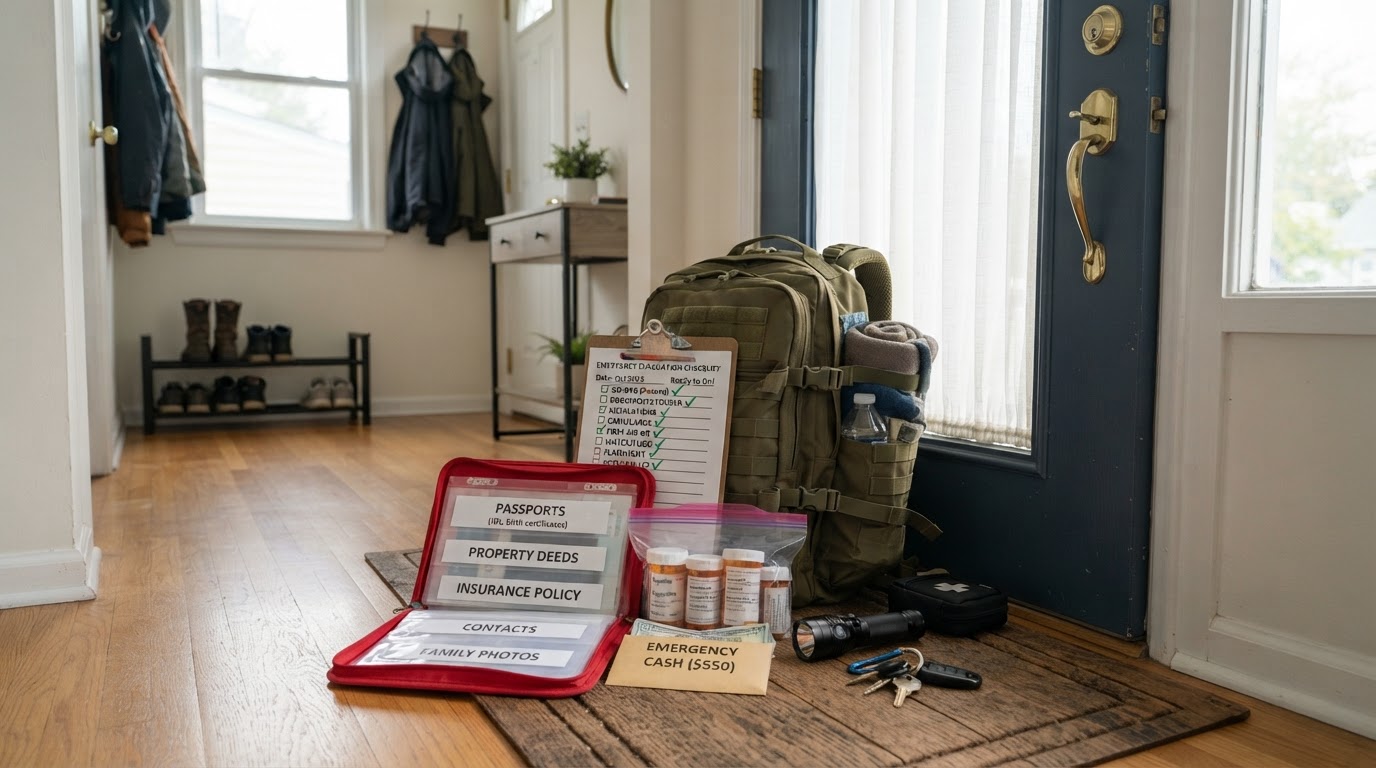
Emergency Evacuation Checklist
Emergency Evacuation Checklist: What to Take and Do
An emergency evacuation checklist helps you leave home quickly and safely with what you need. This guide covers what to pack, what to do before you leave, and how to plan your evacuation route.
Quick Answer
An emergency evacuation checklist is a list of what to take and do when you must leave home fast. It includes your go-bag, documents, medications, a planned route, and a meeting point. Prepare the checklist before you need it, keep go-bags ready, and practice the plan so everyone knows what to do.
Key Takeaways
- •Prepare your go-bags and checklist before an evacuation order.
- •Pack documents, medications, and a change of clothes.
- •Plan at least two evacuation routes and a meeting point.
- •Follow official evacuation orders and routes.
Before an Evacuation: What to Prepare Now
Do these before you ever need to evacuate.
- •Assemble a go-bag for each person.
- •Gather copies of important documents in a waterproof container.
- •Plan at least two evacuation routes away from your area.
- •Choose a meeting point and an out-of-area contact.
- •Keep your car's gas tank at least half full during risk seasons.
- •Know how to shut off utilities if you have time and it is safe.
What to Take: The Evacuation Checklist
Grab these when you leave.
- •Go-bags for each person.
- •Medications and a medication list.
- •Phone chargers and a power bank.
- •Cash in small bills.
- •A change of clothes and sturdy shoes.
- •Pet supplies: carrier, food, water, and leash.
- •Valuables you can carry quickly, if time allows.
- •A weather radio or a way to receive updates.
During an Evacuation: What to Do
When an evacuation order comes, act on your plan. Grab your go-bags, shut off utilities if you have time and it is safe, and leave using your planned route. Do not wait to see if the order is serious.
Follow official routes and instructions. Avoid shortcuts that may be blocked or flooded. Let your out-of-area contact know where you are going. Keep your phone on to receive updates, but conserve battery.
After an Evacuation
Do not return home until officials say it is safe. Roads, structures, and utilities may be damaged. Check on your household and your neighbors if you can.
When you return, inspect your home for damage before entering. Take photos for insurance. The recovery period is its own phase; pace yourself and follow official guidance.
Evacuation Timeline Checklist
| When | Action |
|---|---|
| Now | Build go-bags, plan routes, choose meeting point |
| Risk season | Keep gas tank half full, review plan |
| Order issued | Grab go-bags, shut off utilities, leave |
| During | Follow official routes, contact out-of-area contact |
| After | Wait for all-clear, inspect home, document damage |
Frequently Asked Questions
What should I grab first in an evacuation?
Your go-bags, medications, documents, phone charger, and pets. Everything else is replaceable. Prepare go-bags in advance so you do not have to think under pressure.
How do I plan an evacuation route?
Identify at least two routes away from your area, in case one is blocked. Choose a destination and a meeting point. Practice the routes so they are familiar.
Should I shut off my utilities during an evacuation?
If you have time and it is safe, shut off gas, water, and electricity to prevent damage. Follow utility guidance. Do not risk your safety to shut off utilities.
When is it safe to return home after an evacuation?
Only when officials say it is safe. Roads and structures may be damaged, and hazards may remain. Wait for the all-clear before returning.