
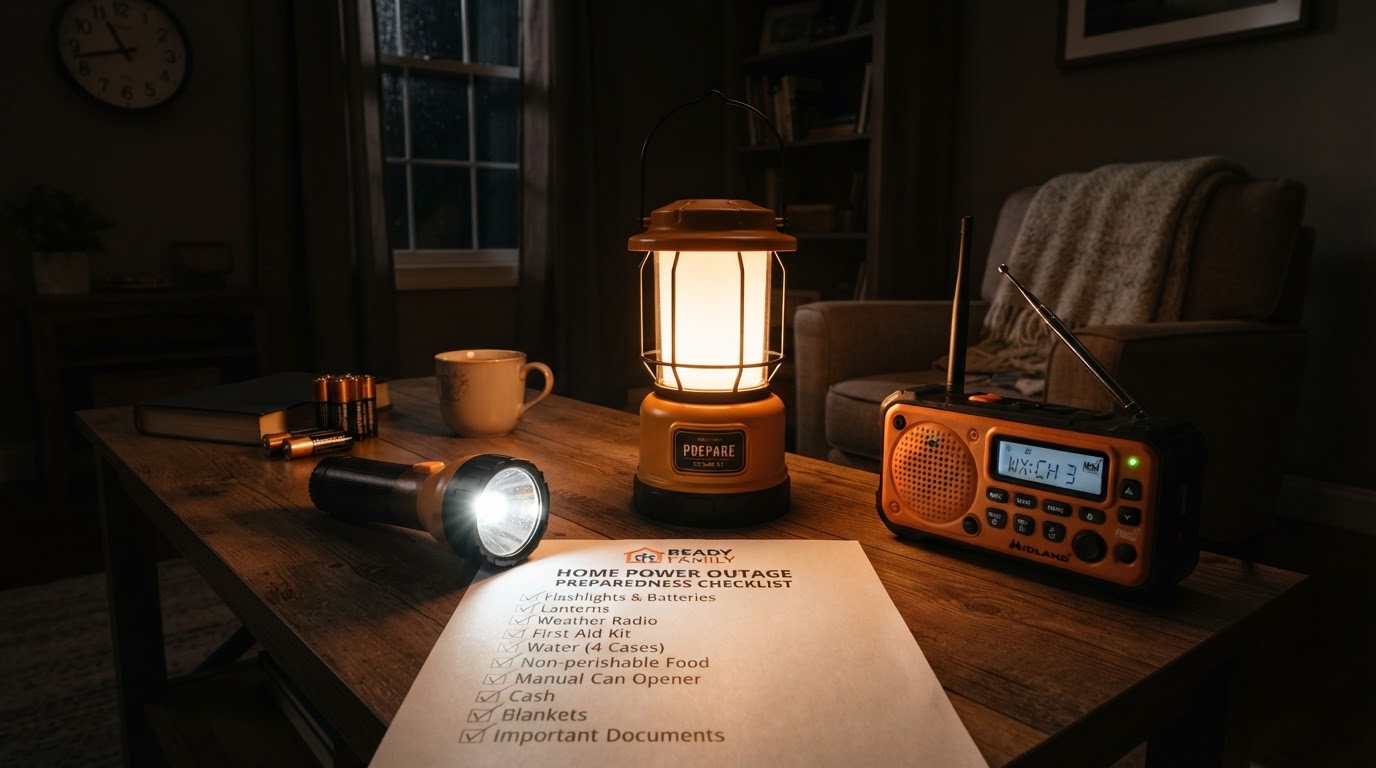
Power Outage Preparedness
Power Outage Preparedness: A Practical Household Plan
A power outage is one of the most common household disruptions. This guide covers how to prepare for an outage so your household has light, food safety, communication, and backup power when the grid goes down.
Quick Answer
Power outage preparedness is the work of ensuring your household has light, safe food, communication, and backup power when electricity fails. It includes keeping flashlights and lanterns accessible, a power bank for phones, a weather radio, and a plan for food safety during an outage. Carbon monoxide safety is critical: never use fuel generators, grills, or camp stoves indoors.
Key Takeaways
- •Keep flashlights and lanterns where you can find them in the dark.
- •A power bank keeps phones charged for communication and alerts.
- •Keep refrigerator and freezer doors closed to preserve food longer.
- •Never use fuel generators, grills, or camp stoves indoors; carbon monoxide kills.
Light and Visibility
The first need in a power outage is light. Keep flashlights in bedrooms, the kitchen, and near the breaker box. A lantern lights a whole room so the household can gather and move safely. Headlamps keep hands free for cooking, repairs, and caring for children.
Store spare batteries and check them every six months. Avoid candles, which are a fire risk, especially in stressful conditions. Test your lights before storm season so you know they work.
Food Safety During an Outage
Keep refrigerator and freezer doors closed. A full freezer holds its temperature for about 48 hours; a half-full freezer for about 24. The refrigerator holds for about 4 hours. A thermometer inside helps you know if food is still safe.
If the outage lasts beyond a day, consider cooking perishable food first. Discard food that has been above 40F (4C) for more than two hours. When in doubt, throw it out. Food poisoning during a disaster compounds the problem.
Communication and Information
Keep a power bank charged so your phone stays on for alerts and communication. A NOAA weather radio with battery backup provides alerts when cell service or power fails. Text messages often get through when calls do not because they use less bandwidth.
Write down important contacts and keep a paper copy. If phones die and you rely on stored numbers, you lose access to everyone you need to reach. A written list is a simple, reliable backup.
Backup Power and Carbon Monoxide Safety
A portable power station keeps phones, medical devices, and lights running without fuel. Match its capacity to what you need to power. A power bank handles a phone; a power station handles more devices for longer.
If you use a fuel generator, place it outdoors, far from windows and doors, and follow the manufacturer's instructions. Carbon monoxide is invisible, odorless, and deadly. Never run a generator, grill, or camp stove indoors or in a garage. Install battery-operated carbon monoxide detectors in your home.
Power Outage Preparedness Checklist
| Area | What to prepare |
|---|---|
| Light | Flashlights, lanterns, headlamps, spare batteries |
| Power | Power bank, optional portable power station |
| Information | NOAA weather radio, written contacts |
| Food safety | Thermometer, keep doors closed, plan for cooking |
| Safety | Carbon monoxide detectors, no indoor fuel devices |
| Comfort | Blankets, books, activities for children |
Frequently Asked Questions
How long will food last in a power outage?
A full freezer holds about 48 hours, a half-full freezer about 24, and a refrigerator about 4 hours if you keep the doors closed. Use a thermometer to check. Discard food above 40F (4C) for more than 2 hours.
Can I use my grill or camp stove indoors during a power outage?
No. Grills, camp stoves, and fuel generators produce carbon monoxide, which is deadly indoors. Use them outdoors only, far from windows and doors. Keep battery-operated carbon monoxide detectors in your home.
What is the best backup power for a power outage?
A power bank handles phones and small devices. A portable power station handles more devices for longer and recharges from a wall outlet or compatible solar panel. Match the capacity to what you need to keep running.
How do I keep my phone charged during a power outage?
Keep a charged power bank ready. Conserve battery by reducing screen brightness, closing background apps, and enabling low power mode. A portable power station can recharge a phone many times over a multi-day outage.