
Research-based buying guide
Choosing an Emergency Weather Radio
NOAA reception, SAME county alerting, and power sources compared so you know what you are actually buying.
A weather radio is the most reliable way to receive official alerts when power and cell service are down. But receiving NOAA channels is not the same as automatic, county-specific alerts. A radio that lets you listen for broadcasts will not wake you at 3 a.m. for a tornado warning the way a programmable alert radio will. This is research-based guidance on the categories so you buy the features that matter for your situation.
Think about how you will power the radio during an outage. A rechargeable battery that sits dead in a drawer is not a plan. The most dependable setup combines replaceable batteries as the primary source with a USB charge option for convenience. Crank and solar inputs are useful backups, but they produce very little energy per minute and should not be your main power.
Check whether the radio supports S.A.M.E. county programming if you want alerts only for your area, and verify NOAA coverage for your location before relying on any radio. Reception depends on distance to the nearest transmitter and your home's construction, so what works for a friend in another town may not work for you.
Start with Your Situation
Home alerting
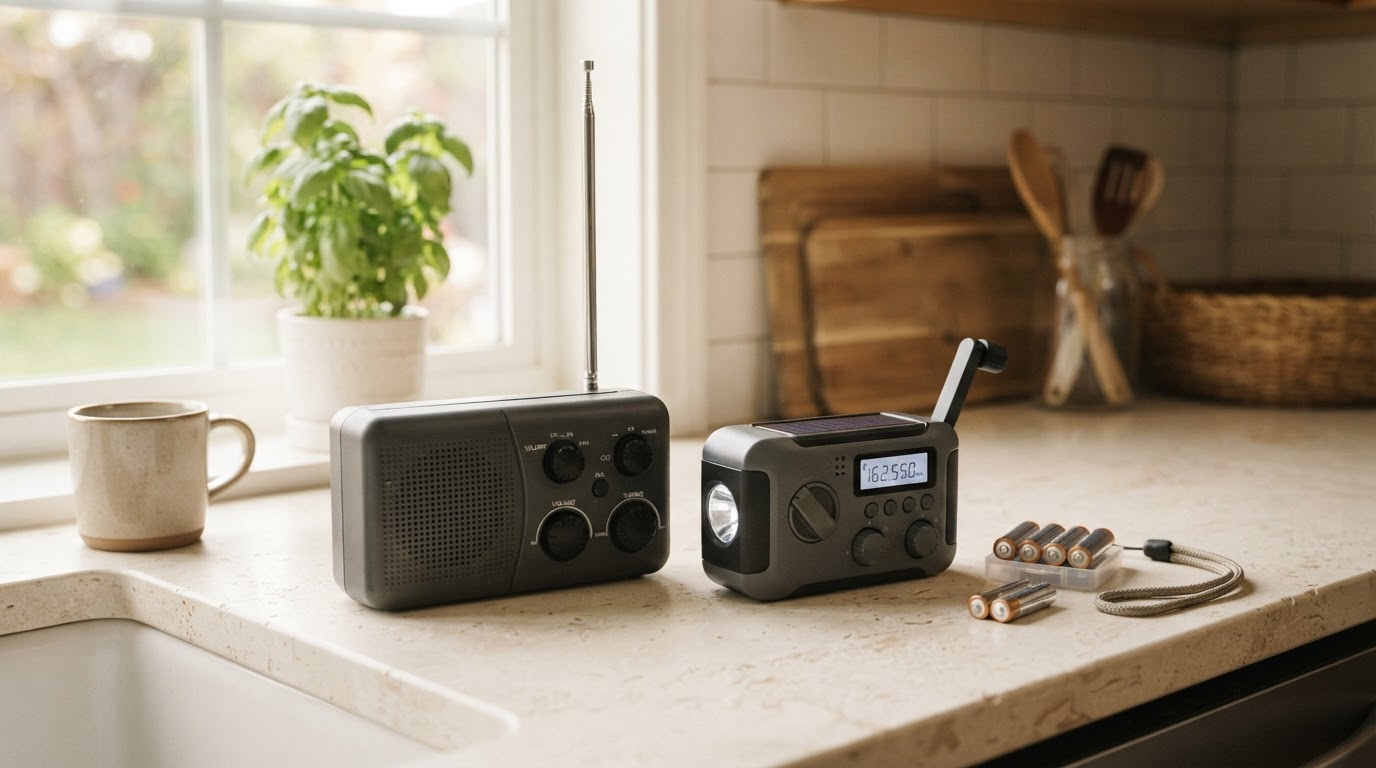
A desktop SAME radio programmed for your county with battery backup.
Kits and go-bags
A compact crank or solar radio for portability.
Backup only
Your phone's Wireless Emergency Alerts, paired with a charged power bank.
Useful for this guide
NOAA Weather Alert Radio
Programmable for your county with automatic tone alerts. Requires backup batteries; reception depends on your area.
Best for: Home alerting
Compare Your Options
These are product categories, not specific tested models. We do not invent prices, ratings, or stock.
| Type | Best for | Evidence | Key notes |
|---|---|---|---|
| Desktop SAME radio | Home alerting where you want automatic, county-specific warnings. | Research-based | Requires backup batteries. Reception depends on area. Not portable |
| Compact crank/solar radio | Kits and go-bags where portability and multiple power sources matter. | Research-based | Crank output is low. Verify NOAA reception in your area. Smaller speaker |
| Phone alerts plus power bank | Backup alerting where you already carry a phone and a charged bank. | Research-based | Depends on cell service. Battery dies without a charge. Not a substitute for a dedicated radio |
Scroll the table horizontally on narrow screens to read every column.
What to Look For
NOAA reception versus automatic alerts
Receiving NOAA channels lets you listen for broadcasts. Automatic tone alerts wake you and trigger without you tuning in. Both are useful, but they are different features. If you want to be woken for a warning, you need the alert function, not just reception.
S.A.M.E. county programming
Specific Area Message Encoding lets a radio alert only for your county, reducing false alarms from alerts meant for places far away. Not every NOAA radio supports SAME, so check the feature list. Program the code for your county and reprogram if you move.
Battery backup
A radio is useless in an outage without power. Look for replaceable batteries, not only a rechargeable cell that dies in storage. Keep spare batteries stored separately to prevent corrosion and replace them on a schedule.
Antenna and local reception
Reception depends on distance to the nearest NOAA transmitter and your home's construction. Check coverage for your area before relying on a radio. A radio with great features that cannot reach your local transmitter is not useful.
Charging requirements
Crank and solar inputs are helpful but limited. Treat them as backups to fresh batteries, not primary power. If the radio charges devices over USB, that convenience does not replace a dedicated power bank.
Realistic crank and solar limits
Hand-cranking produces very little energy per minute, and solar needs direct sun. Neither replaces a stock of spare batteries. Rely on crank and solar only when you have no other option.
Useful for this guide
NOAA Weather Alert Radio
Programmable for your county with automatic tone alerts. Requires backup batteries; reception depends on your area.
Best for: Home alerting
Products Worth Comparing
Desktop SAME radio
Home alerting where you want automatic, county-specific warnings.
Advantages
- Automatic tone alerts
- SAME county programming
- Loud siren
Limitations
- Requires backup batteries
- Reception depends on area
- Not portable
Accessories: Fresh spare batteries and a clear antenna location.
Compact crank/solar radio
Kits and go-bags where portability and multiple power sources matter.
Advantages
- Multiple power sources
- Portable
- Often includes a small flashlight
Limitations
- Crank output is low
- Verify NOAA reception in your area
- Smaller speaker
Accessories: Spare batteries; a small USB cable if it charges devices.
Phone alerts plus power bank
Backup alerting where you already carry a phone and a charged bank.
Advantages
- No extra device to buy
- Familiar to use
- Wireless Emergency Alerts are free
Limitations
- Depends on cell service
- Battery dies without a charge
- Not a substitute for a dedicated radio
Accessories: A charged power bank and a backup charging cable.
Common Buying Mistakes
- !Treating NOAA reception as proof of automatic, county-specific alerts.
- !Relying on hand-crank or solar as a primary power source.
- !Forgetting spare batteries and finding the radio dead in storage.
- !Assuming reception is the same everywhere. Check your local transmitter coverage.
Care and Readiness
- Test the radio monthly and replace batteries on a schedule.
- Reprogram SAME county codes if you move.
- Keep the antenna extended and positioned for best reception.
- Store spare batteries separately to prevent corrosion.
Common Questions
Do I need SAME if I already get phone alerts?
Phone alerts depend on cellular service and a charged battery. A SAME radio with battery backup alerts you when those fail, especially overnight when you may not hear a phone.
Is a crank radio enough for an outage?
Cranking is a backup, not a primary source. It produces little energy per minute, so keep fresh batteries as the main power and use the crank only when you have nothing else.
Will any NOAA radio alert for my county?
Only radios with SAME programming can alert for a specific county. Receiving NOAA channels lets you listen but does not guarantee automatic alerts, and reception still depends on your local transmitter.
Build Your Household Plan
Add this category to your plan, then work through the essentials at a pace that fits your household.
Explore the 10 EssentialsMore gear guides
Water Filters and Purifiers: What to Buy for Your Situation
Research-based comparison of filter and purifier types, what each removes, and where it falls short.
Portable Power Stations: A Buyer's Guide to Capacity and Output
Match watt-hours to what you actually need to run, and understand the gap between rated and usable energy.
Emergency Lighting: Lanterns, Headlamps, and Flashlights Compared
Match the light to the job, and prioritize usable runtime over peak brightness.
Portable Solar Panels: Realistic Expectations and Tradeoffs
Solar is a complement, not a free lunch. Match panel watts to what you actually charge.
Sources and Method
This guide compares manufacturer specifications, published documentation, and relevant official guidance. Products are not described as hands-on tested unless testing is documented. This is research-based comparison, not a substitute for manufacturer instructions or professional advice.
Some links on this page are affiliate links. We may earn a commission if you buy through them, at no extra cost to you.