
Research-based buying guide
Emergency Lighting: Lanterns, Headlamps, and Flashlights Compared
Match the light to the job, and prioritize usable runtime over peak brightness.
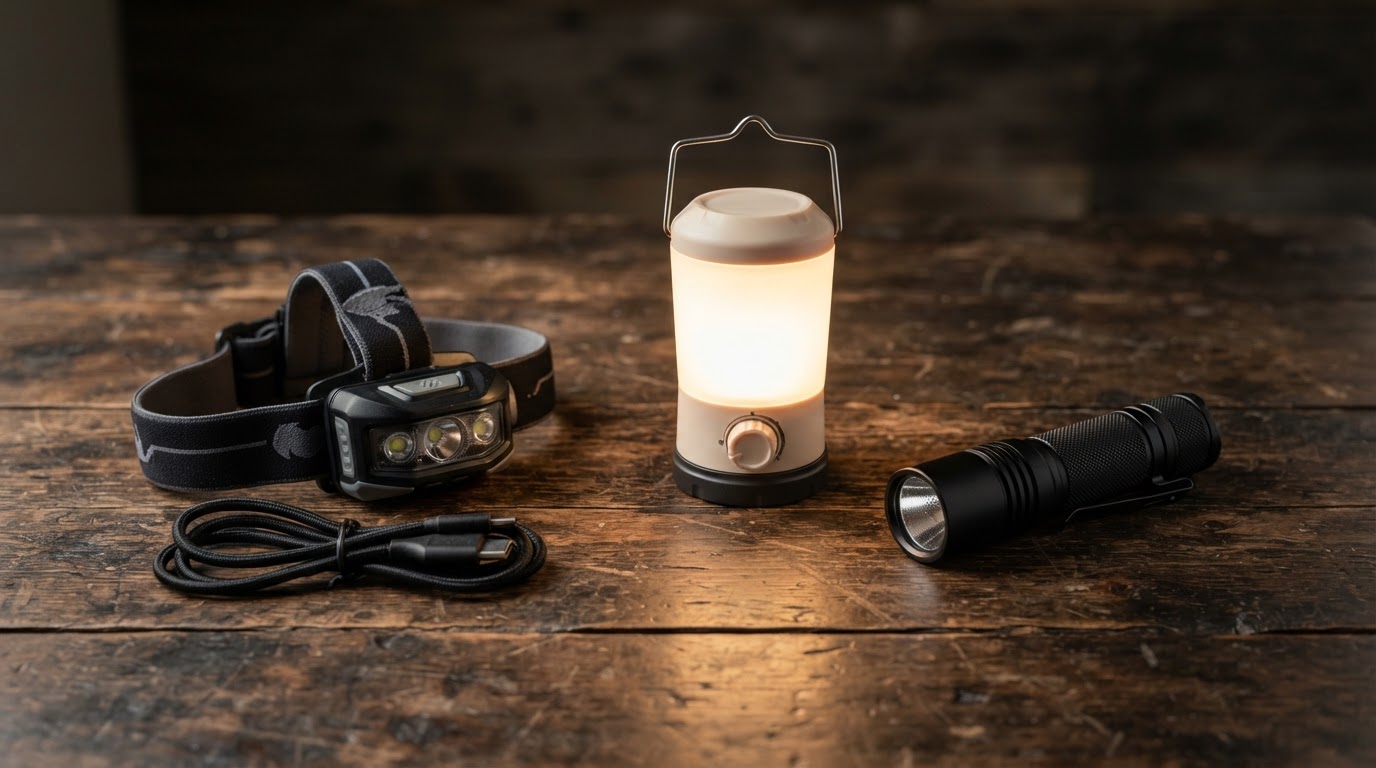
Different lights serve different jobs: headlamps keep hands free, lanterns light a room, flashlights throw a beam. Brightness sells, but usable runtime and the right power source matter more in an outage. A 1000-lumen light on high may last two hours, while the same light on low lasts a full night and is plenty to navigate a dark house. This is research-based comparison, not hands-on testing.
Think about where each light lives. A headlamp by the bed lets you find your way to the breaker panel with both hands free. A lantern in the kitchen lights a space where the family gathers during an outage. A compact flashlight kept where you sleep is the one you can actually find in the dark. Spread lights around the house rather than keeping one central light.
Battery type decides how reliable a light is over a long outage. Lights with replaceable AA or AAA cells let you swap in spares when the charge runs out. Rechargeable lights are convenient but die if you cannot recharge, so pair them with a power bank or keep a replaceable-battery light as your dependable backup.
Start with Your Situation
Hands-free work
A headlamp so you can check breakers or read while using both hands.
Room lighting
A lantern that lights a space rather than a single beam.
Spot illumination
A compact flashlight kept where you sleep.
Long outages
Lights with replaceable batteries and a low mode for runtime.
Useful for this guide
Rechargeable LED Headlamp
Look for USB charging, a low mode for runtime, and a red-light mode for night vision.
Best for: Hands-free work and evacuation
Compare Your Options
These are product categories, not specific tested models. We do not invent prices, ratings, or stock.
| Type | Best for | Evidence | Key notes |
|---|---|---|---|
| Rechargeable headlamp | Hands-free work, evacuations, and moving through the house safely. | Research-based | Dies if you cannot recharge. Verify runtime on low mode. Beam is close-range |
| LED lantern | Room lighting where you need to see a whole space. | Research-based | Not a focused beam. Bulkier. Check battery type before stocking spares |
| Compact flashlight | Spot illumination kept where you sleep or by the breaker panel. | Research-based | Lights one spot, not a room. Keep spare batteries. Single-purpose |
Scroll the table horizontally on narrow screens to read every column.
What to Look For
Brightness versus usable runtime
Peak lumens drain batteries fast. A low mode extends runtime dramatically and is often enough for most tasks during an outage. Choose a light with multiple brightness levels so you can dial down and save power.
Low modes
A good low or medium mode is more useful than maximum brightness. Look for multiple brightness levels you can choose, and a red-light mode for night vision if you want to preserve your eyes' adaptation to the dark.
Beam pattern
A focused beam throws far for checking things outside; a flood beam lights a wide area up close. Lanterns flood a room; headlamps and flashlights often offer both with a zoom or dual LED. Match the beam to the job.
Replaceable versus rechargeable batteries
Replaceable AA or AAA cells let you swap in spares during a long outage. Rechargeable lights are convenient but die if you cannot recharge. For a long outage, replaceable-battery lights are the more dependable choice.
Water-resistance ratings
Check the IP rating if the light may be used outdoors or in wet conditions. Higher ratings handle rain and splashing. A light you cannot use in the rain is less useful for evacuations and outdoor checks.
Controls and accessibility
A light you cannot operate in the dark or with cold hands is not useful. Test the switch and mode changes before relying on it. Avoid lights with tiny, fiddly buttons if you may need them with gloves on.
Useful for this guide
Rechargeable LED Headlamp
Look for USB charging, a low mode for runtime, and a red-light mode for night vision.
Best for: Hands-free work and evacuation
Products Worth Comparing
Rechargeable headlamp
Hands-free work, evacuations, and moving through the house safely.
Advantages
- Hands-free
- USB charging
- Often includes a red mode
Limitations
- Dies if you cannot recharge
- Verify runtime on low mode
- Beam is close-range
Accessories: A USB power bank and a spare charging cable.
LED lantern
Room lighting where you need to see a whole space.
Advantages
- Lights a room
- Long runtime
- Some run on D-cells or USB
Limitations
- Not a focused beam
- Bulkier
- Check battery type before stocking spares
Accessories: Spare batteries matching the lantern's type.
Compact flashlight
Spot illumination kept where you sleep or by the breaker panel.
Advantages
- Focused beam
- Simple to operate
- Easy to store
Limitations
- Lights one spot, not a room
- Keep spare batteries
- Single-purpose
Accessories: Spare batteries stored beside the light.
Common Buying Mistakes
- !Buying on peak lumens alone, which drains batteries fast.
- !Choosing a rechargeable light with no way to recharge during an outage.
- !Forgetting spare batteries in the right size.
- !Using candles, which are a fire risk and not recommended for emergency lighting.
Care and Readiness
- Test lights every few months and replace batteries on a schedule.
- Store spare batteries beside each light, not inside it, to prevent corrosion.
- Keep a light where you sleep so you can find it in the dark.
- Recharge rechargeable lights before storms and check they hold a charge.
Common Questions
How many lights do I need?
A headlamp plus a lantern covers most household needs. Add a compact flashlight where you sleep or near the breaker panel so someone can always find a light in the dark.
Are rechargeable lights better?
They are convenient but useless if you cannot recharge. Lights with replaceable batteries are more reliable for long outages, so keep at least one in your kit.
Do I need the brightest light available?
Usually not. A low or medium mode gives far more runtime and is enough for most tasks during an outage. Brightness drains batteries quickly.
Build Your Household Plan
Add this category to your plan, then work through the essentials at a pace that fits your household.
Explore the 10 EssentialsMore gear guides
Water Filters and Purifiers: What to Buy for Your Situation
Research-based comparison of filter and purifier types, what each removes, and where it falls short.
Portable Power Stations: A Buyer's Guide to Capacity and Output
Match watt-hours to what you actually need to run, and understand the gap between rated and usable energy.
Choosing an Emergency Weather Radio
NOAA reception, SAME county alerting, and power sources compared so you know what you are actually buying.
Portable Solar Panels: Realistic Expectations and Tradeoffs
Solar is a complement, not a free lunch. Match panel watts to what you actually charge.
Sources and Method
This guide compares manufacturer specifications, published documentation, and relevant official guidance. Products are not described as hands-on tested unless testing is documented. This is research-based comparison, not a substitute for manufacturer instructions or professional advice.
Some links on this page are affiliate links. We may earn a commission if you buy through them, at no extra cost to you.