
Household preparedness
Plan for light when the power is out
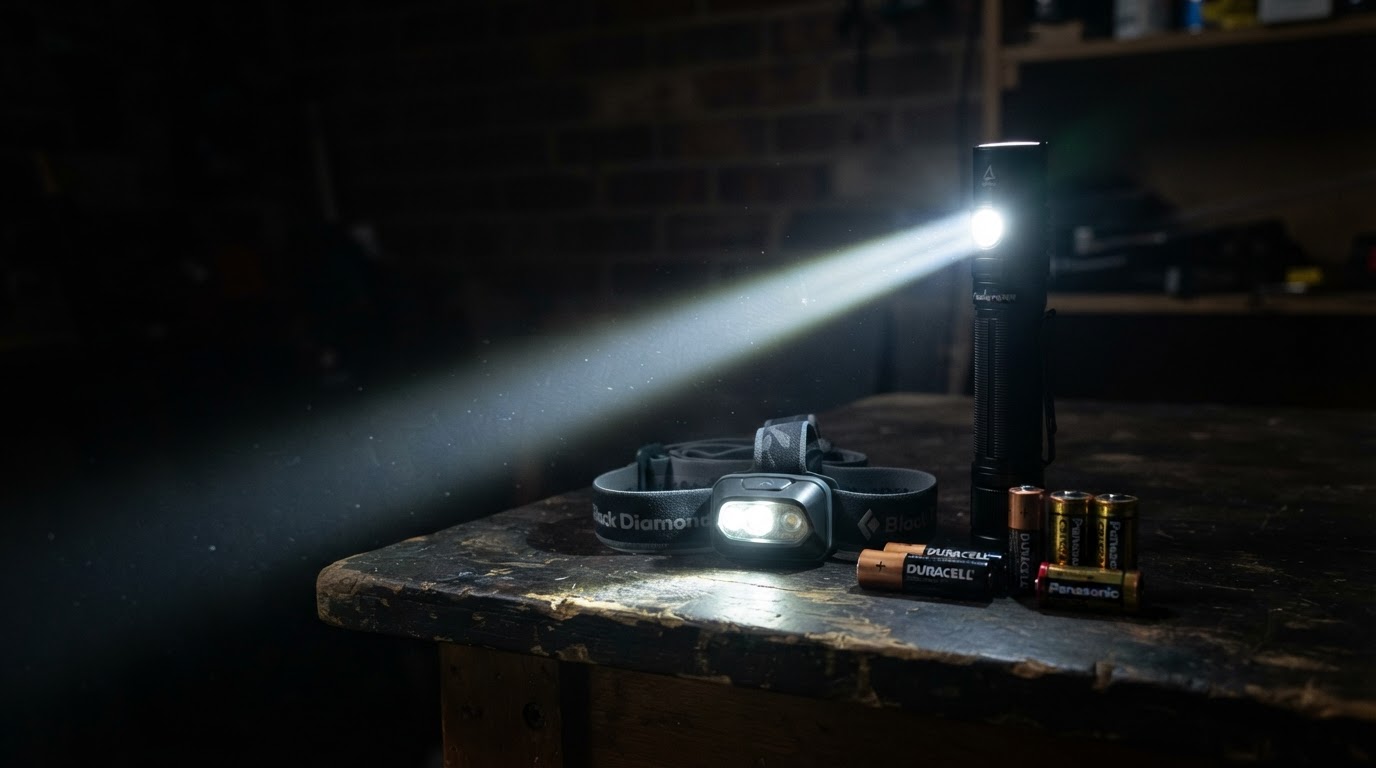
A flashlight you can find in the dark, spare batteries, and a headlamp cover the lighting you actually need in an outage.
Start with These Three Steps
Keep a light by the bed.
A flashlight within reach in the dark means no one stumbles through an unfamiliar, dark house.
Store spare batteries beside it.
A dead flashlight is no flashlight; keep the right spares together and labeled.
Add a headlamp.
Hands-free light lets you carry a child, hold a tool, or check a breaker without juggling a flashlight.
Useful for this scenario
LED Lantern & Headlamp
Keep reliable light where you can find it in the dark.
Your Lighting Checklist
- A flashlight within reach of each bed
- Spare batteries stored and labeled
- A headlamp for hands-free work
- A lantern for room lighting
- Batteries tested on a schedule
- A backup light in the car and go-bag
What to Look For
Reliable and simple.
A light you can find and operate in the dark beats a feature-rich one you have to fumble with.
Common battery size.
Pick lights that share a battery size you already stock.
Hands-free options.
A headlamp leaves both hands free during repairs or evacuations.
Keep It Ready
Test lights every few months and rotate batteries so they are fresh. Consider one light per room you use after dark, and keep a spare set of batteries with each device.
Build Your Household Plan
Add this category to your plan, then work through the essentials at a pace that fits your household.
Explore the 10 EssentialsOther Plan the Basics guides
Food
Build a pantry from foods you already eat, rotate it so nothing expires, and know how to cook when the power is out.
Water
One gallon per person per day is the starting line. Storage, rotation, and a treatment method are what make it usable.
First Aid
A household first-aid kit plus basic training handles the cuts, burns, and sprains that show up in every disruption.
Hygiene & Sanitation
Handwashing, a toilet alternative, and a waste plan are the unglamorous prep that prevents the real secondary disaster: illness.
Shelter & Warmth
Insulate one room, layer up, and never heat with something meant for the outdoors. Hypothermia and carbon monoxide are the real threats.
Cooking
A stable outdoor stove and the right fuel let you make a hot meal and boil water during an extended outage.