
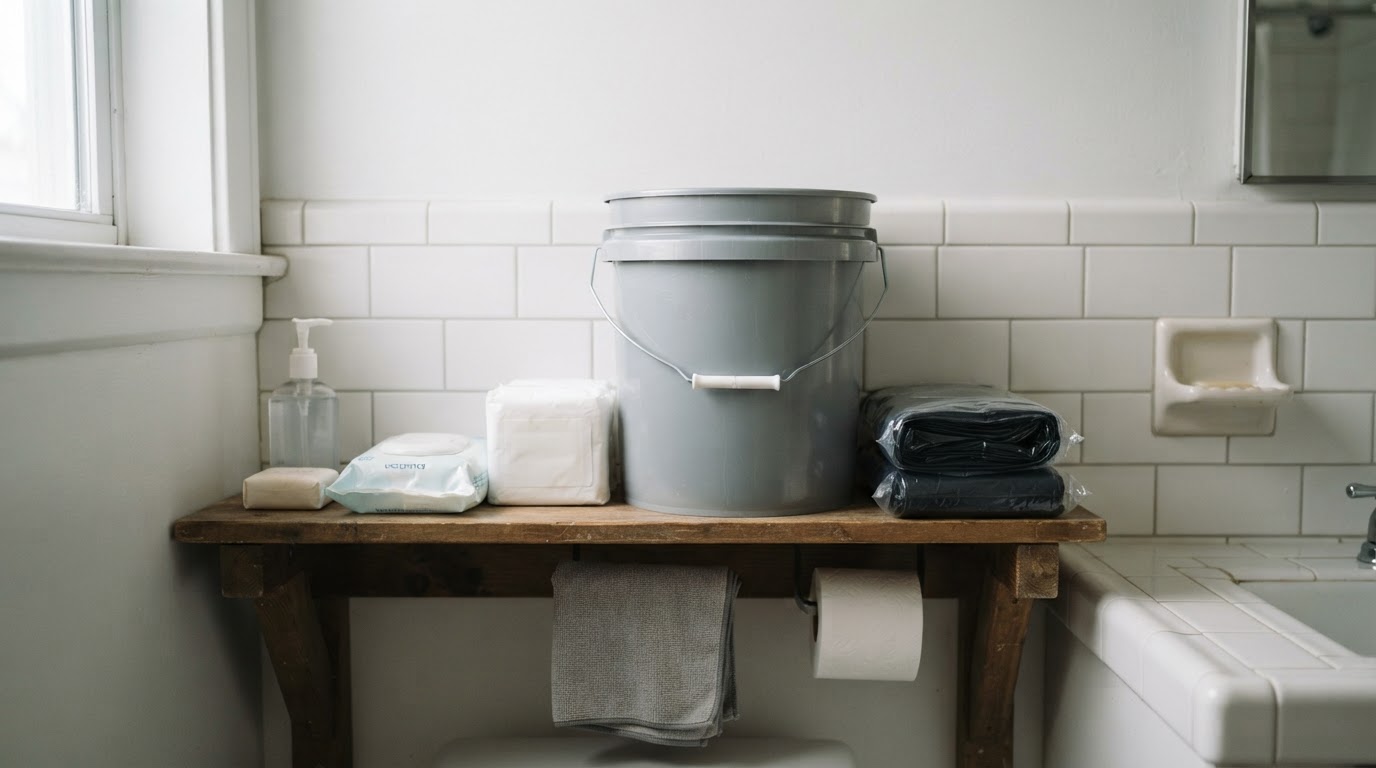
Household preparedness
Plan for when the plumbing stops
Handwashing, a toilet alternative, and a waste plan are the unglamorous prep that prevents the real secondary disaster: illness.
Start with These Three Steps
Stock handwashing supplies.
Keep soap, sanitizer, and paper towels together, and plan to reuse lower-quality water for washing when drinking water is scarce.
Plan a no-plumbing toilet.
Line a bucket or toilet bowl with a heavy-duty bag and an absorbent like kitty litter or sawdust for each use.
Plan waste and laundry.
Stock extra trash bags and a hand-washing method for clothes, because a week at home produces more waste than you expect.
Useful for this scenario
Emergency Sanitation Kit
A portable toilet, waste bags, and hygiene supplies for disrupted plumbing.
Your Hygiene & Sanitation Checklist
- Soap, hand sanitizer, and paper towels stocked
- Bucket toilet with bags and absorbent ready
- Heavy-duty trash bags and a waste storage plan
- Menstrual and diaper supplies stocked
- Detergent and a drying line for laundry
- Disposable gloves for handling waste
- A privacy plan for the toilet setup
What to Look For
Absorbent material.
Kitty litter, sawdust, or soil controls moisture and smell in a bucket toilet.
Sealed storage.
Store used bags in a covered bin away from living spaces until disposal.
Household-specific supplies.
Plan for infants, menstruation, and anyone with mobility or incontinence needs.
Useful for this scenario
Hygiene Supplies
Soap, sanitizer, and cleaning products for infection control.
Keep It Ready
Sanitation supplies run out faster than you expect when the whole household is home for days. Buy them in quantity and store them with your emergency supplies, not scattered through the house. Check local guidance for emergency waste disposal after a long disruption.
Build Your Household Plan
Add this category to your plan, then work through the essentials at a pace that fits your household.
Explore the 10 EssentialsOther Plan the Basics guides
Food
Build a pantry from foods you already eat, rotate it so nothing expires, and know how to cook when the power is out.
Shelter & Warmth
Insulate one room, layer up, and never heat with something meant for the outdoors. Hypothermia and carbon monoxide are the real threats.
Backup Power
A phone charger is one job; a fridge or a medical device is another. Match the power source to the real need and know its limits.
Cooking
A stable outdoor stove and the right fuel let you make a hot meal and boil water during an extended outage.
Fire Safety
Working alarms on every level and a practiced escape plan are the first line of defense in a household fire.
Clothing & Footwear
Sturdy footwear and weather-appropriate layers matter more than specialized gear when you need to leave fast or stay warm.