
👕 Plan the basics
Plan the clothes you'd actually grab
Sturdy shoes by the bed, layers for cold, and a change of clothes per person in the go-bag — the prep that's free if you already own it.
Clothing is the prep that's already in your closet. The plan isn't to buy special clothes — it's to set aside what you'd need in a hurry, where you'd need it, and to know how to layer for cold or wet. The single highest-value move is a pair of sturdy shoes by every bed, because a 3 a.m. evacuation in bare feet over broken glass is how people get hurt. This page covers the shoes, the layers, and the go-bag changes that turn a clothing plan from 'I have clothes' into 'I have the right clothes where I need them.'
Shoes where you sleep
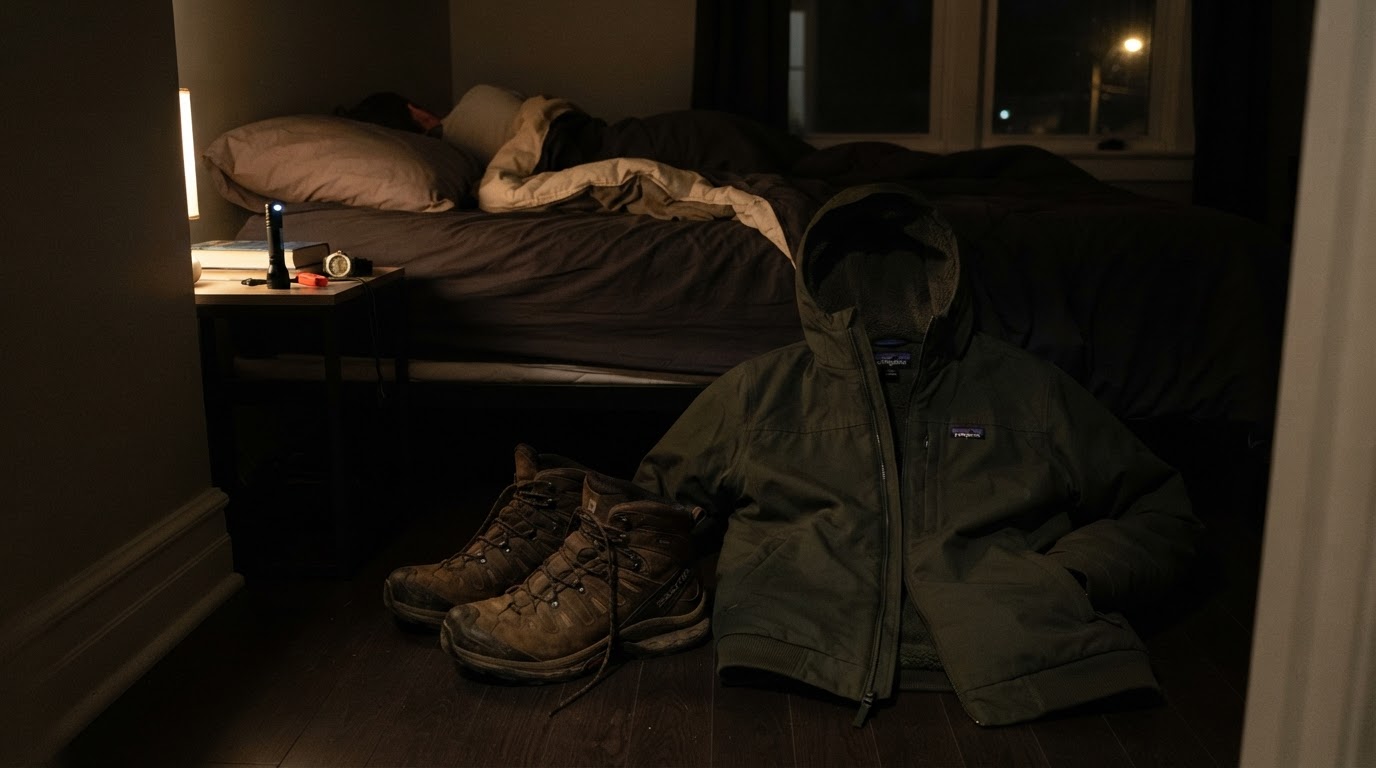
Keep a pair of sturdy, closed-toe shoes next to every bed. In a nighttime fire, earthquake, or evacuation, you won't have time to find shoes, and bare or socked feet over broken glass or debris is a common injury. Work boots, hiking shoes, or even sturdy sneakers work. The point is: they're there, you don't have to look for them. A $0 prep that prevents a $10,000 ER visit.
Keep a pair in the car too. If you commute in dress shoes and break down or get stranded, a pair of sturdy shoes in the trunk is what lets you walk safely if you need to. The same goes for a warm layer in the car for winter — a jacket or blanket for the moment the heater's off or you're waiting for a tow. The vehicle readiness page covers this in more depth.
For kids, check that the shoes by the bed still fit every few months. Kids outgrow shoes fast, and a pair that's two sizes too small is not a plan. Rotate them up as they grow. The shoe that was perfect in March may be useless by October. This is a five-minute check that keeps the prep real.
Think about what's on the floor between the bed and the door. If there's an earthquake or a fire, the floor may have glass, debris, or spilled liquid. The shoes by the bed are the difference between walking out and crawling out hurt. Keep the path to the door clear too — a cluttered path is a tripping hazard in the dark.
For anyone with mobility needs, the shoe plan is more specific. If someone uses a cane or a walker, the shoes need to work with that — not slip, not trip. If someone can't bend to put on shoes easily, keep slip-ons or shoes they can manage. The clothing plan includes the accessibility plan, not just the generic 'sturdy shoes' line.
Layer for the weather you might face
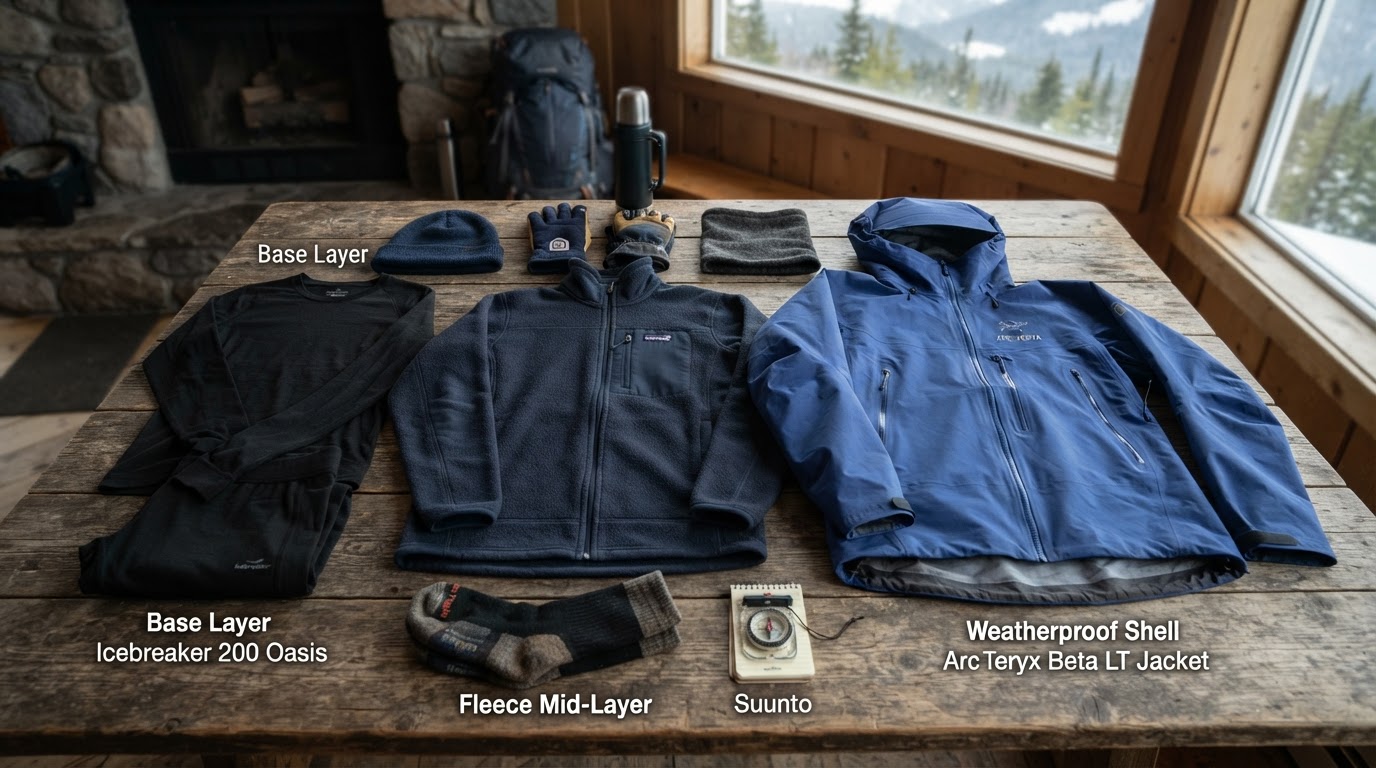
The layering system: a moisture-wicking base layer (not cotton for cold/wet), an insulating mid-layer (fleece or wool), and a weatherproof shell (rain or wind). You add or remove layers to regulate temperature rather than relying on one heavy coat. This is how outdoor clothing works, and it's how you stay warm or dry in a disruption without special gear.
Wool and synthetic layers keep insulating when damp; cotton does not. For a cold, wet scenario, a wool or synthetic base layer matters — cotton kills in the cold and wet, as outdoor educators say. For everyday household prep, a warm hat, warm socks, and a base layer are the pieces that make the biggest difference — you lose a lot of heat from your head and extremities.
For hot weather, the plan is different: loose, light-colored, breathable clothes, a wide-brimmed hat, and sun protection. Extreme heat during a power outage (no AC) is a real threat; see the dedicated extreme-heat scenario page. Don't assume one set of clothes covers all weather. The clothing plan matches the climate you live in and the season you're preparing for.
Stock the layers where you'd grab them. A warm layer in the car, a rain shell in the go-bag, a hat by the bed. The layers you own are useless if they're in the back of a closet when you need them in 30 seconds. Stage the clothes where the plan says you'll grab them, not where they 'live' in your routine.
Don't forget the small things that make a big difference: warm socks, gloves, a hat. These are the items people forget and the ones that matter most in the cold. A coat keeps your core warm; cold extremities make you miserable and can be a real risk in extreme cold. The small items are the prep; the coat is the obvious part everyone already has.
Pack a change in the go-bag
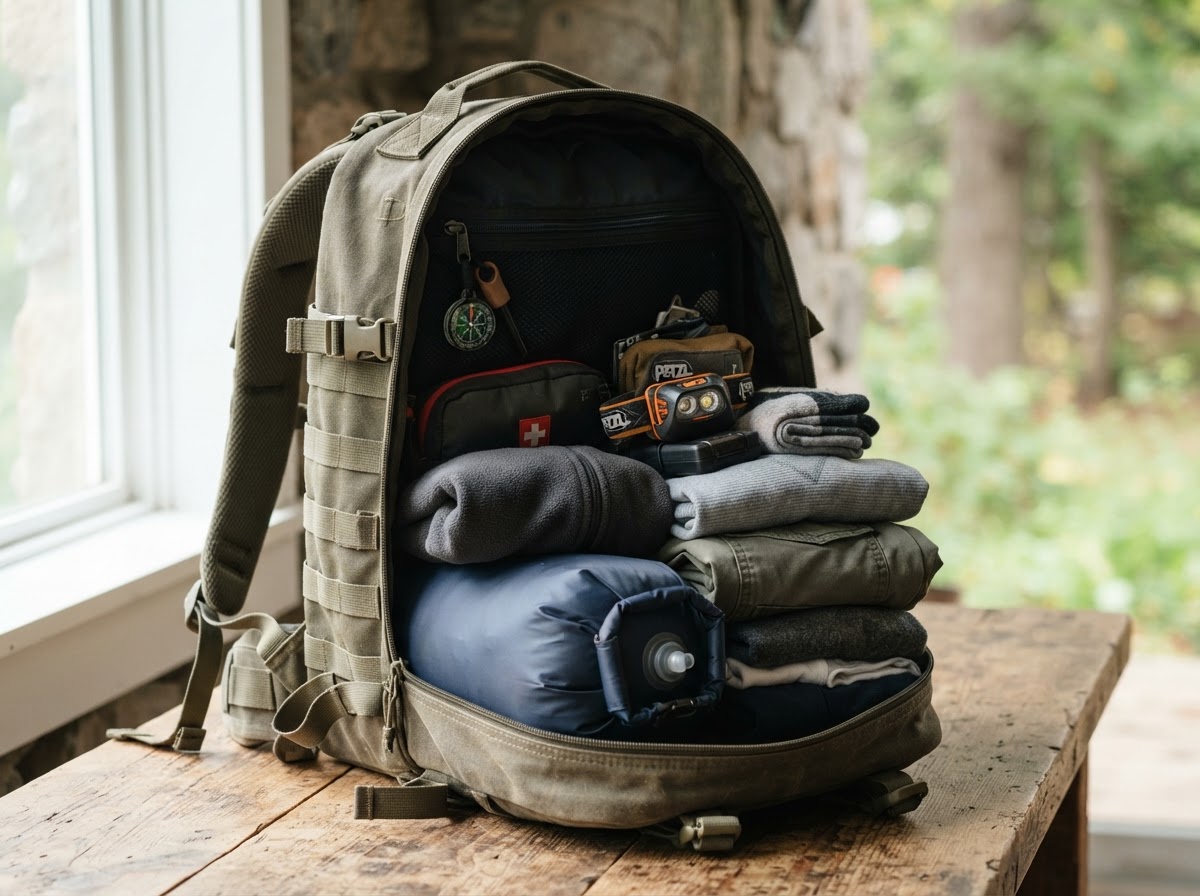
Each person's go-bag has a change of clothes appropriate to the season — and swapped out as the seasons change. A summer go-bag with shorts won't help in a January evacuation. Pack for the worst-case weather for when you might need it: warm and dry for winter, cool and sun-protected for summer. The go-bag page covers the full kit; this is the clothing piece.
Include rain gear if your climate calls for it, a hat, gloves if it gets cold, and sturdy shoes or boots if the go-bag doesn't have shoes by the bed. For kids, pack one size up and check it each season — a go-bag with last year's too-small clothes is a prop, not a plan. The seasonal check is what keeps the go-bag real.
For anyone with specific clothing needs — adaptive clothing, a uniform, religious garments, incontinence supplies — account for them. A generic go-bag that ignores the household's real needs is a go-bag that fails the household it's for. Pack for the people who live there, not for the people on the checklist.
The honest summary: clothing prep is mostly free, because you already own it. The work is putting it where you'll need it, swapping it seasonally, and making sure it fits. A go-bag with last year's too-small clothes is not a plan. The work is the placement and the maintenance, not the purchase.
Keep the clothes in the go-bag in a sealed bag so they stay dry even if the go-bag gets wet. A change of clothes that's soaked through is not a change. The sealed bag is a 50-cent prep that keeps the clothing prep real. And rotate the clothes with the seasons — the go-bag is a living kit, not a packed-and-forgotten one.
Practical priorities
- Sturdy shoes by every bed
- A layering system for cold and a shell for wet
- A seasonal change of clothes in each go-bag
- Shoes and a warm layer in the car
- Sealed bags to keep go-bag clothes dry
Common mistakes
- No shoes by the bed for a 3 a.m. evacuation
- A go-bag with outgrown kids' clothes
- Only cotton layers for a cold, wet scenario
- Dress shoes only, with nothing sturdy for walking
- Clothes in the go-bag not protected from water
Your clothing & footwear checklist
- Sturdy shoes at every bedside
- Car has shoes and a warm layer
- Layering system understood (base, mid, shell)
- Go-bag has a seasonal change of clothes
- Kids' sizes checked each season
- Rain gear packed if your climate needs it
- Clothes sealed against water in the go-bag
Sources & further reading
This is planning guidance, not emergency advice. In an emergency, call 911. See a mistake? Report it.