
Scenario guide
Prepare to Evacuate
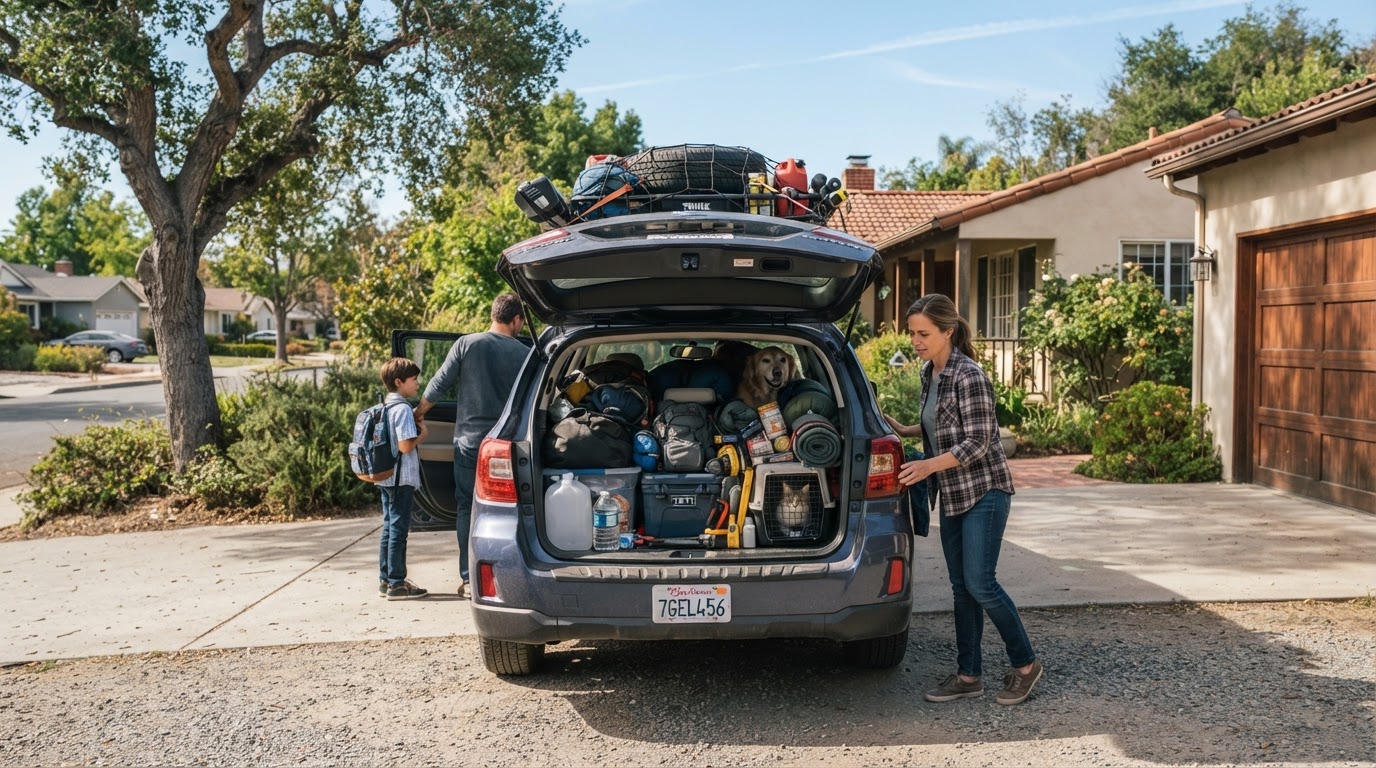
An evacuation is the moment a household plan becomes a household action. The difference between a smooth evacuation and a dangerous one is almost always preparation: a packed go-bag, two routes, a meeting point, and a decision made before the order arrives.
What Matters First
Pack a go-bag per person and keep it by the door
Three days of water and food, a first-aid kit, a flashlight, copies of documents, and cash in small bills. Keep it packed before the order.
Identify two routes and a destination
The primary route may be blocked. Print the routes, because you may not have cell service. Confirm the destination in advance.
Designate an out-of-area contact and two meeting points
Local lines can jam while long-distance calls go through. Everyone should have the out-of-area contact's number written down.
Your Evacuation Checklist
Before It Happens
- Go-bag packed per person, by the door or in the car
- Two evacuation routes identified and printed
- Destination confirmed; out-of-area contact designated
- Vehicle kept above half a tank during high-risk seasons
Useful for this scenario
Evacuation Bag
A packed go-bag with documents, medication, and essentials.
During the Disruption
- If an order is issued, leave immediately; grab the bag, medication, and pets
- Turn off gas, electricity, and water if you have time and know how
- Drive with headlights on; do not drive around barricades
Afterward
- Do not return until officials say it is safe
- Photograph damage before cleanup for insurance
- Reunite at the meeting point; text rather than call if networks are jammed
Useful Gear for This Scenario
Evacuation bag
The foundation of any evacuation. One per person, packed with documents, medication, and three days of essentials.
Compact water storage
Collapsible water containers add little weight but extend your supply once you reach your destination.
First aid kit
Keep a basic kit in the go-bag and check expiration dates a couple of times a year.
Useful for this scenario
Emergency Water Storage
Build your starting supply with reusable, food-grade containers.
Make the Plan Fit Your Household
Tailor the bag to the household: infants need formula and diapers, people with mobility needs need their own supplies, and pets need food, water, carriers, and vaccination records. Confirm which shelters accept pets, because most do not. If you do not have a vehicle, plan how you will leave.
Useful for this scenario
First Aid Kit
Choose a practical kit you can organize, maintain, and use.