
Hurricane Preparedness
The work that matters happens before watches and warnings.
A hurricane gives you days of warning, which is both a gift and a trap. The warning is enough to prepare if you start early, but most people do not start early — they start when the lines at the store are already long and the plywood is gone. Hurricane preparedness is not about the storm; it is about finishing a list before the list matters. The National Weather Service issues watches 48 hours before tropical-storm-force winds and warnings 36 hours before, which means by the time the warning goes out you should be doing the last items, not the first. This guide breaks the work into what to do well before, what to finish during the watch, and what to act on the moment a warning is issued.
Know your zone before the season starts
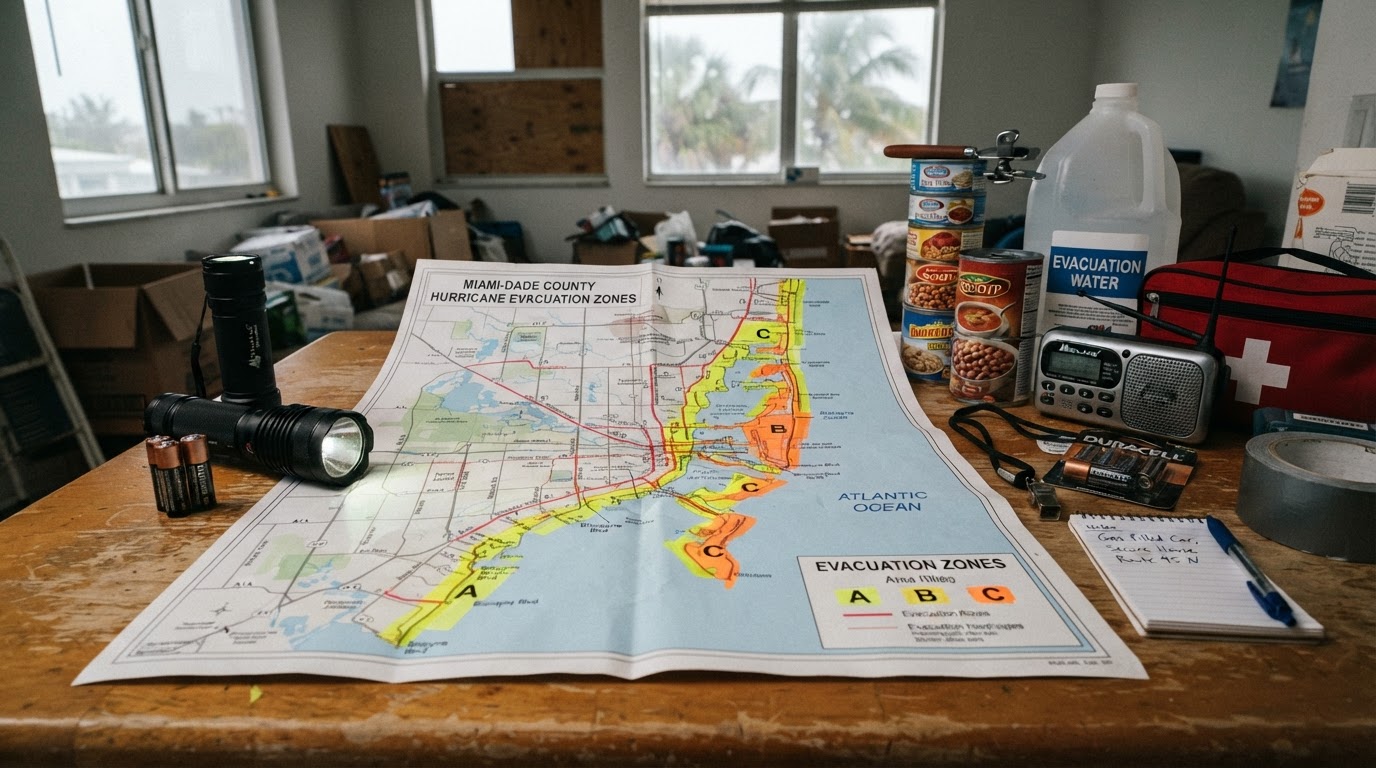
The single most important hurricane decision is whether you live in an evacuation zone, and if so, where you will go. Find your local evacuation zone from your emergency management agency — many coastal counties publish interactive maps. Know the letter or number of your zone, because officials evacuate by zone, not by street. If you are not in an evacuation zone, your plan may be to shelter in place through the storm, which is a legitimate choice only if your home can withstand the wind and you are not at risk of storm surge flooding. If you are in a surge zone, a mobile home, or a flood-prone area, your plan is to leave.
Insurance does not count as a plan, but it is part of one. Standard homeowners insurance does not cover flooding from storm surge; you need a separate flood policy through the National Flood Insurance Program, and there is typically a 30-day waiting period before it takes effect. Check your coverage now, not after the forecast shifts. Gather insurance papers, deeds, and identification into a waterproof container or digital backup so you can prove who you are and what you own when you file a claim.
Finish the home before the watch
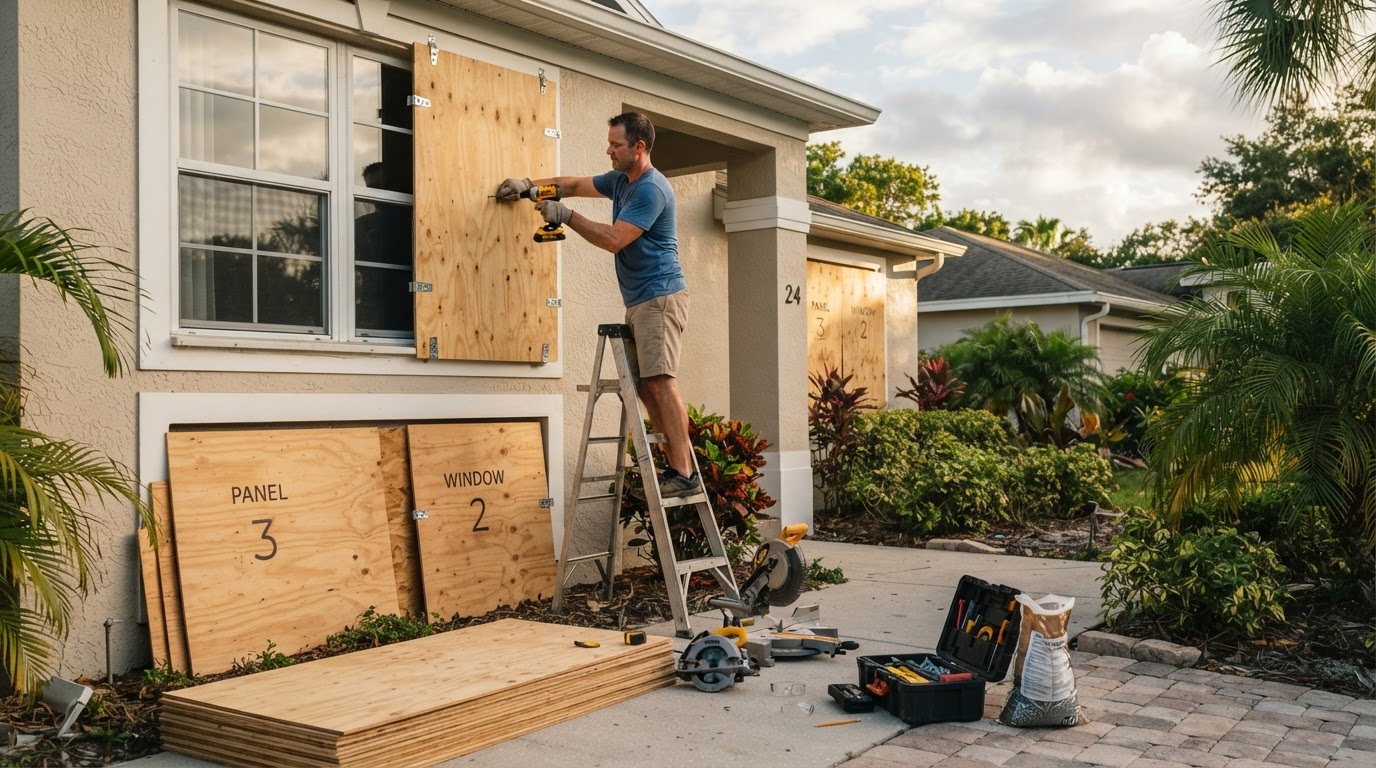
Structural preparation is the work that actually protects the house. Inspect your roof for loose shingles and have it repaired before the season; a roof leak is the most common way a hurricane damages a home. Clear gutters and downspouts so rain can drain. Trim branches that overhang the house. If you have storm shutters, confirm they close and lock; if you rely on plywood, measure and cut it now and label each panel by window. Do not wait until a warning to discover your hardware store has sold out of everything. Ready.gov recommends bringing in or tying down outdoor furniture, trash cans, and anything that can become a projectile in 100 mph wind.
Inside, the goal is to reduce damage from the windows that break. Move valuables away from windows and off the floor if you are in a flood-prone area. Set your refrigerator and freezer to their coldest settings before the storm so they hold cold longer if the power goes out. The work is unglamorous and most of it has nothing to do with the storm at all — it is maintenance that happens to double as preparation.
During the watch: supplies and the stay-or-go call
When a watch is issued, you have roughly two days. Fill your vehicle's gas tank and any gas cans, because power and supply chains stop before the wind does. If you plan to evacuate, leave early; traffic becomes the danger as the storm approaches. Fill bathtubs with water for sanitation (not drinking) and stock one gallon of drinking water per person per day for at least three days. Charge phones, power banks, and medical devices. If you rely on electricity for medical needs, confirm your utility's medical baseline registration and a backup plan.
Review your evacuation route and destination now, while the roads are open. Know at least two routes, because highways back up and bridges close. Confirm with anyone you plan to stay with that the offer still stands. If you will go to a shelter, know which one and what it allows (many do not take pets unless they are service animals). Write down the address and phone number; you will not be able to look it up if the cell network is jammed.
During the warning: act, do not research
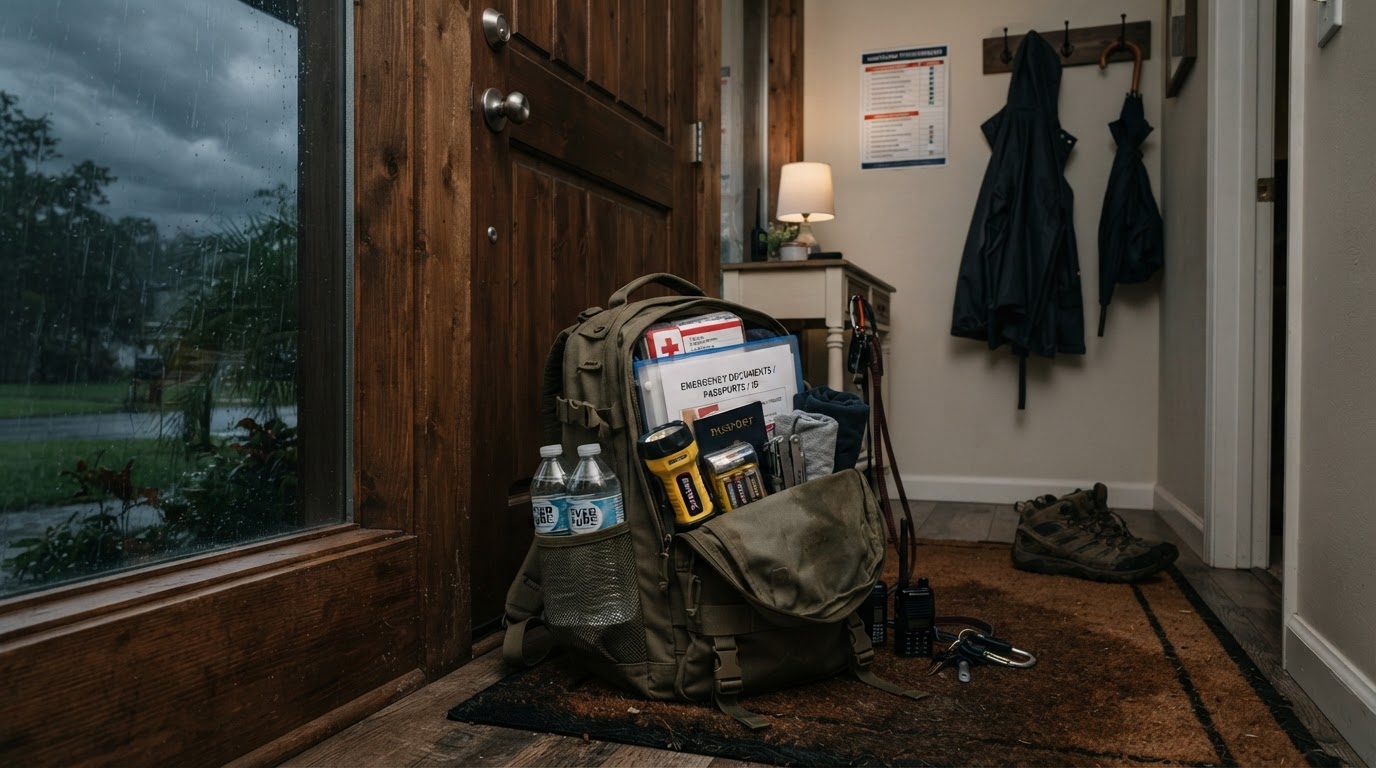
When a warning is issued, the time for planning is over. If you are in an evacuation zone, leave. The National Weather Service is direct: the time to leave is before the wind arrives, because once the storm hits, roads may be impassable and emergency crews will not be able to reach you. If you are sheltering in place, move to an interior room away from windows on the lowest floor that is not at risk of flooding, and stay there until the all-clear is given. Keep your weather radio on. 'The eye' is not an all-clear — wind can drop and then return from the opposite direction within an hour.
Turn off propane tanks, unplug non-essential electronics, and set your freezer to its coldest. If you have a generator, run it outdoors at least 20 feet from windows. Do not let children play in rising water, and do not drive through flooded roads — the Red Cross warns that most hurricane deaths in the last two decades have been from freshwater flooding, not wind. Two feet of moving water can float a car.
After the storm: the safe return
Do not return until officials say it is safe. Downed power lines can energize standing water, and roads can collapse beneath flood-scoured soil. When you return, photograph damage before you clean up — you will need the evidence for insurance. Do not drink tap water until your utility confirms it is safe; a boil-water advisory is common after a hurricane. Throw away food that touched flood water or that has been above 40°F for more than two hours. Run generators outdoors and away from windows even during cleanup, because carbon monoxide is the most common post-hurricane poisoning.
The weeks after a storm are when a household with a plan recovers and one without one struggles. The plan is not the storm; it is everything that came before, so that when the storm passes you still have the documents, the insurance, the contacts, and the supplies to rebuild.
Practical priorities
- Know your evacuation zone and have a destination
- Verify flood insurance before the season (30-day waiting period)
- Board windows and clear gutters well before a warning
- Fill the gas tank and stock 3 days of water per person
- Decide the stay-or-go call during the watch, not the warning
Common mistakes
- Waiting for a warning to start shopping
- Assuming homeowners insurance covers storm-surge flooding
- Sheltering in a surge or flood zone because the wind feels tolerable
- Treating the eye of the storm as the all-clear
- Driving through flooded roads to get home faster
Hurricane readiness checklist
- Evacuation zone known + destination confirmed
- Flood insurance verified
- Roof inspected, gutters cleared, branches trimmed
- Plywood cut and labeled per window
- 3-day water supply (1 gal/person/day)
- Gas tank full + gas cans stored
- Storm shutters functional
- Important documents in a waterproof container
- Two evacuation routes identified
- Weather radio with batteries
Sources & further reading
This is planning guidance, not emergency advice. In an emergency, call 911. See a mistake? Report it.