
Scenario guide
Prepare for a Supply Disruption
A supply disruption is not always a disaster. A storm closes the highway, a plant shuts down, a recall pulls a product, and the store is suddenly out of what you need. The lesson is not to hoard, it is to keep a buffer of the things you actually use, rotated so nothing expires.
What Matters First
Build a pantry of what you actually eat
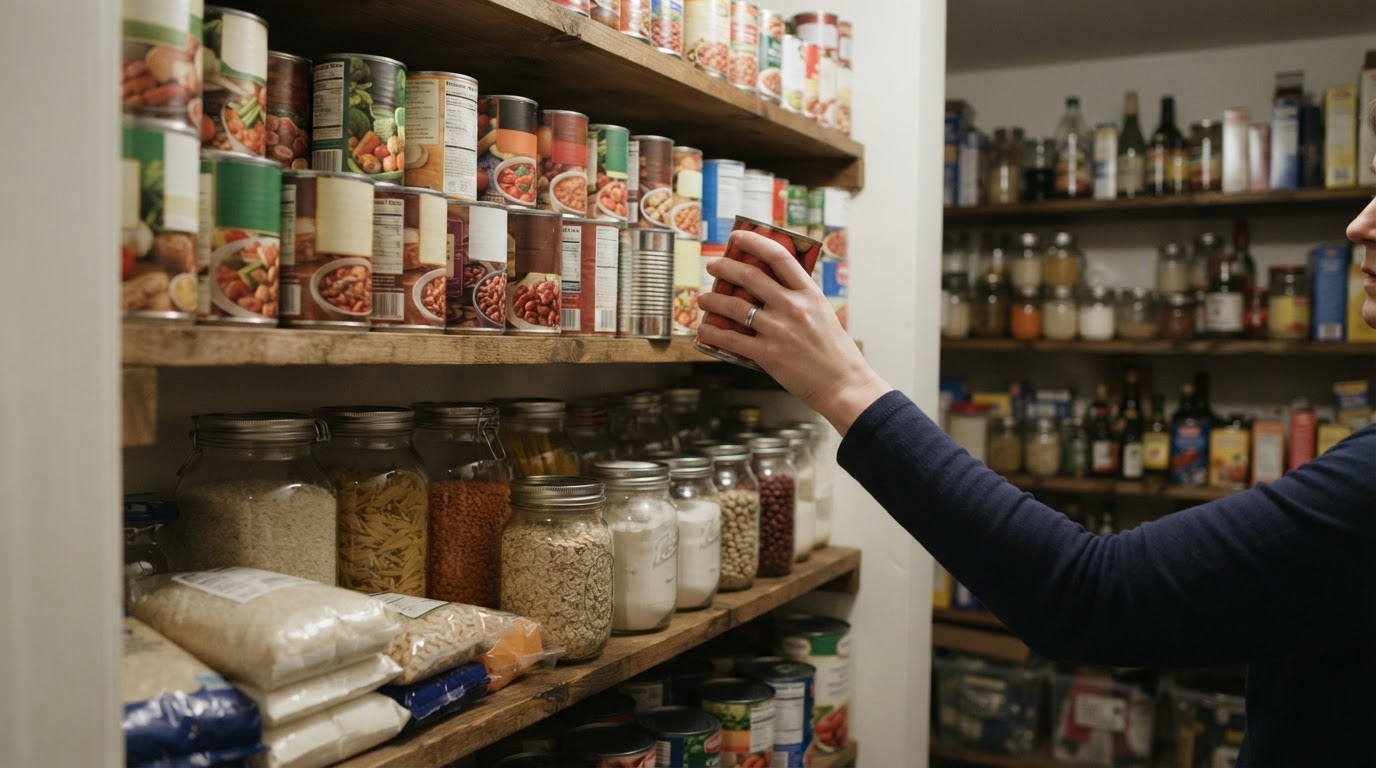
A two-week supply of shelf-stable staples your household enjoys. If you stock foods no one likes, they expire and you throw them away.
Rotate stock with first-in, first-out
Move new stock behind the older items so the oldest is always next used. Date labels help; check the pantry every few months.
Keep a medication buffer and cash in small bills
Keep at least a 7-day supply of prescriptions. A disruption can take card readers with it, so keep cash for essentials.
Your Supply Disruption Checklist
Prepare
- Two-week pantry of shelf-stable foods you eat
- Manual can opener in the kitchen
- Water stored, one gallon per person per day for three days
- 7-day medication buffer and a written medication list
Useful for this scenario
Emergency Food Supply
Stock familiar shelf-stable foods your household will actually eat.
Respond
- Buy what you need, keep a buffer, and leave supply for others
- Use cash in small bills if card readers are down
- Find alternatives early for a specific item that thins out
Recover
- Restock the buffer gradually before the next disruption
- Rotate anything past its quality date into regular meals
- Update your list of essentials as your household changes
Useful Gear for This Scenario
Shelf-stable food
Ordinary groceries, canned proteins, grains, and ready-to-eat items cover most disruptions. You do not need expensive survival meals.
Water storage
Store one gallon per person per day for at least three days in food-grade containers, rotated every six months.
Food storage organizers
Clear bins and labels make first-in, first-out rotation simple so the oldest is always used first.
Useful for this scenario
Emergency Water Storage
Build your starting supply with reusable, food-grade containers.
Make the Plan Fit Your Household
If your household has dietary restrictions, build the pantry around them, because a disruption is exactly when an allergy or celiac need becomes hardest to manage. Keep comfort foods; the familiar matters in a stressful time. Do not hoard, because clearing shelves makes the community more fragile.
Useful for this scenario
Food Storage Organizers
Clear bins and labels make first-in, first-out rotation simple.