
Winter Storm Preparedness
Cold is the hazard. Your plan is how you stay warm, fed, and connected.
A winter storm is not one threat; it is several stacked. Snow and ice can trap you at home, cut power, and block roads. Cold can become dangerous faster than people expect, especially when the heat goes out. Carbon monoxide is the silent killer of winter storms, because the things people reach for to stay warm — ovens, grills, generators — are the things that poison them. Ready.gov and the National Weather Service both stress the same core: plan for the loss of heat and power, keep an emergency kit in the car, and never improvise indoor heating. This guide walks through what to do before the cold, during the storm, and if the power fails.
Winterize before the season
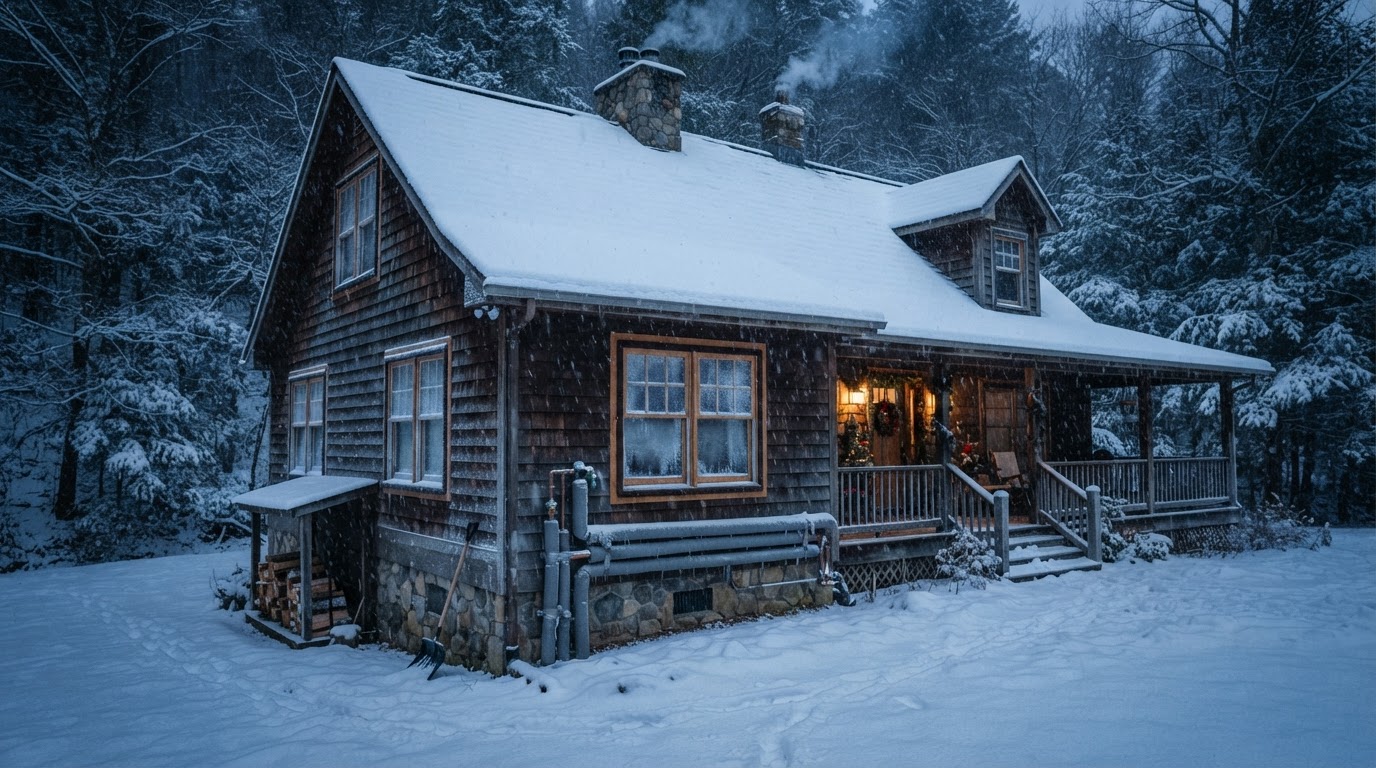
Most winter-storm damage is preventable maintenance that should be done by fall. Have your heating system serviced and your chimney inspected, because a blocked flue sends carbon monoxide into the home. Insulate pipes, especially those along exterior walls and in unheated spaces, and let faucets drip during extreme cold to prevent freezing. A frozen pipe that bursts is one of the most expensive winter failures a home can have. Know where your main water shut-off is and how to turn it off, because minutes matter once a pipe splits.
Outside, clear gutters so melting snow can drain instead of refreezing into an ice dam that pushes water under the roof. Have ice melt or sand on hand for walkways, and a shovel that fits your strength. If you have a generator, test it now and store fuel safely — never in the house. Keep the car's gas tank at least half full during winter, because a stranded car with an empty tank cannot stay warm for long. Assemble a winter emergency kit for the vehicle: blankets, water, non-perishable snacks, a phone charger, jumper cables, and a flashlight.
When a winter storm watch or warning is issued
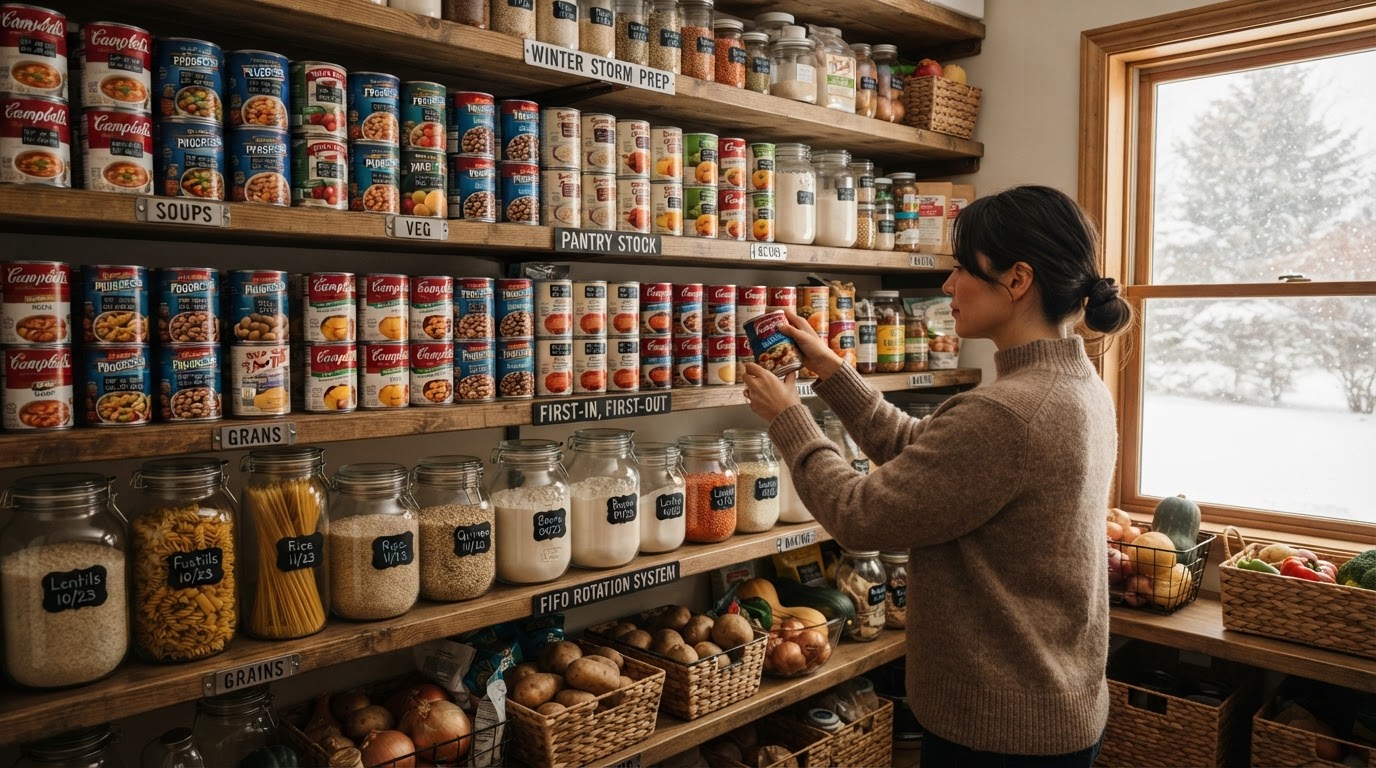
A Winter Storm Watch means conditions are possible; a Warning means they are happening or imminent. Either way, stock up now: food that does not need cooking, water (one gallon per person per day for at least three days), and any prescription refills you will need. A power outage means the stove may not work, so plan meals around what you can prepare cold or on a safe alternative. Keep the pantry stocked with foods you actually eat, so rotation is natural and nothing goes stale.
Charge every device and power bank. If you rely on electricity for medical equipment, confirm your backup plan. Fill the bathtub with water for sanitation in case the well pump or water heater stops working. Check on neighbors, especially older adults and anyone with mobility limits, because they are the most at risk in the cold. The Red Cross recommends making a household plan for where everyone will gather if one room needs to be abandoned for heat.
Staying warm without the heat
When the heat goes out, the goal is to keep one room warm and shrink the space. Choose a small interior room, close its doors, and hang blankets over windows. Layer loose, dry clothing and wear a hat. The CDC notes that infants and older adults are especially vulnerable to hypothermia, and that signs include shivering, confusion, and exhaustion — call 911 if someone seems disoriented and cold to the touch. Do not use a gas stove, oven, grill, or camp stove for indoor heat. The Consumer Product Safety Commission warns that these cause carbon-monoxide poisoning, which is odorless and lethal.
If you use a generator, run it outdoors at least 20 feet from any window, door, or vent, and never in a garage even with the door open. Install and test battery-operated carbon-monoxide alarms on every level of the home. If you use a fireplace, make sure the flue is open and the chimney is clear. Heating with candles is not a plan; the Red Cross discourages them for the fire risk. The plan for staying warm is the same plan as for not burning the house down: one warm room, layered clothes, and no improvised indoor heat.
If you lose power for days
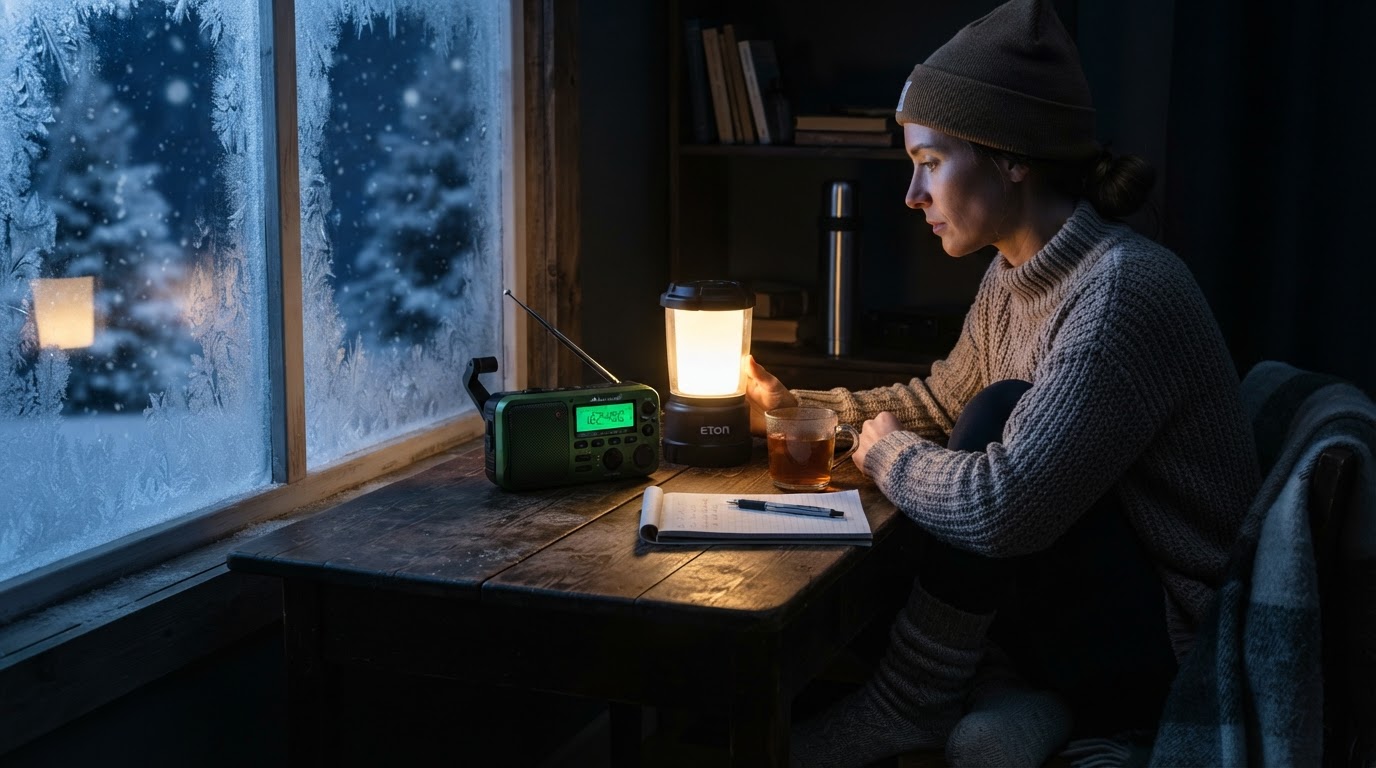
An extended winter outage is when a generator, a portable power station, or a wood stove earns its place. Know the rated wattage of anything you run and do not overload it. If you have a portable power station, it can keep a phone, a light, and a CPAP running, but it will not heat the home. Keep a thermometer in the refrigerator and freezer; if the food has been above 40°F for more than two hours, throw it out. In a cold garage, food may actually stay frozen — but do not assume; check.
Listen to a battery or hand-crank NOAA radio for updates. If roads are impassable, do not try to drive out unless it is a medical emergency. Keep your vehicle's emergency kit stocked in case you do need to leave. The goal in an extended outage is not comfort; it is to keep everyone warm, fed, and safe until the grid returns, and to do it without creating a new emergency like a fire or a carbon-monoxide poisoning.
The car: the other winter plan
Half of winter-storm deaths happen in vehicles, many of them people caught on the road when the storm arrives. Keep the tank above half. Pack blankets, warm clothes, water, snacks, a phone charger, jumper cables, a flashlight, a first-aid kit, and a bag of sand or cat litter for traction. If you are stranded, stay in the vehicle; it is your shelter and your signal. Run the engine for about 10 minutes per hour for heat, but first confirm the exhaust pipe is clear of snow, because a blocked pipe sends carbon monoxide into the cabin. Make yourself visible with a bright cloth or flag, and call for help.
The plan for the road is the same as the plan for the home: assume you will be stuck, assume the cold is the threat, and do not improvise. The difference is that in the car you cannot open windows for ventilation easily, so the carbon-monoxide rule is even more important. Prepare the kit before winter, and leave it in the car all season.
Practical priorities
- Service the heating system and chimney before the season
- Insulate pipes and learn the main water shut-off
- Keep the car above half a tank and stocked for winter
- Never use a stove, oven, or grill for indoor heat
- Test carbon-monoxide alarms with fresh batteries
Common mistakes
- Using a gas oven to warm the house
- Running a generator in the garage
- Driving on low fuel during storm season
- Forgetting the exhaust pipe can block in snow
- Not knowing where the water shut-off is before a pipe bursts
Winter storm readiness checklist
- Heating system serviced
- Chimney inspected
- Pipes insulated
- Water shut-off located and tested
- Carbon-monoxide alarms tested
- Generator tested + fuel stored safely
- 3-day non-cook food + water
- Vehicle winter kit packed
- Ice melt and shovel on hand
- Power banks and radio charged
Sources & further reading
This is planning guidance, not emergency advice. In an emergency, call 911. See a mistake? Report it.