
Scenario guide
Prepare for a Wildfire
Wildfires move fast, and the decision to leave is the one that saves lives. The home can be hardened, but the household must be ready to go, sometimes within minutes. Late evacuations are the leading cause of wildfire deaths, so the plan is to leave the moment an order is issued.
What Matters First
Create defensible space around the home
Within 30 feet, remove dead vegetation and clear leaves from roofs and gutters. Embers can ignite a home from a mile away.
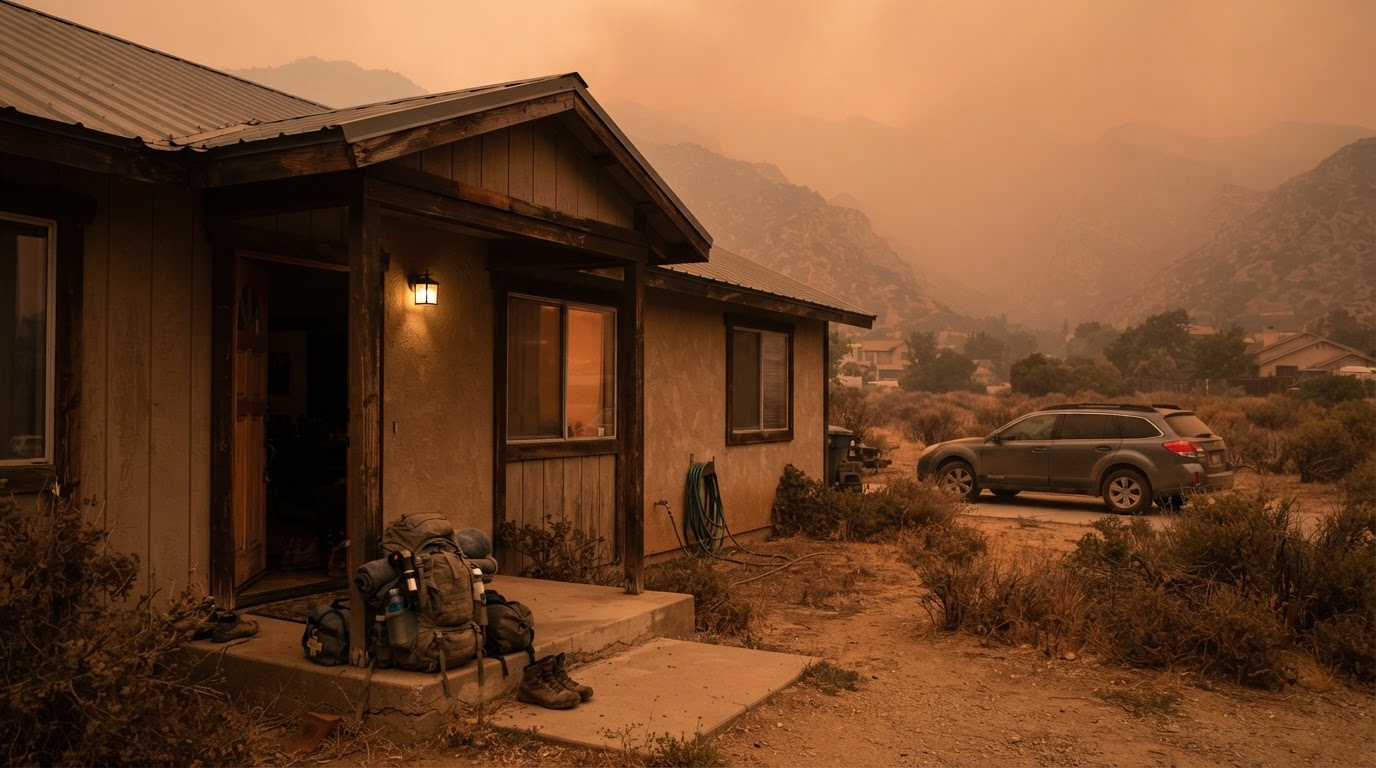
Keep a go-bag packed during fire season
Wildfire evacuations can be ordered with little warning. Keep the bag by the door with documents, medication, and N95 respirators.
Leave the moment an evacuation order is issued
Do not wait to see if the fire turns. By the time you see flames, it may be too late to reach the road.
Your Wildfire Checklist
Before It Happens
- 30-foot clear zone; roof and gutters cleared of debris
- Fire-resistant roof and screened vents; go-bag packed by the door
- Evacuation zone known and local alerts subscribed
- N95 respirators for the household; cloth masks do not filter smoke
Useful for this scenario
Evacuation Bag
A packed go-bag with documents, medication, and essentials.
During the Disruption
- If an order is issued, leave immediately; do not stop for valuables
- Wear cotton or wool, not synthetics, and sturdy shoes
- Drive with headlights on and follow official routes only
Afterward
- Do not return until officials say it is safe; watch for hot spots
- Wear an N95, gloves, and closed shoes during cleanup; ash is hazardous
- Do not use water until your utility confirms it is safe
Useful Gear for This Scenario
Evacuation bag
A packed go-bag with documents, medication, and a phone charger lets you leave in minutes. Keep it by the door during fire season.
Particulate respirators for smoke
N95 respirators filter fine smoke particles; cloth masks do not. Know their limits, they do not protect against chemical gases.
Portable air cleaner
A HEPA air cleaner reduces smoke particles indoors for anyone with respiratory conditions, even outside the evacuation zone.
Useful for this scenario
Particulate Respirators
N95 respirators filter fine smoke particles; cloth masks do not.
Make the Plan Fit Your Household
If anyone has respiratory conditions, prepare to leave earlier, because smoke can arrive before the fire does. Plan for pets and livestock separately, because shelters will not take them. Confirm a destination outside the area and two routes to reach it before the season starts.
Useful for this scenario
Portable Air Cleaner
A HEPA air cleaner reduces smoke or airborne particles indoors.