
Household preparedness
Plan power for the things that matter
A phone charger is one job; a fridge or a medical device is another. Match the power source to the real need and know its limits.
Start with These Three Steps
List what needs power, by priority.
Rank devices from a phone and a radio up to a CPAP or a fridge, and note each one's wattage and surge draw.
Size the source to the real need.
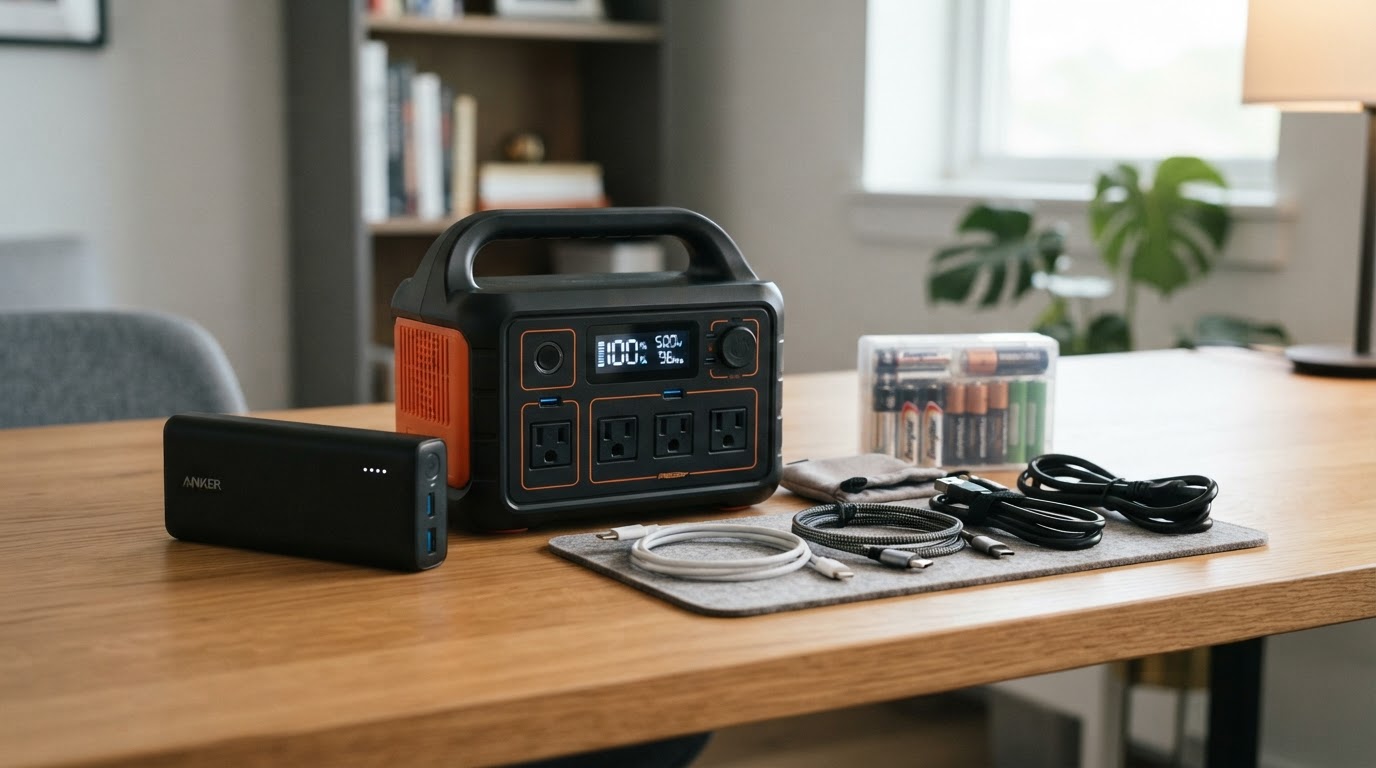
A small power bank covers a phone; a power station covers a fridge for a short outage; a generator is a bigger commitment.
Keep it charged and test it once.
A power station left at zero for a year may not come back. Top it off and confirm it runs the device you need.
Useful for this scenario
Portable Power Station
Compare backup power options for the devices you need most.
Your Backup Power Checklist
- Devices listed by priority and wattage
- Power source sized to the real need
- Generator outside only, with a CO detector
- Fuel stored and rotated if applicable
- A charging habit on the maintenance schedule
- Medical-device power needs checked with the supplier
- The setup tested at least once
What to Look For
Capacity and surge.
Match watt-hours to runtime, and make sure the source can handle the startup surge of any motor or compressor.
Indoor-safe design.
Power banks and battery stations are silent and safe indoors; generators belong outside and never in a garage.
Medical compatibility.
For a CPAP or oxygen concentrator, confirm runtime and power needs with the equipment supplier before you rely on it.
Useful for this scenario
Power Bank
Keep your phone alive when the network is up but the outlet is not.
Keep It Ready
Keep the power station charged and top it off every few months. If you store a generator, run it periodically, rotate the fuel per the manufacturer's guidance, and keep it maintained. For any medical device, talk to the supplier about backup-power requirements rather than guessing.
Build Your Household Plan
Add this category to your plan, then work through the essentials at a pace that fits your household.
Explore the 10 EssentialsOther Plan the Basics guides
Food
Build a pantry from foods you already eat, rotate it so nothing expires, and know how to cook when the power is out.
Water
One gallon per person per day is the starting line. Storage, rotation, and a treatment method are what make it usable.
First Aid
A household first-aid kit plus basic training handles the cuts, burns, and sprains that show up in every disruption.
Hygiene & Sanitation
Handwashing, a toilet alternative, and a waste plan are the unglamorous prep that prevents the real secondary disaster: illness.
Shelter & Warmth
Insulate one room, layer up, and never heat with something meant for the outdoors. Hypothermia and carbon monoxide are the real threats.
Cooking
A stable outdoor stove and the right fuel let you make a hot meal and boil water during an extended outage.