
Household preparedness
Plan how you receive alerts and stay in touch
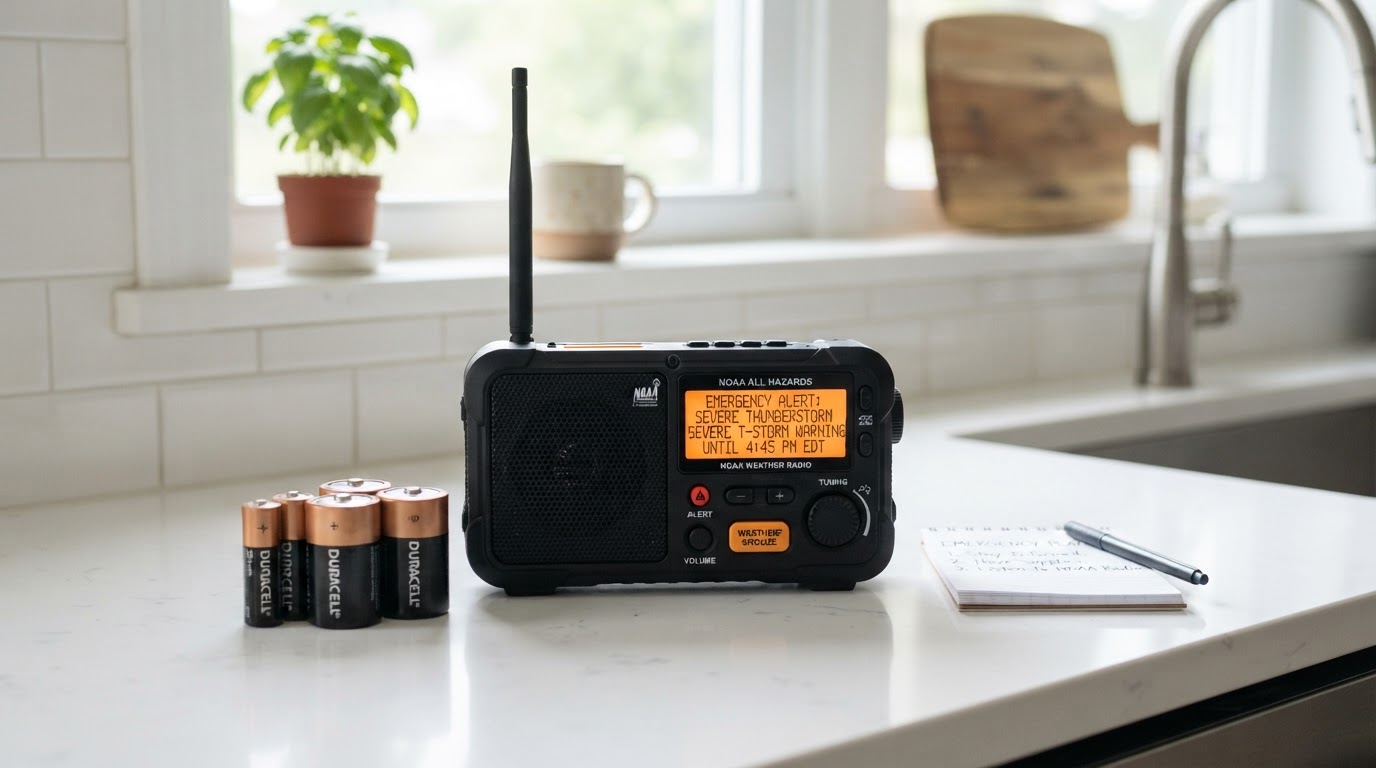
A NOAA weather radio and a written contact list keep information flowing when internet and cell service are unreliable.
Start with These Three Steps
Get a NOAA weather radio.
Choose a battery-powered model with tone alerts, set it for your area, and keep spare batteries with it.
Write down your contacts.
Keep family numbers, doctors, and utilities on paper, because the phone's contacts may not load.
Plan a meeting place.
Agree on where the household gathers if you cannot reach each other by phone.
Useful for this scenario
NOAA Weather Radio
Receive local weather alerts when internet or cell service is unreliable.
Your Communication Checklist
- A battery NOAA weather radio with tone alerts
- Spare batteries for the radio
- Written family and emergency contacts
- A household meeting place agreed on
- A power bank to keep a phone charged
- Local emergency alert channels noted
What to Look For
Tone alerts.
An alert that wakes you is the feature that matters when warnings come at night.
Battery power.
A radio that runs when the grid does not is the point; check the power source before you rely on it.
Local setup.
Program the radio for your county so you only hear the alerts that apply to you.
Useful for this scenario
Power Bank
Keep your phone alive when the network is up but the outlet is not.
Keep It Ready
Test the radio during calm weather so you know the controls, and replace batteries on a schedule. Keep a power bank charged so a phone stays reachable, and review your written contact list once a year.
Build Your Household Plan
Add this category to your plan, then work through the essentials at a pace that fits your household.
Explore the 10 EssentialsOther Plan the Basics guides
Food
Build a pantry from foods you already eat, rotate it so nothing expires, and know how to cook when the power is out.
Water
One gallon per person per day is the starting line. Storage, rotation, and a treatment method are what make it usable.
First Aid
A household first-aid kit plus basic training handles the cuts, burns, and sprains that show up in every disruption.
Hygiene & Sanitation
Handwashing, a toilet alternative, and a waste plan are the unglamorous prep that prevents the real secondary disaster: illness.
Shelter & Warmth
Insulate one room, layer up, and never heat with something meant for the outdoors. Hypothermia and carbon monoxide are the real threats.
Cooking
A stable outdoor stove and the right fuel let you make a hot meal and boil water during an extended outage.