
Household preparedness
Stock a kit and learn to use it
A household first-aid kit plus basic training handles the cuts, burns, and sprains that show up in every disruption.
Start with These Three Steps
Build a kit you can find in the dark.
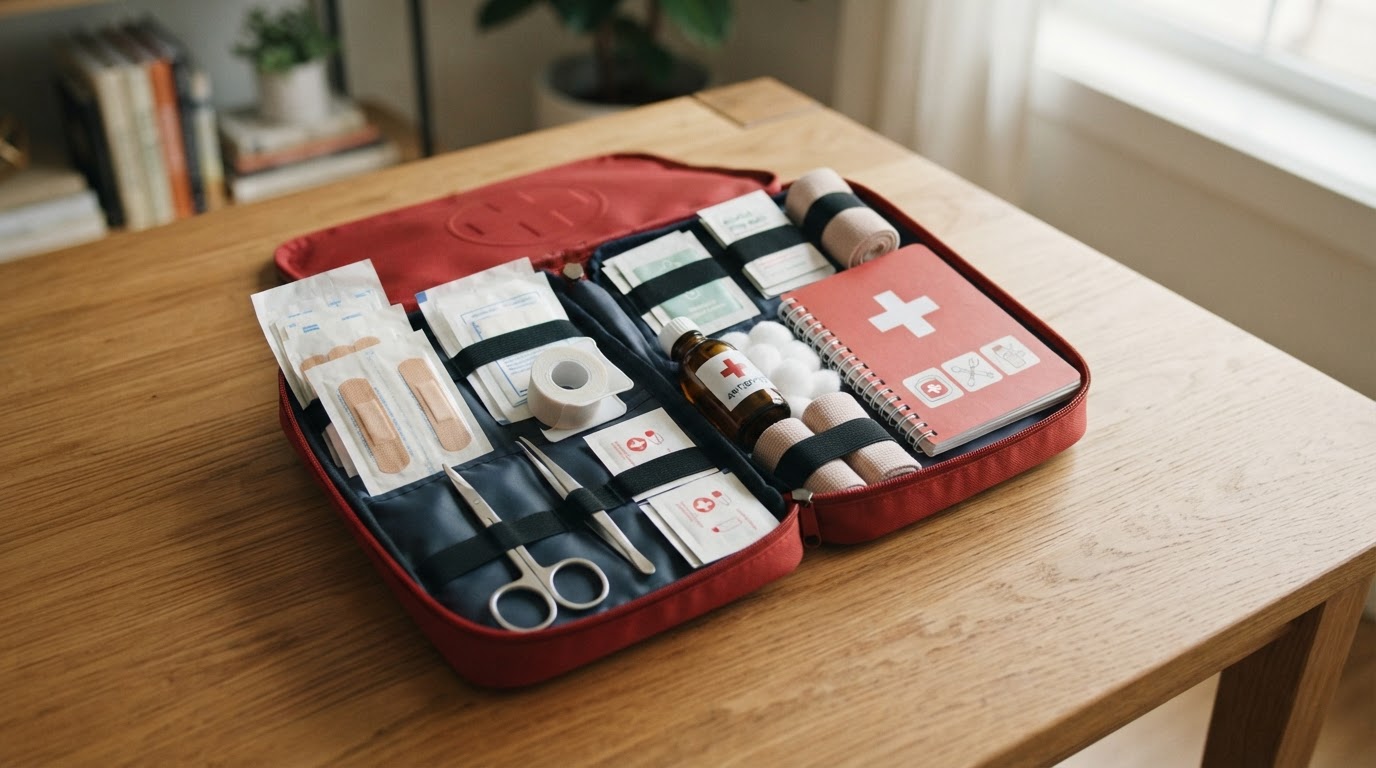
Stock bandages, gauze, tape, antiseptic, a thermometer, gloves, and a pain reliever, and keep it in a known spot.
Tailor it to your household.
Add the specific items your family needs: an EpiPen, a rescue inhaler, baby supplies, or a backup of a key prescription.
Take a course.
Hands-on first-aid and CPR practice is the skill that makes the kit useful; a kit you never opened is decoration.
Useful for this scenario
First Aid Kit
Choose a practical kit you can organize, maintain, and use.
Your First Aid Checklist
- Household first-aid kit stocked and located
- Household-specific items included (allergies, inhaler, baby)
- CPR or first-aid course taken
- Printed quick-reference card with the kit
- Nearest urgent care and ER identified
- Emergency numbers beyond 911 on paper
- Small kits in the car and go-bag
What to Look For
Useful contents.
Quality bandages and dressings you will actually use matter more than inflated piece counts.
Organization.
Pick a kit you can keep organized so expired items are easy to spot and replace.
Refill supplies.
Choose a kit you can restock, and plan a twice-yearly check of contents.
Keep It Ready
Restock what you use after every scrape and replace expired items on a schedule. Keep a printed reference with the kit, because the online tutorial will not load during an outage. Plan for the care you cannot give at home by knowing the nearest ER and when to call 911.
Build Your Household Plan
Add this category to your plan, then work through the essentials at a pace that fits your household.
Explore the 10 EssentialsOther Plan the Basics guides
Food
Build a pantry from foods you already eat, rotate it so nothing expires, and know how to cook when the power is out.
Water
One gallon per person per day is the starting line. Storage, rotation, and a treatment method are what make it usable.
Hygiene & Sanitation
Handwashing, a toilet alternative, and a waste plan are the unglamorous prep that prevents the real secondary disaster: illness.
Shelter & Warmth
Insulate one room, layer up, and never heat with something meant for the outdoors. Hypothermia and carbon monoxide are the real threats.
Backup Power
A phone charger is one job; a fridge or a medical device is another. Match the power source to the real need and know its limits.
Cooking
A stable outdoor stove and the right fuel let you make a hot meal and boil water during an extended outage.