
Earthquake Preparedness
Earthquakes come without warning. Your plan has to be ready all the time.
An earthquake gives no warning at all. There is no season, no watch, no advance text. The ground moves and the plan has to already be in place. Ready.gov and the Red Cross both treat earthquake preparedness as constant: secure the home, practice the response, and know how to reconnect afterward. The central skill is Drop, Cover, and Hold On — the three movements that protect you during the shaking. This guide covers how to secure the home before the quake, what to do during the shaking, and how to find your family after.
Secure the home before the ground moves
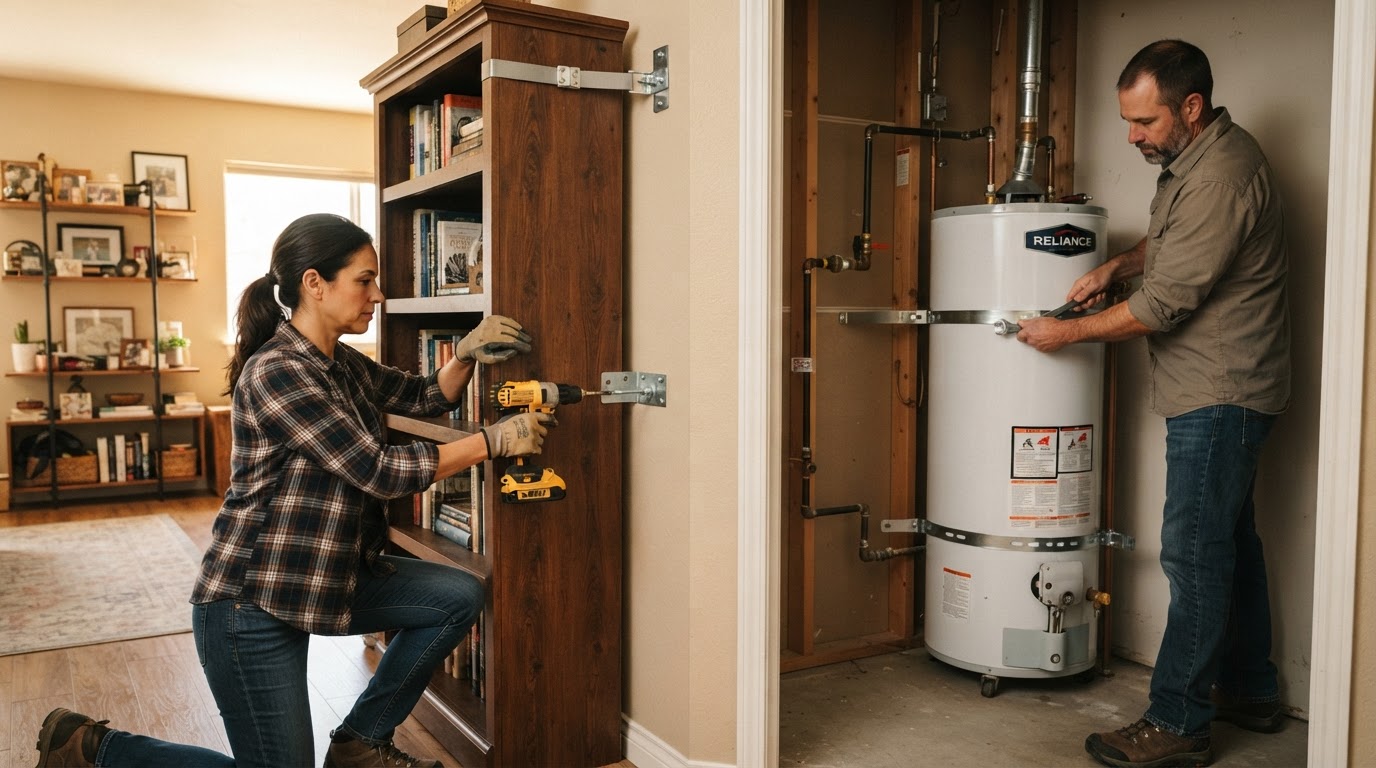
Most earthquake injuries are not from collapsing buildings but from falling objects and unsecured furniture. Anchor tall furniture — bookshelves, dressers, water heaters — to wall studs. Move heavy items to lower shelves. Secure hanging art and mirrors with closed hooks away from beds and seating. The Red Cross recommends strapping water heaters to the wall, because a tipped heater is both a gas and a water hazard. Know where your gas shut-off is and how to turn it off; keep a wrench nearby. Keep the main water and electricity shut-offs accessible.
Identify the safe spots in each room — under a sturdy desk or table, away from windows and anything that could fall. Identify the dangerous spots too: near windows that can shatter, near tall unsecured furniture, and under hanging fixtures. The plan is to already know where to go when the room starts to shake. Walk through the home with everyone in the household and point out both.
Drop, Cover, and Hold On during the shaking
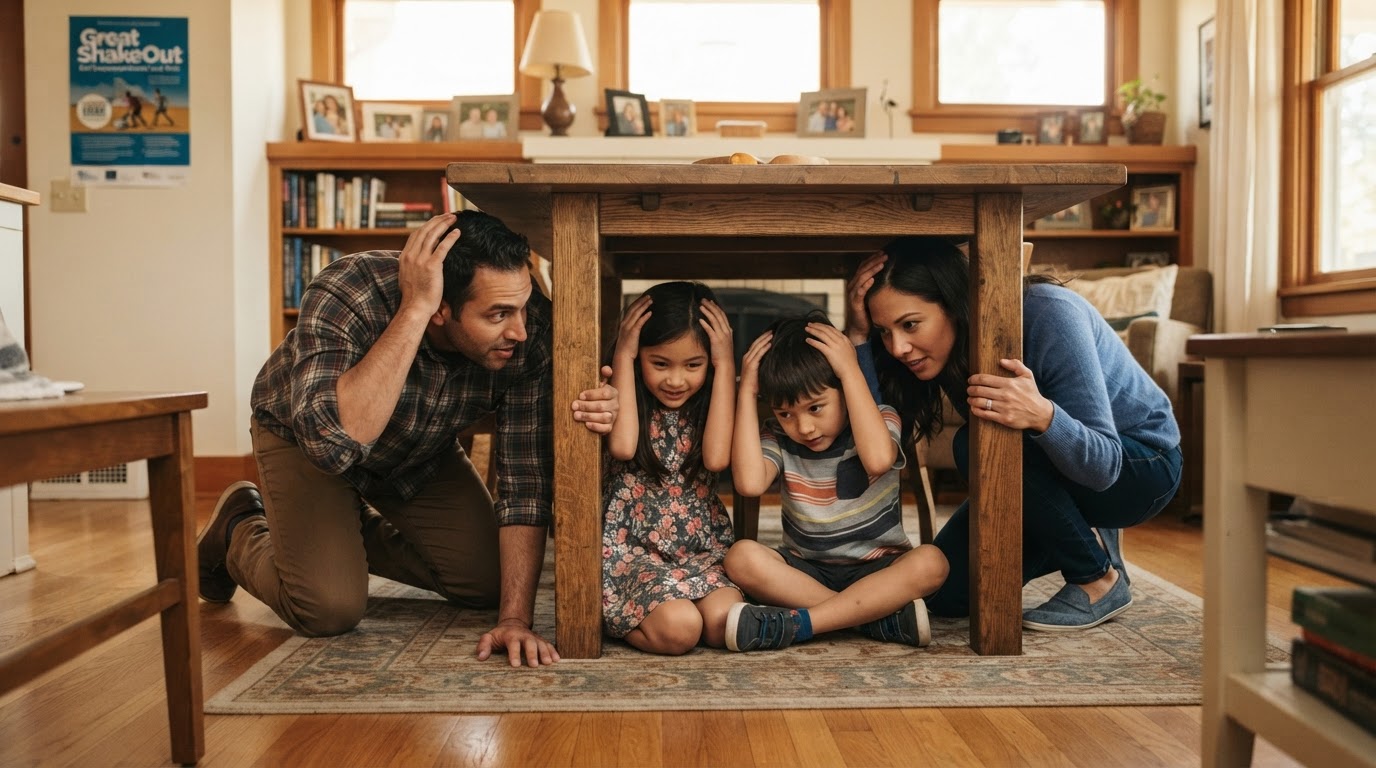
The recognized response is Drop, Cover, and Hold On. Drop to your hands and knees before the quake drops you, so a fall does not add to the injuries. Cover your head and neck with your arms and, if you can, take shelter under a sturdy table. Hold on to your shelter and be ready to move with it. Stay in place until the shaking stops. Ready.gov is clear: do not run outside during the shaking, because most injuries happen near building exteriors from falling glass and debris.
If you are in bed, stay there, protect your head with a pillow, and hold on. If you are in a wheelchair or use a walker, lock the wheels and cover your head. If you are outdoors, drop to the ground in a clear spot away from buildings, trees, and power lines. If you are in a vehicle, pull over to a clear area, stop, and stay in the car until the shaking stops, avoiding overpasses and bridges. The movements are the same everywhere: get low, get covered, and hold on.
Be ready for aftershocks
Aftershocks can follow the main quake for days, weeks, or even months, and a large aftershock can be more damaging than the original if a structure has been weakened. The USGS treats aftershocks as expected, not exceptional. After the shaking, expect more shaking. Stay out of damaged buildings. Keep your shoes on. Keep your go-bag close, because you may need to leave suddenly if an aftershock damages the structure further. The plan that protected you in the first quake is the same plan for every aftershock.
Be ready to drop, cover, and hold on again at the first sign of shaking. If you are under a tsunami warning and you are on the coast, move to high ground immediately after the shaking stops, because a local tsunami can arrive within minutes. Do not wait for an official evacuation order if you are on the coast and the ground has shaken hard — move.
After the shaking: find your family and assess
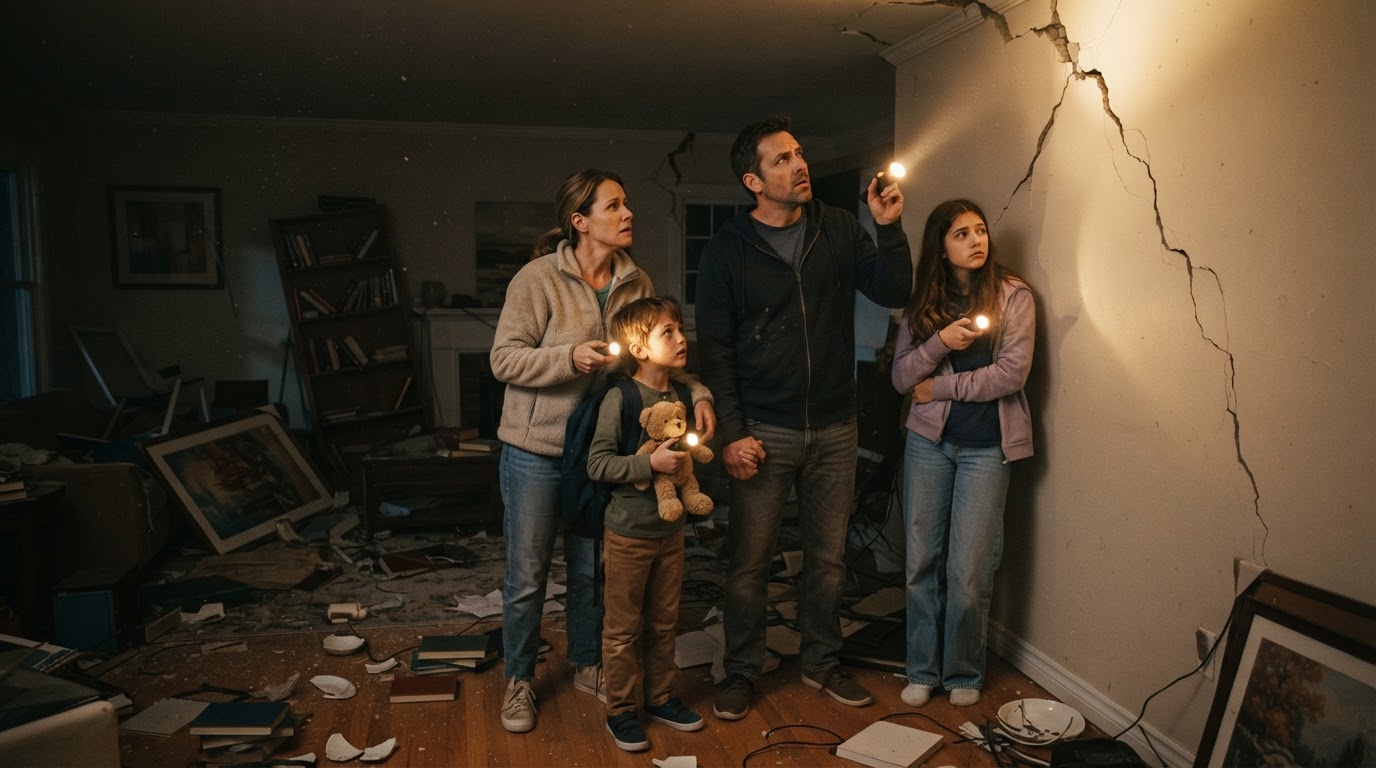
Once the shaking stops, check yourself and others for injuries. Administer first aid if you are trained; call 911 for serious injuries. Check the home for damage: gas leaks (smell for gas and listen for a hissing sound), electrical damage (snapped wires, burning smell), and water leaks. If you smell gas, turn off the main gas valve, open windows, leave the building, and call your utility. Do not use candles, lighters, or matches, because a gas leak can ignite. Use flashlights.
Inspect the home for structural damage — cracks in the foundation, broken stairs. If the building looks unstable, leave. Do not use the elevator; use stairs. Locate your household using your communication plan. If you are separated, text rather than call, because the network may be jammed. Go to your meeting point or contact your out-of-area contact. Keep a printed contact card, because the phone may be dead. The plan is to reconnect even when the phones are not.
The reconnection plan and the go-bag
An earthquake can leave the household separated and the phones jammed. Have a household communication plan: an out-of-area contact, two meeting points, and a printed contact card for everyone. Keep a go-bag by the door with documents, water, a first-aid kit, a flashlight, and a radio. The Red Cross recommends one per person. If your home is damaged, the go-bag is what you take when you leave. The plan that secures the home and protects you during the shaking is the same plan that reconnects you after.
Review the plan each year. Walk through the safe spots, the shut-offs, and the meeting points with everyone, including children and anyone with mobility needs. The earthquake that gives no warning is the one you have to be ready for all the time, and the plan that is rehearsed is the one that works.
Practical priorities
- Anchor furniture and water heaters to wall studs
- Identify safe and dangerous spots in each room
- Practice Drop, Cover, and Hold On
- Know the gas, water, and electricity shut-offs
- Keep a go-bag and a household communication plan
Common mistakes
- Running outside during the shaking
- Taking shelter under an overpass in a vehicle
- Using candles after the quake if gas may be leaking
- Using the elevator after an earthquake
- Assuming the first quake is the last
Earthquake readiness checklist
- Tall furniture anchored to studs
- Water heater strapped to the wall
- Heavy items on lower shelves
- Gas shut-off located + wrench nearby
- Safe spots identified in each room
- Go-bag by the door
- Household communication plan
- Printed contact cards
- Flashlights (no candles)
- Shoes by the bed for broken glass
Sources & further reading
This is planning guidance, not emergency advice. In an emergency, call 911. See a mistake? Report it.