
Household preparedness
Plan for the medications your household needs
A written medication list and a modest backup supply keep a short disruption from becoming a medical emergency.
Start with These Three Steps
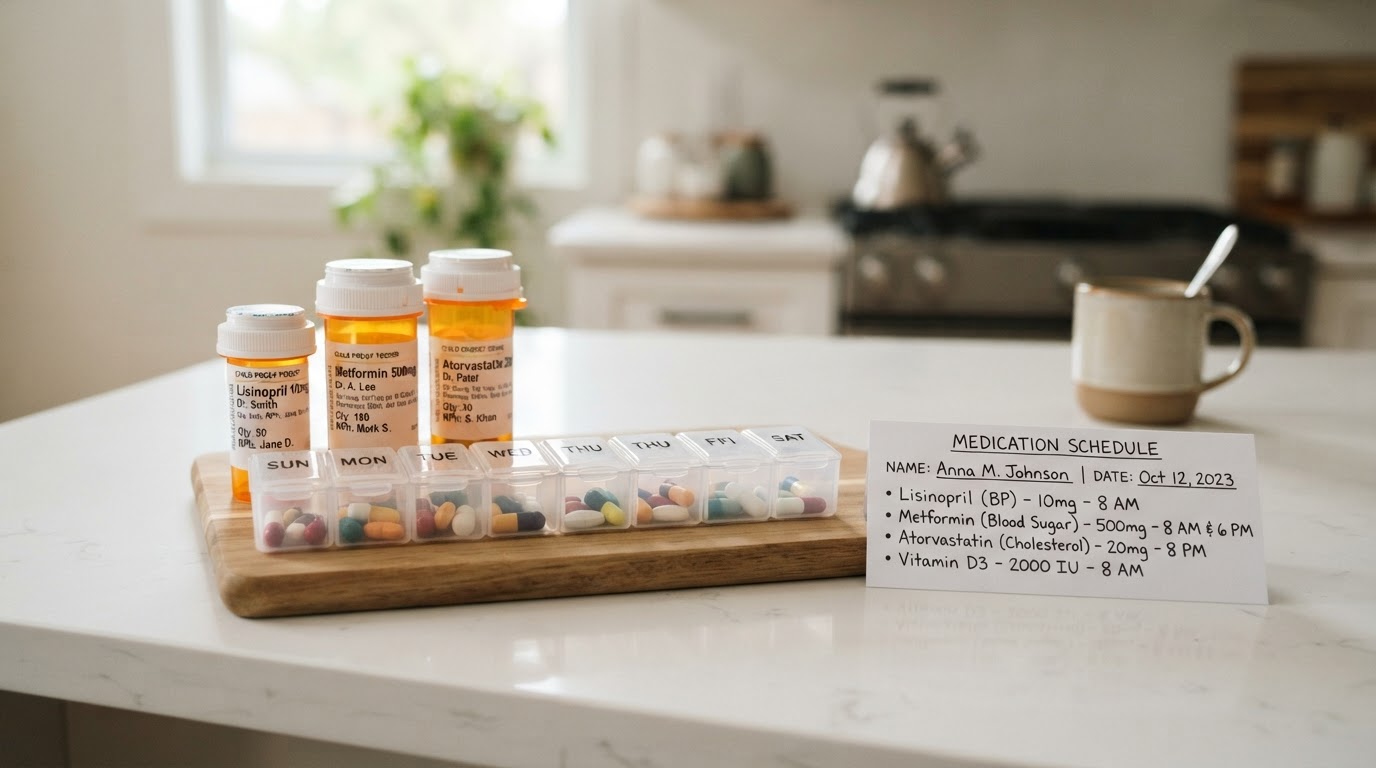
Write down every medication.
List prescriptions, doses, and refill dates for each person, including pets, and keep a copy with your kit.
Talk to your clinician about backup.
Ask your doctor or pharmacist whether an emergency refill supply is appropriate for your situation; do not assume a fixed quantity.
Store it correctly.
Keep medication in its original container and follow the label's storage temperature; an ordinary cooler does not maintain safe medication temperatures.
Your Medication Checklist
- A written list of all medications and doses
- Refill dates and pharmacy phone numbers noted
- An emergency supply discussed with your clinician
- Storage temperature requirements checked
- A medication organizer for the go-bag
- Allergy and condition information documented
What to Look For
A clear written list.
Include names, doses, and prescriber so anyone can read it in a crisis.
Proper storage.
Follow the label; heat, cold, and moisture shorten shelf life and can make some drugs unsafe.
A refill plan.
Know your pharmacy's refill process and whether your insurance allows emergency refills.
Keep It Ready
Review the list at every appointment and update it after any change. Check expiration dates periodically and safely dispose of expired medication per local guidance. For refrigerated medication, confirm the required storage range with your pharmacist and plan for outages accordingly.
Build Your Household Plan
Add this category to your plan, then work through the essentials at a pace that fits your household.
Explore the 10 EssentialsOther Plan the Basics guides
Food
Build a pantry from foods you already eat, rotate it so nothing expires, and know how to cook when the power is out.
Water
One gallon per person per day is the starting line. Storage, rotation, and a treatment method are what make it usable.
Hygiene & Sanitation
Handwashing, a toilet alternative, and a waste plan are the unglamorous prep that prevents the real secondary disaster: illness.
Shelter & Warmth
Insulate one room, layer up, and never heat with something meant for the outdoors. Hypothermia and carbon monoxide are the real threats.
Backup Power
A phone charger is one job; a fridge or a medical device is another. Match the power source to the real need and know its limits.
Cooking
A stable outdoor stove and the right fuel let you make a hot meal and boil water during an extended outage.